





Sudan Transparency and Policy Tracker: RSF-aligned ‘Future Bank’ an unlicensed money-transfer platform
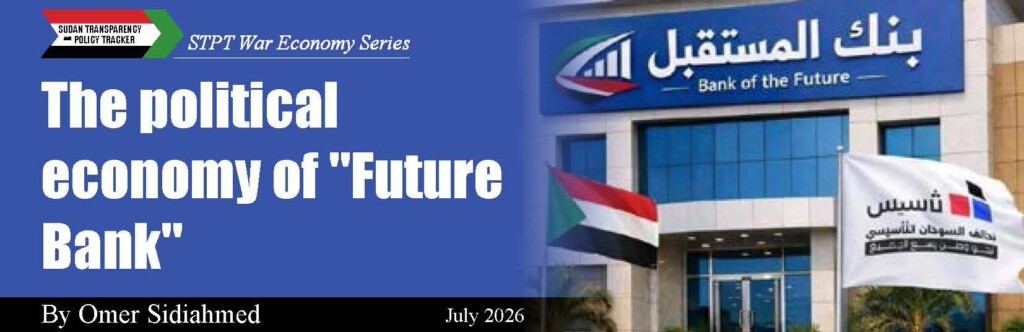
Sudan’s civil war has fragmented not only the country but also its financial system. A new paper published by the Sudan Transparency and Policy Tracker (STPT), written by Omer Sidiahmed, a researcher in Sudanese political economy, independent banking, finance, and funding, argues that El Mustaqbal aka Future Bank—established in Rapid Support Forces (RSF)-controlled territory—is not a bank in any recognised regulatory sense but an unlicensed money-transfer platform.
At the same time, it acknowledges that the institution emerged to meet a genuine need created by the collapse of formal banking. The central challenge is therefore to reduce its risks while providing practical alternatives that can operate during the conflict rather than waiting for peace.
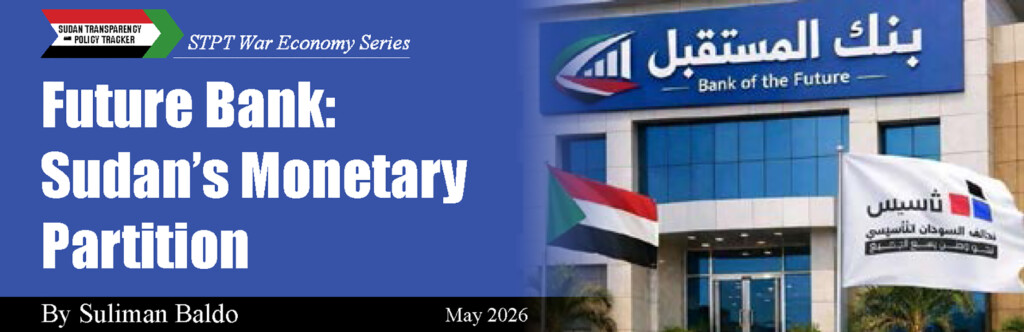
The New Omer Sidiahmed paper, The political economy of ‘Future Bank’, comes in response to the publication of an earlier STPT report in May by Suleiman Baldo, Future Bank: Sudan’s monetary partition, which traces how the emergence of the RSF-aligned El Mustaqbal ‘Future Bank’ and its affiliated digital transfer application reflects the deepening institutional rupture between areas controlled by the Rapid Support Forces (RSF) and those held by the Sudanese Armed Forces (SAF). What began as an improvised response to acute cash shortages and the collapse of conventional banking has evolved into a broader attempt by the Sudan Founding Alliance ‘Tasees’ government to establish parallel financial authority.
The new paper by Omer Sidiahmed offers a complementary analysis focused on two main points: first, an assessment of the Future Bank’s compliance with international banking standards—an aspect not addressed in the first paper and second, the proposal of immediate, actionable strategies to be implemented during the ongoing crisis, without waiting for a ceasefire.
Sidiahmed notes that since the publication ofFuture Bank: Sudan’s Monetary Partition, three relevant developments have emerged that have heightened concern. Future Bank’s informal transfer network has expanded beyond Sudan through agents in Uganda, increasing its exposure to money laundering and terrorist financing risks. Wartime conditions have also entrenched a system in which armed groups extract large commissions from cash transfers by controlling transport and communications. Most significantly, the establishment of a parallel monetary authority in RSF-held areas suggests that Future Bank is evolving from an informal payment platform into part of an alternative financial system, deepening Sudan’s de facto monetary partition.
The Sidiahmed paper stresses that the principal problem is not informal money transfers themselves. Such systems often fill a vital gap when conventional banking collapses. Rather, the concern is that Future Bank presents itself as a bank, implying protections—such as deposit security, regulatory oversight and legal accountability—that it cannot provide. Customers may therefore believe their funds enjoy safeguards that do not in fact exist. Without proper customer identification and consumer protection procedures, users may struggle to prove ownership of funds, challenge disputed transactions or seek legal redress if money is lost.
Measured against international standards, the paper concludes that Future Bank fails to qualify as a regulated financial institution. It does not satisfy the Basel Core Principles governing licensed banks, lacks the capital and liquidity disclosures expected of regulated institutions, and falls outside the oversight required by the Financial Action Task Force (FATF). The absence of supervision, customer due diligence and recognised crisis-management mechanisms means international banks would regard it as a high-risk counterparty, while depositors lack the protections associated with formal banking.
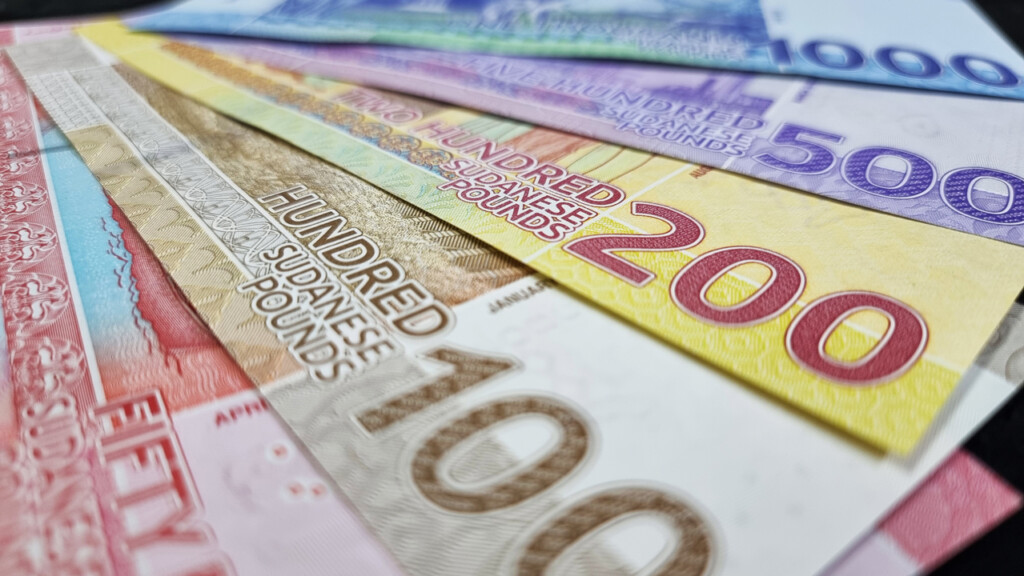
Recognising the realities of wartime Sudan, the paper argues for practical rather than ideal solutions. It recommends regulating local currency circulation where possible, while acknowledging that international recognition, correspondent banking relationships and engagement with institutions such as the IMF and World Bank remain unattainable under current conditions. Drawing lessons from divided financial systems in Yemen, Libya and Somaliland, it proposes supervised USSD-based mobile payment platforms as a realistic alternative. Operating on basic mobile phones without internet access, such systems could extend financial services into conflict areas while keeping customer funds within regulated banking structures.
The proposed roadmap unfolds in three stages. The immediate priority is to protect depositors through a 90-day transition period allowing customers to withdraw or transfer funds while documenting their claims. International regulators should issue warnings about dealing with Future Bank and scrutinise the UAE-based company linked to its operations. At the same time, Sudan’s central bank could pilot supervised USSD payment systems and establish an official register of Future Bank users.
A second phase would establish temporary joint financial oversight, introduce simplified customer identification procedures and create an emergency deposit guarantee backed by international donors. Following a ceasefire, the final stage would integrate transitional arrangements into Sudan’s formal banking system under international supervision and review Future Bank’s legal status within global anti-money laundering frameworks.
Sidiahmed’s paper concludes that Future Bank is best understood as an informal value-transfer mechanism rather than a bank. While its emergence reflects the collapse of Sudan’s financial system, allowing it to become institutionalised would deepen the country’s monetary division. The author argues that immediate depositor protection, regulatory action and practical technological alternatives offer a more sustainable response than allowing an unregulated financial system to become entrenched.
Background
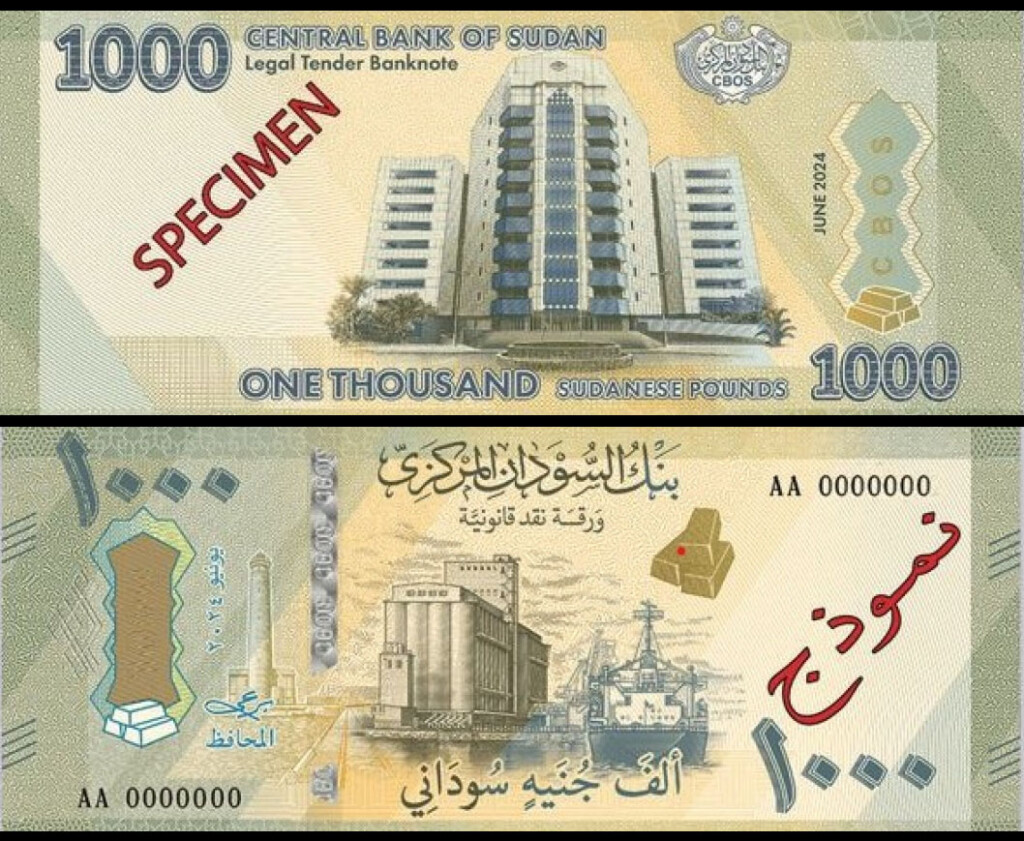
In November 2024, the Central Bank of Sudan introduced new designs of the SDG 1,000 and 500 notes and limited their exchange to bank account holders, effectively excluding RSF-controlled areas from access to the new banknotes.10 The RSF responded by declaring the older banknotes legal tender in RSF territories.
Although residents of RSF-controlled areas continued to rely on national bank transfer applications— predominantly ‘Bankak’ operated by the Bank of Khartoum, many reported to local media that funds in Bank of Khartoum savings accounts linked to Bankak, disappeared or were frozen on the basis of questionable legal complaints reportedly filed in SAF-controlled areas and/or on suspicions that larger balances were linked to financing of the RSF operations. This has led to economic stagnation and a reluctance to use the application as transfer offices raised the discount rate for cash transfers to 30 per cent.
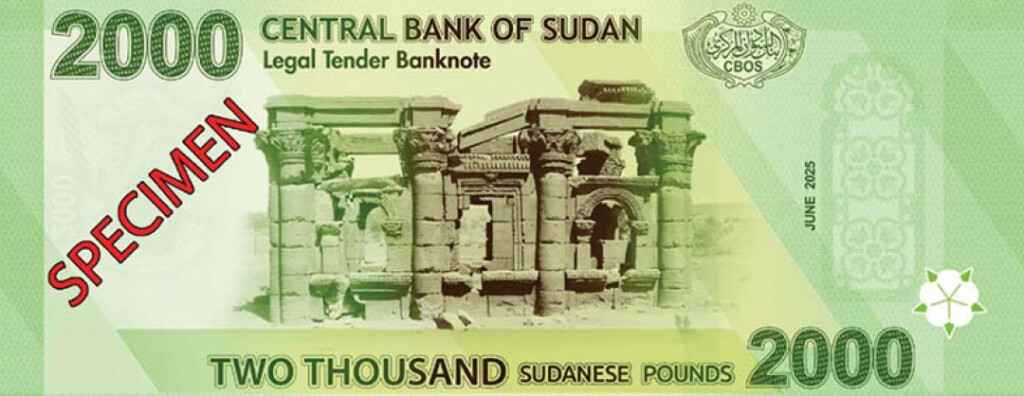
Severe cash shortages accelerated the physical deterioration of currency in circulation. Cross-border trade from RSF areas, meanwhile, relied on multiple currencies, including the South Sudanese Pound, the Chadian Franc, the Libyan Dinar, and the US Dollar.
(Source: STPT)


 and then