





WFP: North Kordofan capital El Obeid new epicentre of Sudan’s hunger crisis
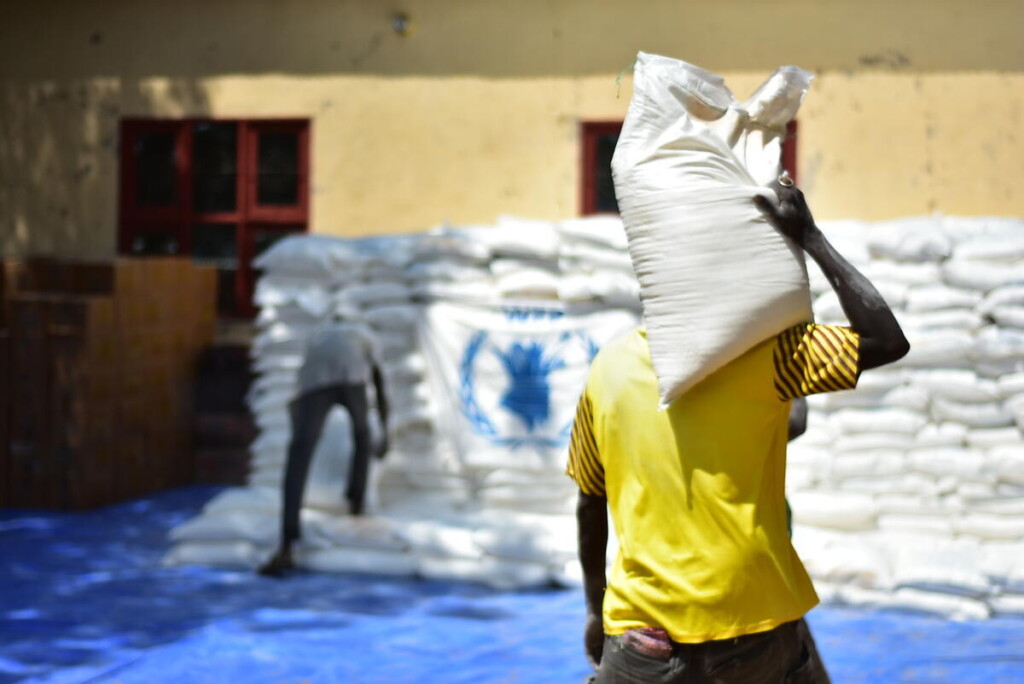
WFP Food distribution in Kadugli (File photo: WFP)
The UN World Food Programme (WFP) warns that soaring displacement, dwindling aid supplies, and severe funding shortages threaten to reverse hard-won gains against famine in central Sudan. The humanitarian crisis in El Obeid is rapidly escalating as hundreds of thousands of displaced people pour into the North Kordofan state capital, placing overwhelming pressure on food, water and basic services, the WFP laments.
The agency says the city, once home to around 500,000 people, may now be sheltering almost twice that number as families flee fighting across North and South Kordofan, West Kordofan and even Darfur. Camps are overflowing, while many displaced people are living with host families or constructing makeshift shelters from whatever materials they can find.
WFP’s Sudan country director, Abdallah Aldawart, who visited El Obeid this week, described the city as “the epicentre of Sudan’s displacement and hunger crisis”.
“I visited the camp and met people queuing for food or water,” he said. “It was very clear that whatever humanitarian agencies are bringing into the city is the only lifeline for people in these camps.”
The influx is stretching already scarce supplies of food, fuel, and clean water. Regular power cuts have disrupted water pumping, contributing to shortages of safe drinking water, while more than 30 new cholera cases have been recorded.
Nearly 400,000 people across Sheikan district, which includes El Obeid, together with neighbouring Bara and Gharb Bara districts, are already facing emergency levels of acute food insecurity (IPC Phase 4), requiring immediate food assistance to prevent hunger-related deaths.
WFP is currently assisting just over 100,000 people in El Obeid, providing mainly food and some cash support. However, severe funding shortages mean beneficiaries receive only half of the standard food ration.
Aldawart said many families are sharing these already reduced rations with neighbours who have even less.
“People are only receiving 50 per cent of the food they should,” he said. “Despite this, the people I met were sharing what they had with their neighbours and other families who have no source of income.”
Fuel shortages have also disrupted humanitarian operations. With commercial transport increasingly unavailable, WFP has deployed its own fleet of trucks to move around 200 metric tonnes of food each day from warehouses to distribution points across the city.
The agency has established shared warehouse facilities through the WFP-led Logistics Cluster and is pre-positioning supplies to expand assistance to more than 250,000 people in and around El Obeid if conditions permit. However, these emergency stocks have been diverted from supplies originally intended for pre-positioning ahead of the rainy season, reducing WFP’s ability to respond elsewhere as seasonal access deteriorates.
Across Sudan, WFP says the humanitarian operation is under unprecedented strain. More than 19.5 million people are acutely food insecure, including an estimated 770,000 people in 14 locations at risk of famine. Despite scaling up operations, the agency has reached an average of only three million people each month because of insecurity, access restrictions, and a lack of funding.
Conflict continues to hamper aid deliveries. In June alone, fighting and drone strikes prevented WFP from reaching an estimated 200,000 people with lifesaving assistance.
The agency warned that, without fresh funding, its food stocks will be severely depleted by September and exhausted entirely in October. Specialised nutritional foods used to prevent and treat malnutrition are expected to begin running out in August.
WFP is seeking US$646 million between June and November to provide emergency food assistance and support agricultural recovery for 8.5 million people.
“We want to do more,” Aldawart said. “We have the access in El Obeid, we can deliver the food, and we can be in the city. It is only resources that are limiting our operations.”
He warned that without sustained donor support and secure humanitarian access, recent gains in reducing the risk of famine in parts of Sudan could quickly be lost.



 and then