




Surge in online abuse targets Sudanese women journalists
Graphic: RD
The Sudanese Journalists Syndicate has reported a sharp rise in digital harassment and violence against women journalists, with more than 250 subjected to various forms of online threats and defamation on social media platforms, particularly Facebook. The union says it has also documented more than 25 cases of direct threats and hate speech over the past year of the war that began on 15 April.
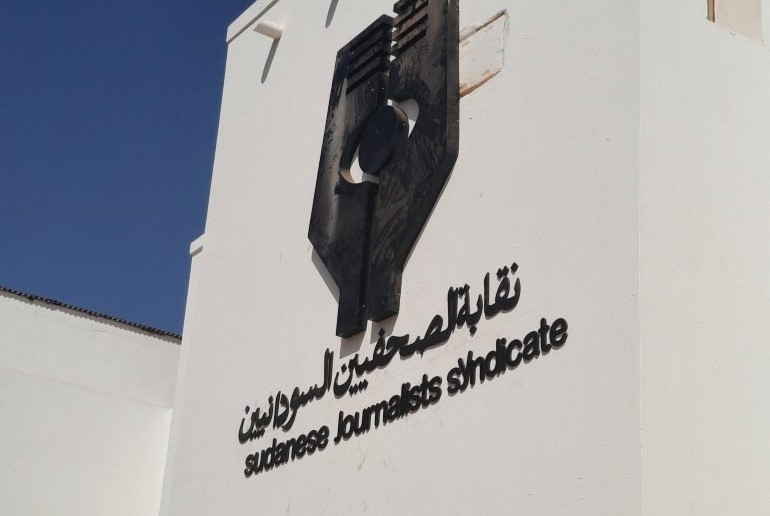
Iman Fadl Ed Sayed, a member of the executive office and secretary for freedoms, told Radio Dabanga that about 80 per cent of women journalists had lost their jobs since the outbreak of the war in April 2023, reflecting a severe deterioration in their professional conditions compared with before the conflict.
She warned that digital violence had become one of the most dangerous phenomena at the current stage, noting that it is escalating alongside the spread of hate speech. It often takes the form of organised campaigns targeting women journalists via social media, and in some cases involves the use of personal images and information for defamation.
‘Feminisation of the crisis’
Fadl El Sayed described the situation as a “feminisation of the crisis” within the journalistic community, saying women journalists had become the most vulnerable group during the war.
She said risks had shifted from field-based dangers in the early stages of the conflict to growing digital and social threats, placing significant pressure on women journalists and threatening their ability to continue working.
She added that this form of violence leaves deep psychological effects and directly impacts journalists’ ability to remain in the profession, with some withdrawing from work or from public life altogether.
Fadl El Sayed said reports issued by the freedoms secretariat do not generally include a detailed gender-based classification of violations. She noted that 393 violations were documented in the first year of the war, rising to 596 in the second year, while 590 violations were recorded in the January 2026 report as the conflict approaches its third year.
Media workers missing or detained
As reported by Radio Dabanga in March, the Rapid Support Forces in Nyala, South Darfur, detained a number of women, including female journalists, and transferred them to the Korea prison.
A separate report by Radio Dabanga in February, shows that long rooted in divide-and-rule tactics, hate speech continues to fuel the ethnic dimensions of Sudan’s conflict, where online rhetoric translates into real-world atrocities. An extension of Digihub Africa’s Hold Before You Send It campaign to counter online hate speech and harassment, the Misinformation, Propaganda, and the Battle for Truth in Sudan online panel event on February 16 brought together activists, researchers and journalists. Representing Radio Dabanga, Access Now, Build Up and The African Middle East Leadership Project (AMEL) they shared their expertise on the spread of disinformation and the erosion of independent media in Sudan.
 and then