





Sudan 4th among 186 countries most affected by climate change
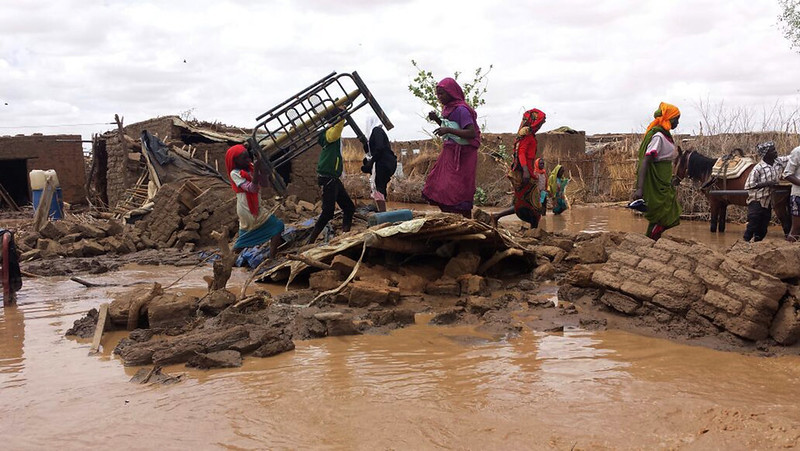
Sudan’s annual rainy season often leads to flooding, creating conditions that facilitate the spread of waterborne diseases (File photo: Dar Al Salaam Development Association / UNAMID)
War, environmental degradation, and climate change are increasing pressure on natural resources and livelihoods. Sudan is facing severe environmental challenges amid climate change and the continuing war, which has damaged infrastructure, ecosystems, vegetation, and soil, while directly affecting natural resources and public health through the spread of epidemics and serious diseases. The situation has highlighted the need to treat environmental issues as a strategic national priority.
The concerns coincided with World Environment Day on 5 June, as Sudan continues to experience further destruction from the ongoing conflict, growing displacement, resource shortages and encroachment on forests and tree belts across the country. The lack of essential services and the sharp deterioration in economic conditions have contributed to making Sudan one of the countries most affected by climate and environmental change.
Lack of awareness
Journalist and environmental affairs specialist Sari Naqd said environmental and climate change issues in Sudan are often treated through a traditional lens as secondary concerns, with some people regarding them as closer to science fiction than reality.
Speaking to Radio Dabanga, he attributed this to weak public awareness and criticised academic and media institutions for failing to give the subject sufficient attention, despite Sudan being among the countries most affected by climate change globally.
He said there was a paradox in the limited public engagement with environmental issues in Sudanese society, where they are often viewed as a luxury concern or an issue for developed countries, despite scientific studies and reports showing Sudan to be among the countries most negatively affected by climate change.
Naqd pointed to the latest report by the University of Notre Dame in the United States, which publishes an annual index measuring countries’ vulnerability to climate change. The index covers 186 countries and ranks Sudan fourth in the world in terms of negative impacts from climate change.
“In other words, out of 186 countries we rank fourth in terms of inability to withstand and adapt to climate change. That is a very alarming figure,” he said, noting that the index is based on a range of highly sensitive indicators.
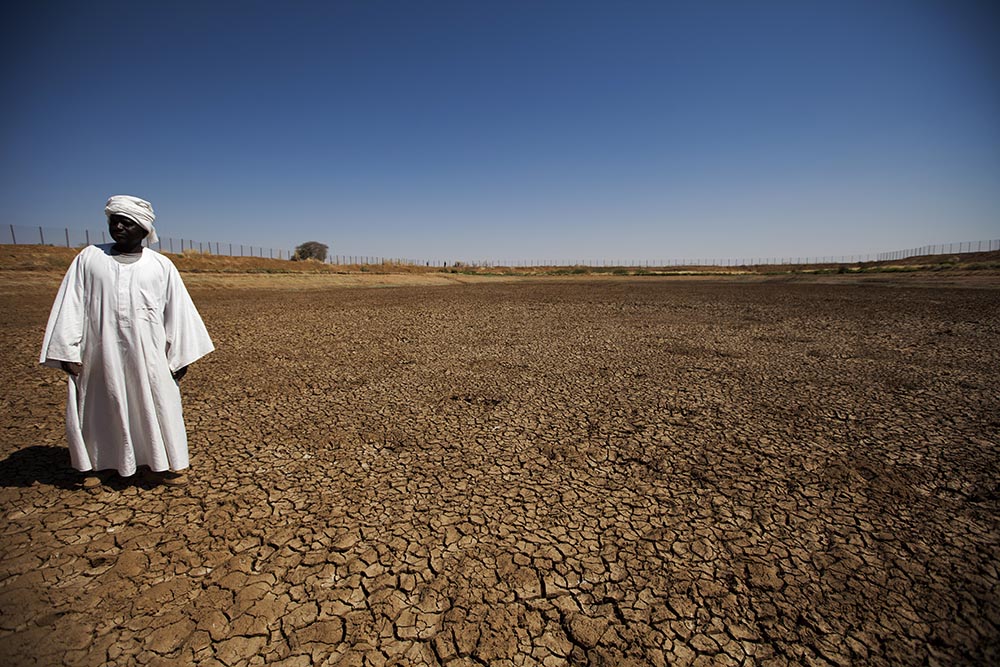
Among those indicators, he cited the degradation of agricultural land and the shrinking of vegetation cover in favour of arid land and desertification. He said climate change has a major impact on soil moisture, leading to the expansion of dry areas and the reduction of plant cover.
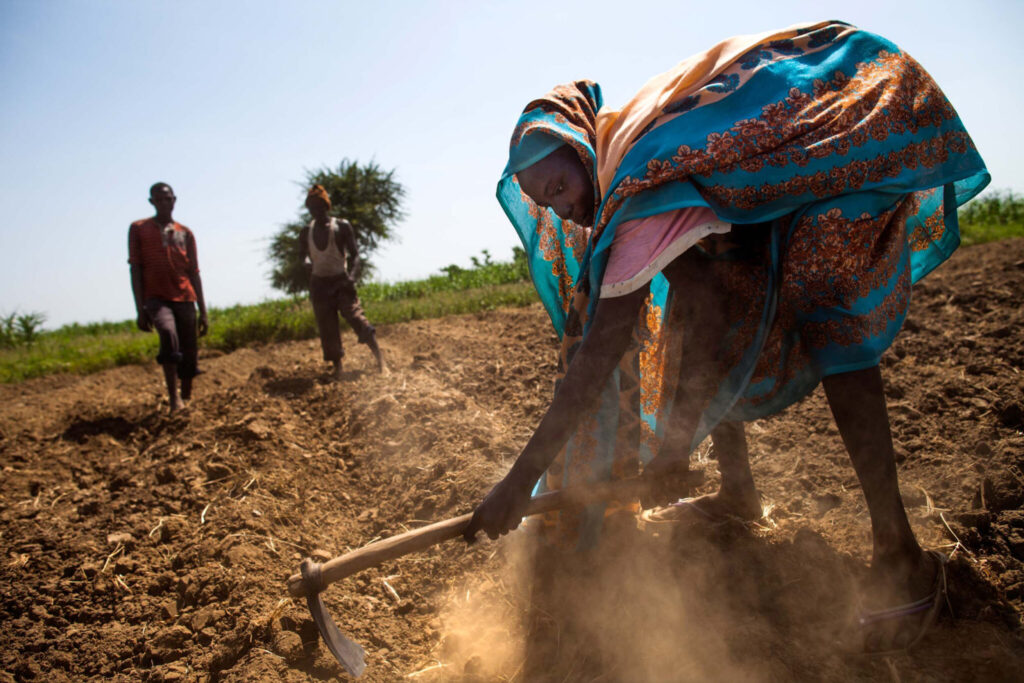
He argued that this has direct implications for national security, particularly food security. The loss of agricultural land contributes to crop failures and lower production, leading to higher food prices and increased dependence on imports. This, in turn, raises import costs, puts pressure on exchange rates, and negatively affects the national economy.
Darfur described as the first climate war
Naqd also discussed competition over resources, citing the conflict in Darfur in 2003, which began between pastoralists and farmers, as an example of this type of dispute.
He said a number of international institutions had described it as the first climate war of the 21st century because it was rooted in competition over resources affected by climate change.
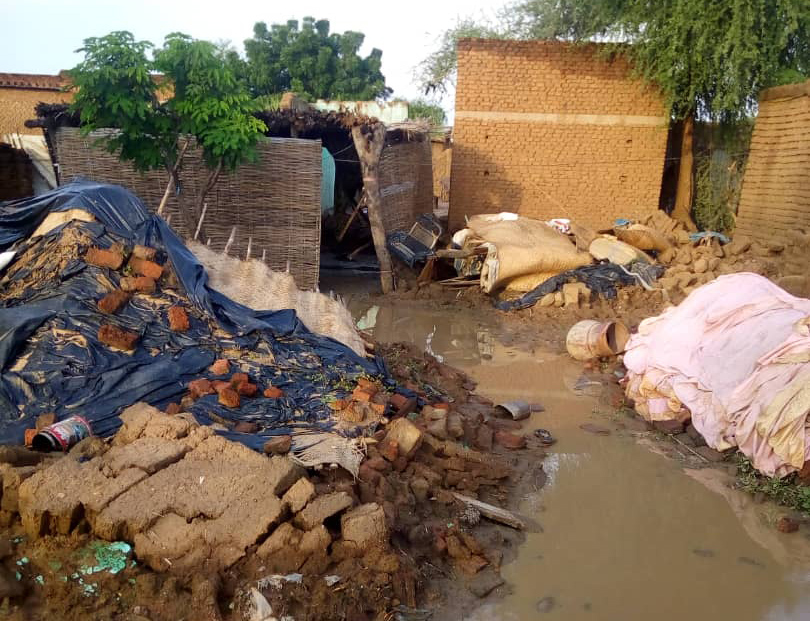
He added that the University of Notre Dame report also considered factors such as flooding, pointing to the repeated floods that have affected Sudan in recent years, including those in 2024 and 2025, which caused extensive damage to infrastructure and had significant health consequences.
Flooding, he said, creates conditions conducive to the spread of diseases such as malaria, dengue fever, and cholera. These outbreaks form part of the substantial losses suffered by Sudan, which are estimated to amount to billions of dollars.
He noted that the African Development Bank stated in a 2021 report, two years before the outbreak of the current war, that Sudan needed around $2.5bn annually to strengthen its resilience and capacity to adapt to climate change.
Environmental justice
Naqd said such challenges had led to the creation of the international Loss and Damage Fund, within the framework of environmental or climate justice, which places responsibility on major industrialised countries to address the effects of climate change because they are the largest contributors to global warming.
He said countries such as China, European states, the United States, Brazil, India, and Japan are largely outside the world’s hottest regions and therefore experience fewer impacts than countries south of the Sahara, including Sudan. Sudan, he said, has historically contributed little to global pollution but bears many of the consequences because of its geographical location.
He stressed the importance of strengthening environmental awareness and promoting the principles of climate justice in Sudan.
“People need to know that they have suffered from climate injustice and that they have rights. Before that, they need to understand that they are environmentally affected and that much of their suffering is linked to climate change,” he said.
Environmental issues are no longer a luxury
Naqd said environmental issues can no longer be regarded as a luxury or a marginal concern. Instead, they have become a key factor affecting food, health, economic and social security, and understanding the scale of environmental damage is essential for securing international support.
He argued that although the war has had serious environmental consequences, weak environmental management and the absence of governance and coordination among relevant institutions have had an even greater impact.
He criticised government bodies for operating in isolation and pointed to a lack of coordination between the Meteorological Authority and the ministries responsible for environment, health, and irrigation. He called for the creation of joint operations rooms to exchange information and coordinate decisions, noting that environmental monitoring results do not always reach the public through effective early warning systems.
He also criticised the appointment of non-specialists to environmental positions as part of political power-sharing arrangements, saying this weakens performance and highlighting the need to rely on expertise and professional competence.
Naqd pointed to what he described as environmental “bright spots” during the war, including the regeneration of acacia forests during periods of fighting. However, he said large areas were later cleared after residents returned and increasingly relied on firewood for cooking in the absence of environmental oversight.
Sudan’s environmental rights
He concluded by proposing a series of measures, including strengthening environmental governance, improving institutional coordination, building national capacity through training and overseas study programmes, and adopting modern technologies for monitoring and forecasting environmental risks.
He also called for the establishment of technical and legal committees to pursue Sudan’s rights to climate compensation, secure funding for climate adaptation programmes, and expand the use of renewable and clean energy to help offset the losses caused by the war.

 and then