





Justice Africa Sudan: ‘Warring parties using starvation a weapon of war’
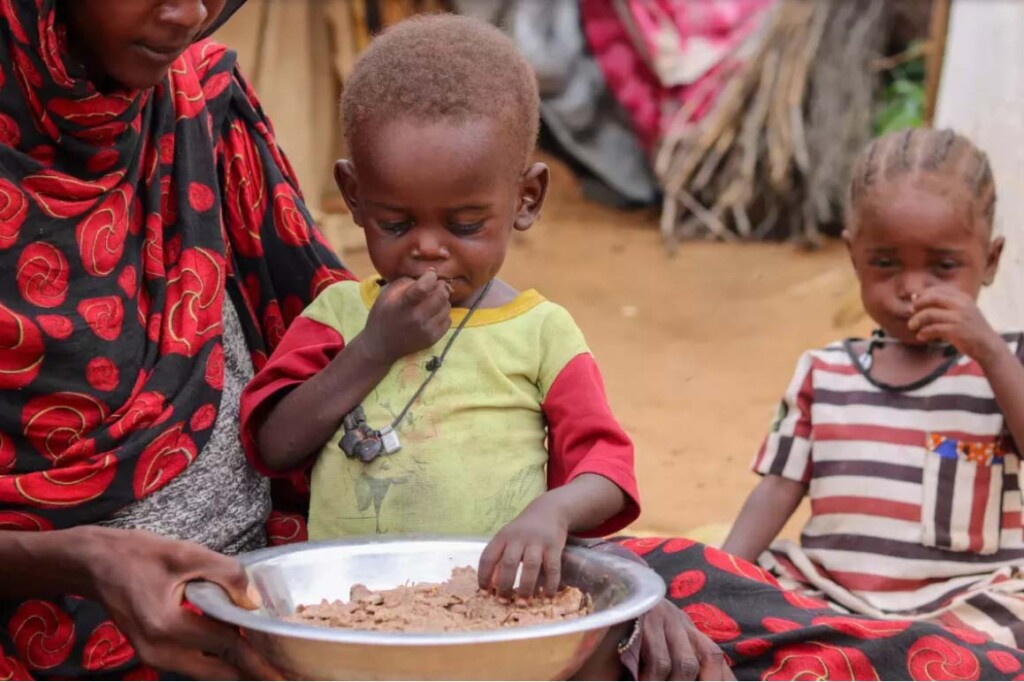
Displaced children in Darfur eat a meal prepared from ambaz (animal feed), which is usually used as animal feed (File photo: UNICEF)
Sudan is edging towards a man-made famine as more than three years of war, economic collapse, and worsening agricultural conditions leave millions struggling to find food, Justice Africa Sudan warns in a statement* dated 19 September that Sudan is approaching a famine that it says is being deliberately engineered by the warring parties.
The conflict between the Sudanese Armed Forces (SAF) and Rapid Support Forces (RSF) has displaced more than 10 million people, while 25 million face acute food shortages, the statement highlights. Nearly five million are experiencing emergency levels of hunger, according to local reports cited by the organisation. Community kitchens have closed for lack of resources, while remittances from Sudanese abroad, an important lifeline for many households, are weakening under prolonged hardship and global inflation.
The crisis is being compounded by poor rainfall in rain-fed farming areas, including El Gedaref and South Kordofan states, threatening harvests just as access to food and other essentials is deteriorating.
Justice Africa Sudan accuses both sides of deliberately using starvation as a method of warfare. It points to sieges, road blockades, the obstruction of food supplies to areas controlled by opponents, and the destruction of warehouses, water sources and farms. It also accuses the belligerents of restricting humanitarian access. Such tactics, the organisation argues, amount to war crimes and have aggravated an economic crisis in which food and essential commodity prices have more than doubled in a month.
The statement says famine has already been declared in parts of the Nuba Mountains under SPLA/M-North control, while accusing the government in Port Sudan of denying the scale of the crisis.
Justice Africa welcomes US and EU sanctions against those prolonging the war, but says they are insufficient. It calls for an immediate end to hostilities, unrestricted humanitarian access, stronger accountability mechanisms and greater international pressure for a cessation of fighting.
The organisation argues that the present crisis is worse than Sudan’s 1984–85 famine because, unlike that disaster, starvation is now being deliberately inflicted on civilians.
The summary preserves the statement’s figures and allegations without independently verifying them.


 and then