




Drought threatens Sudan’s agricultural season as food fears grow
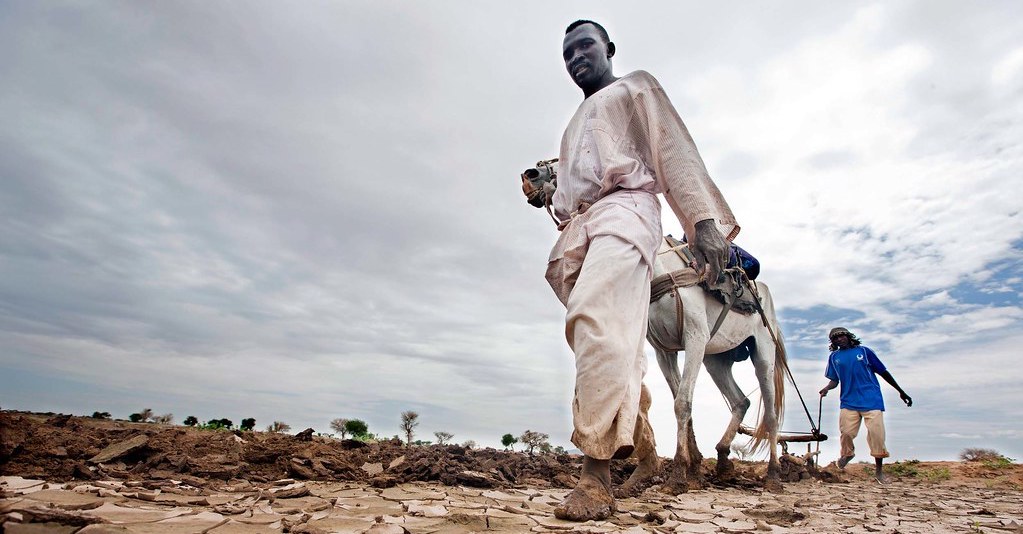
Farming in the rainy season (File photo: Albert González Farran / UNAMID)
Farmers and residents across parts of South Kordofan and Darfur are warning that severe rainfall shortages and prolonged dry spells are threatening this year’s agricultural season, raising fears of further food shortages and price rises.
Residents in several areas of the Nuba Mountains told Radio Dabanga that rains have been scarce and interrupted, with unusually high temperatures damaging crops and threatening food security.
In El Tadamon locality, residents said rainfall was below normal and insufficient for crops to continue growing, while the drought has extended across large areas. Residents of Abbasiya also warned that crops were increasingly vulnerable, raising fears of production losses, reduced food supplies and higher grain prices.
A farmer in Abu Jubeiha told Radio Dabanga that drought had spread from the Habila and Liri agricultural projects through Abu Jubeiha, El Tadamon and Abbasiya, reaching areas south of Umm Rawaba.
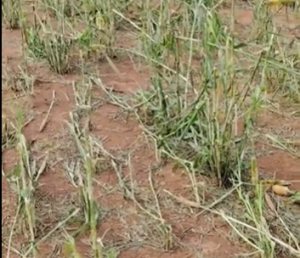
He said rains had stopped for more than 20 consecutive days amid severe and unusual heat. Some crops, particularly sorghum, sesame and peanuts, had been completely “burned” by the drought and could no longer be saved by later rainfall.
Farmers have also reported unusually open roads between Abu Jubeiha and El Tadamon, and onwards to El Muqnas, Kosti, Talodi and Liri, allowing large trucks to move through areas where roads are normally disrupted during the autumn rains.
The price of a sack of sorghum has risen from SDG70,000 to SDG120,000 amid the movement of crops from South Kordofan to El Obeid.
No field surveys have yet been conducted in Abu Jubeiha by official, international or local organisations, making it difficult to estimate the scale of crop losses. Farmers said they had already lost money preparing land, buying inputs and paying labour, leaving them less able to prepare for the next season.
Residents and farmers called for urgent field assessments, measures to restrict crop exports outside South Kordofan to protect local stocks, and immediate humanitarian intervention.
‘Darfur faces mounting drought’
Several areas of Darfur are also facing severe rainfall shortages, threatening agricultural production and raising concerns about food availability.
In North Darfur, delayed and insufficient rains have left some farms dry while some farmers have yet to begin planting.
Local emergency room members said villages west of Kutum and surrounding areas were facing a worsening crisis as delayed rains reduced pasture and water sources, threatening food security and livestock. It appealed for food, drinking water and support for water sources.
In South Darfur, Adam El Fadil from Netika locality told Radio Dabanga that some farms had already reached the drought stage while others were waiting for rain before planting. He said cultivated millet had not yet reached half a metre, threatening basic crop production.
He warned that food grain prices could rise to unaffordable levels. A sack of millet was selling for SDG280,000–300,000, while sorghum cost SDG220,000–230,000.
Netika is among 13 South Darfur localities facing an emergency over rainfall shortages.
In East Darfur, Hope and Refuge Organisations for Refugees and Support for Darfur Victims warned of rainfall shortages and agricultural failure in Abu Karinka. The group said rains had been interrupted for around three weeks, damaging large areas planted with millet and beans and forcing some farmers to use seed stocks, threatening next season’s planting.
The organisation called on UN agencies, humanitarian organisations and donors to conduct an urgent assessment and provide food, seeds and agricultural inputs.
‘FAO warns of wider rainfall deficit’
The UN Food and Agriculture Organization (FAO) reported that major agricultural areas in southeastern Sudan recorded significant rainfall deficits. Cumulative rainfall between June and mid-August was around 20 per cent below the long-term average in Sennar and 30 per cent below average in El Gedaref.
FAO said severe moisture shortages had affected vegetation, with its Agricultural Stress Index showing severe drought across up to 40 per cent of cultivated land in Sennar and 70 per cent in El Gedaref.
The agency warned that below-average rainfall during the June-September rainy season was already affecting germination and early crop development, while forecasts point to a high probability of below-average rainfall for the remainder of the planting season.
Conflict has also disrupted farming in Darfur, Kordofan and Blue Nile, while insecurity, high input prices and limited access to credit continue to constrain agricultural production.
FAO said sorghum prices rose by 65 per cent in most monitored markets between January and June, while millet prices increased by 42 per cent.
Sudan’s 2025 cereal production stood at around 5.2 million tonnes, 22 per cent below 2024 levels and 19 per cent below the five-year average. The country is expected to need 2.8 million tonnes of cereal imports this year, mostly wheat, amid limited financial and logistical capacity.
FAO estimates that 33.7 million people in Sudan will need assistance this year, including 19.5 million facing extreme hunger.

 and then