




Sudanese Pound plunges despite government measures
(Graphic RD)
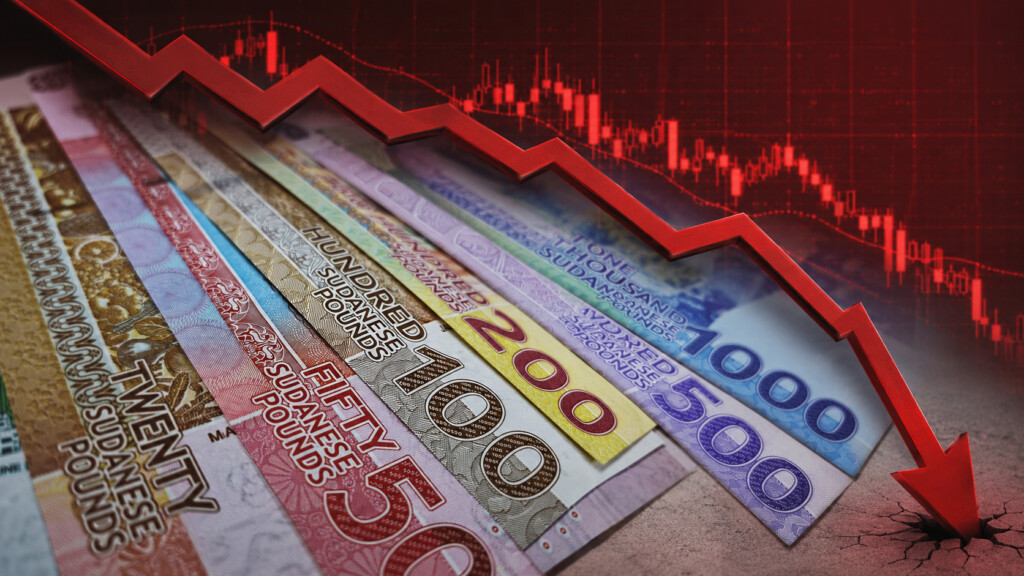
The Sudanese Pound has plunged against the Dollar, with the US currency trading above SDG 8,400 on the parallel market, up 40% in three weeks as demand for foreign currency surges.
Traders who spoke to Radio Dabanga expect the Pound to weaken further as demand for foreign currencies grows.
The Dollar is trading at SDG 8,400 on the parallel market, compared with SDG 4,200 at Bank of Khartoum and SDG 3,750 at Omdurman National Bank. The parallel market rate is therefore 100% higher than Bank of Khartoum’s rate and 124% higher than Omdurman National Bank’s.
The Dollar has risen from SDG 6,000 to SDG 8,400 in just three weeks, an increase of SDG 2,400, or 40%. In April 2023, shortly before the war began, the Dollar traded for SDG 565 on the parallel market. Its price has therefore risen roughly 14-fold since then.
Prices rise
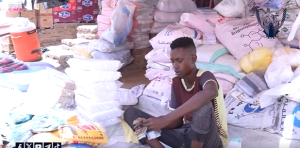
The collapse of the Pound is feeding directly into the cost of basic goods, particularly sugar and fuel. Some shops in cities across Sudan’s states have stopped selling goods until the Dollar rate stabilises.
In Kosti, the price of a 50kg sack of sugar rose from SDG 350,000 on Tuesday to SDG 420,000 on Wednesday.
In the market at El Managil, the same sack now costs SDG 460,000. In Kassala, in eastern Sudan, it has risen to SDG 420,000.
What economists propose
Economists argue that government purchases of Dollars on the parallel market, to finance weapons and military equipment deals and secure fuel, are contributing to successive jumps in the exchange rate.
Ibrahim El Badawi, a former finance minister, says stabilising the Pound requires simultaneous progress on several fronts: reducing monetary financing of the budget deficit, rebuilding foreign-exchange reserves, reviving exports, restoring productive capacity, strengthening fiscal discipline, and mobilising domestic revenues.
Ending the war is the critical condition, he says. The conflict has destroyed productive capacity, weakened investment, disrupted exports, increased the government’s financing needs, reduced tax revenues, and entrenched uncertainty.
So long as these conditions persist, El Badawi expects the Pound to continue losing value, while the effectiveness of monetary and exchange-rate policies will remain severely constrained.
He adds that the official exchange rate is out of line with the equilibrium rate needed to clear the trade deficit. Post-war exports amount to roughly one-third of imports, while the ratio of foreign-currency holdings to local-currency holdings is only about 1%.
Sustained exchange-rate stability therefore requires restoring confidence in both the national currency and the wider economy, he says.
The widespread disruption to the Bankak mobile-banking application, which began at the start of September, has also failed to produce the expected fall in the Dollar rate. Instead, El Badawi says, the Pound’s decline against the Dollar and other foreign currencies has accelerated.
Government measures
The National Economic Management Committee, chaired by Prime Minister Kamil Idris, has held its regular meeting to discuss measures aimed at improving living conditions, stabilising the exchange rate, and containing inflation amid the economic fallout from the war.
The committee has also discussed plans to increase production and exports. It has approved a broader programme to raise output and productivity, improve export infrastructure, encourage manufacturing, and strengthen the economy’s ability to supply goods locally.
Other measures include expanding discounted-sales markets and regulating cross-border trade, in an effort to control the movement of goods and address market distortions. The committee has also ordered reviews of company and business-registration records.
It has called for stricter scrutiny of company and business records to regulate commercial activity, tighten economic oversight, and ensure that financial and trading practices comply with regulations.
The committee has stressed the need to conduct imports through the Baladna platform. As part of efforts to protect the national currency, it has ordered tighter controls on imports and called for a broader tax base to close gaps that reduce state revenues and put further pressure on the Sudanese Pound.
Note: This report has been translated from Arabic with the assistance of artificial intelligence tools, and subsequently reviewed and adapted by a human editor before publication.

 and then