





Sudanese Pound collapse sees shops close amid soaring prices
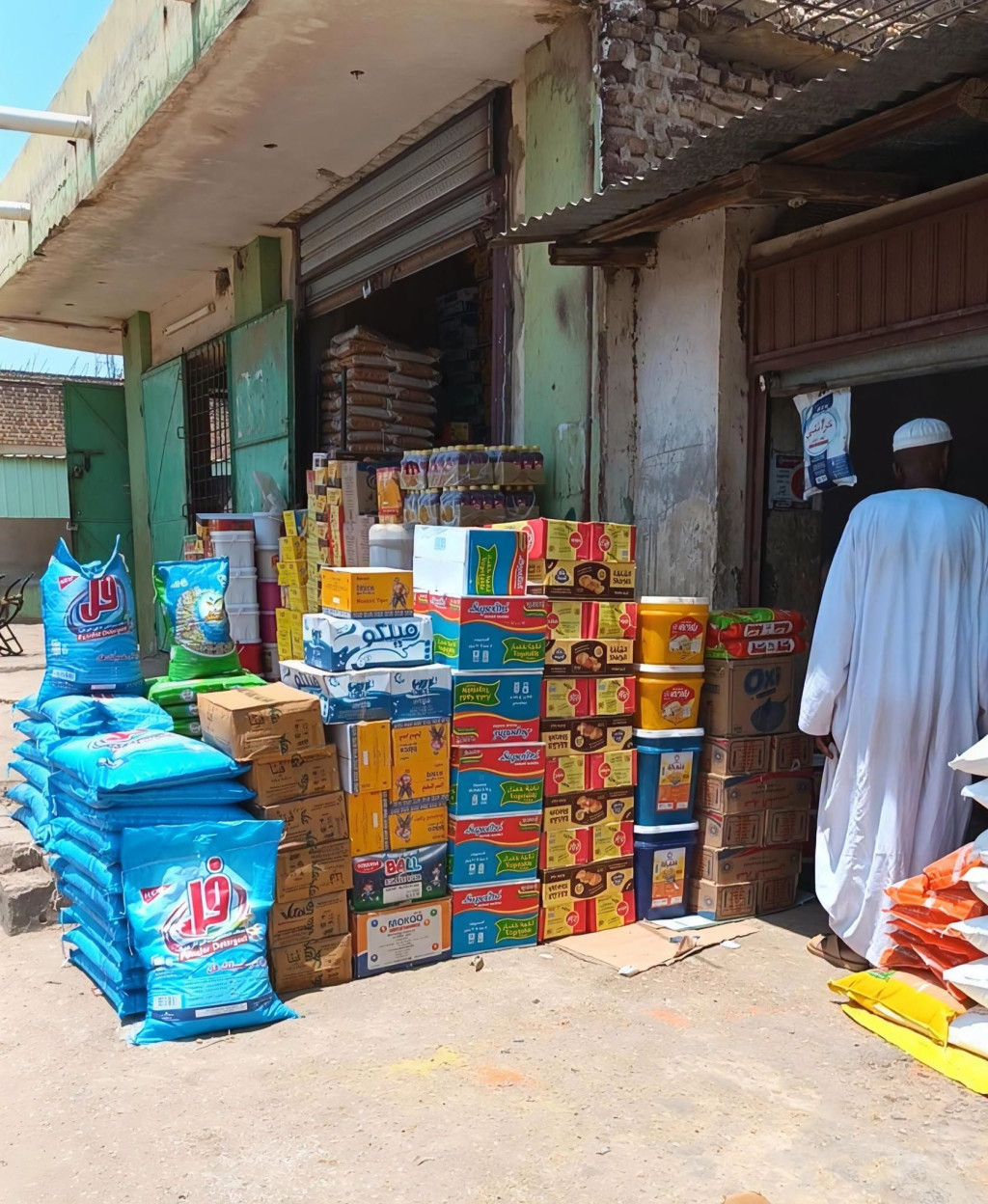
A shop in Ed Dueim, White Nile state (Photo: Supplied)
The collapse of Sudan’s Pound is sending consumer prices sharply higher as traders struggle to price their goods. About three-quarters of shops in Ed Dueim, White Nile state, have closed, along with about 90% of wholesale shops in Omdurman and branches of several flour and dairy-product companies in White Nile state.
As previously reported by Radio Dabanga, the Sudanese Pound has plunged against the Dollar, with the US currency trading above SDG 8,400 on the parallel market, up 40% in three weeks as demand for foreign currency surges.
An Ed Dueim trader tells Radio Dabanga that the closures reflect rapid and unpredictable price changes, which make it difficult for traders to determine what to charge customers.
The price of a 50kg sack of sugar in Omdurman has risen from SDG 350,000 to SDG 420,000, while in White Nile state it is now about SDG 440,000.
A 25kg sack of flour has risen from SDG 100,000 on Wednesday to SDG 125,000 on Thursday. A sack of powdered milk has increased from SDG 1.15m to SDG 1.4m.
The price of a carton of sunflower oil has jumped from SDG 220,000 to SDG 320,000, while onions have risen from SDG 180,000 to SDG 230,000.
The trader describes market conditions as ‘incomprehensible’, with prices changing rapidly and varying between sellers.
What is driving prices higher?
Wholesale traders attribute the rapid increases primarily to the Pound’s fall against the Dollar. The Dollar is trading at between SDG 8,300 and SDG 8,500, with some transactions reaching about SDG 8,600, the trader says. The resulting higher costs are feeding directly into prices for sugar, cooking oil, powdered milk, flour, and other staples.
Another trader in Ed Dueim identifies three main factors behind the increases. The first is the volatility of the Dollar, which he describes as the central problem, regardless of who or what is responsible for the exchange-rate decline.
Security measures targeting and arresting currency brokers and traders do not address the exchange-rate crisis, he says. The authorities should instead adopt economic policies aimed at tackling the causes of the Pound’s depreciation.
The second factor is the accumulation of taxes, fees, and other levies imposed on traders, particularly by local authorities. These include taxes, zakat, local revenues, and fees for roadside stalls and other facilities.
The problem is not the existence of such charges, which are normal obligations in any state, he says, but the way they are collected and the number of authorities and checkpoints imposing them.
Goods entering Ed Dueim, for example, may be subject to fees or taxes at the entrance to the Ed Dueim bridge. Once the goods reach the trader’s warehouse, tax officials may make a further assessment based on the trader’s annual records and impose additional charges.
Taxes ‘astronomical’
The trader describes some tax assessments as ‘astronomical’. Ultimately, he says, traders pass the cost of taxes, fees, and other expenses on to consumers through higher prices.
The third factor is the instability of fuel prices. Frequent changes increase transport costs, while trucks and drivers also face fees and charges as goods move between cities.
The cumulative cost of fuel, transport, fees, and levies can substantially inflate the price of goods before they reach consumers, he says. A product that starts out relatively cheap can cost several times its original price by the time it reaches the market.
The trader calls on economic-security authorities and the government to focus on policies to tackle the exchange-rate crisis and rising costs of production, transport, and trade, rather than relying on arrests and security measures. Continuing along the current path, he warns, risks further deterioration and disruption in Sudan’s markets.
Note: This report has been translated from Arabic with the assistance of artificial intelligence tools, and subsequently reviewed and adapted by a human editor before publication.



 and then