




African Centre for Democracy and Human Rights Studies calls on UN Human Rights Council to extend mandate of Sudan fact-finding mission
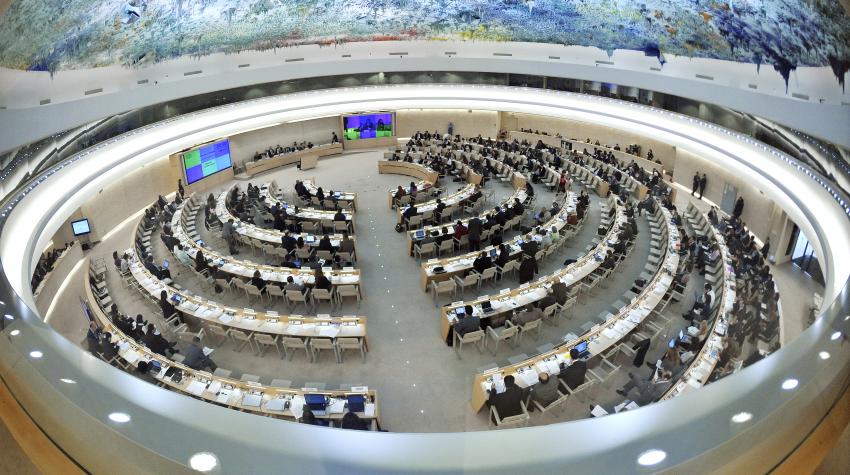
The Human Rights and Alliance of Civilizations Room of the Palace of Nations, Geneva (Switzerland) where the United Nations Human Rights Council meets (UN Photo/Jean-Marc Ferré)
African human rights advocates have urged the United Nations Human Rights Council to extend the mandate of its independent fact-finding mission on Sudan, citing ongoing allegations of serious abuses linked to the country’s civil war.
In a joint written statement submitted by African Centre for Democracy and Human Rights Studies (Centre d’études juridiques africaines / CEJA) to the 62nd United Nations Human Rights Council session in Geneva, the groups welcomed a joint declaration adopted in May by the UN Independent International Fact-Finding Mission for Sudan and a parallel African Union mechanism. They said the missions played a vital role in documenting violations of international human rights and humanitarian law and contributing to accountability efforts.
The organisations expressed concern that neither mission has yet been able to visit Sudan and said some neighbouring countries hosting large Sudanese refugee populations had not granted access to investigators. They praised Chad, Kenya, Uganda, Ethiopia and South Sudan for cooperating with the missions.
The statement highlighted findings from recent UN reports documenting grave human rights violations during the conflict, including allegations that Sudanese Armed Forces (SAF) personnel may have used chemical weapons. The groups noted that Sudan has yet to publish the findings of a national investigation established in 2025 to examine the claims.
The organisations also drew attention to the economic impact of the war, describing widespread destruction of infrastructure, looting and damage to public services. They cited reports that electricity facilities, water systems and other civilian infrastructure had been extensively damaged.
The statement further criticised a campaign of forced evictions and demolitions in Khartoum, Omdurman and Khartoum North. It alleged that hundreds of thousands of residents had been displaced without compensation or alternative accommodation as authorities removed neighbourhoods deemed to be informal settlements.
The groups claimed the evictions disproportionately affected communities from Darfur and Kordofan and were accompanied by discriminatory rhetoric and accusations linking residents to the paramilitary Rapid Support Forces (RSF).
Calling for the fact-finding mission’s mandate to be extended by at least two years, the organisations said investigators needed more time to visit Sudan and neighbouring countries. They also urged the mission to examine the historical causes of Sudan’s recurring conflicts, including legacies of slavery, colonial rule and long-standing patterns of ethnic discrimination and exclusion.

 and then