





Sudan media defiant at govt directive to ‘regularise legal status by 1 June’ or face legal action
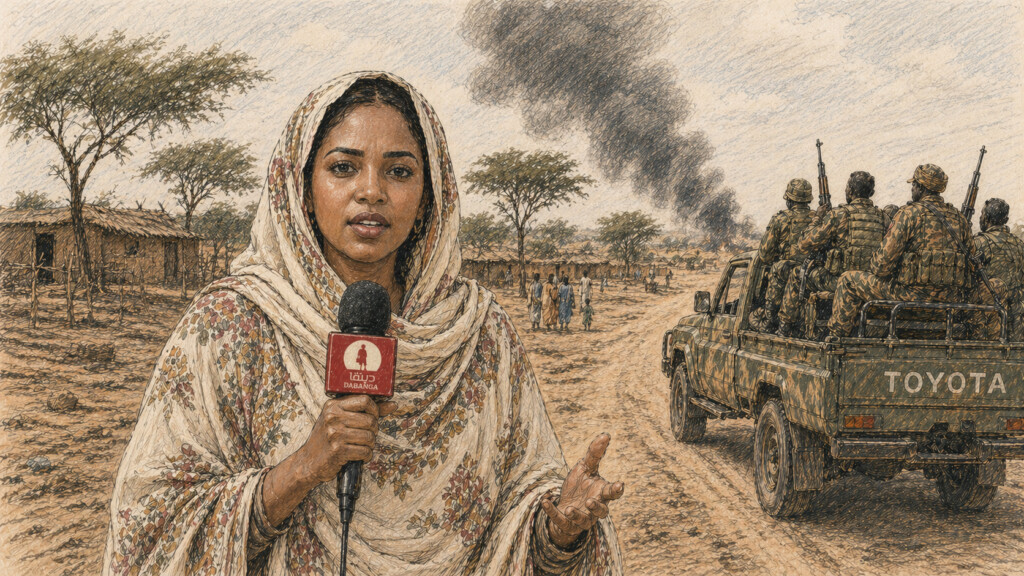
(AI-generated illustration: RD)
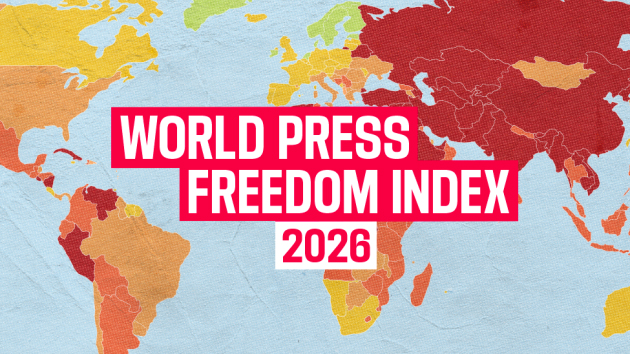
Sudanese media organisations have strongly condemned a directive* issued to all media outlets by Sudan’s Ministry of Culture, Information, Antiquities and Tourism, giving them a one-month deadline to obtain official operating licences or “face legal action”. The move the government says is aimed at “restoring professionalism and order to the sector”, comes as Sudan continues its relentless slide to the bottom of global press freedom rankings, currently rated 161 out of 180 countries on the 25th World Press Freedom Index by Reporters Without Borders published today.
In a statement issued on Wednesday, the press office of Sudan’s Ministry of Culture, Information, Antiquities and Tourism said all media outlets – including domestic and international broadcasters, radio stations and digital platforms operating in Sudan – must regularise their legal status by 1 June 2026.
The directive, which takes effect immediately, forms part of what the ministry described as its statutory responsibility “within the framework of the responsibilities of the National Press and Publications Council” to regulate the sector in coordination with other state bodies. Officials said the directive was intended to “enhance a free, professional and organised media environment” that complies with national laws and standards.
Under the new measures, media organisations have until June 1, 2026, to complete registration procedures and secure official permits issued through the relevant authorities, including the National Press and Publications Council. After that date, any outlet operating without authorisation will be considered in breach of the law and subject to unspecified legal penalties, the directive says.
The ministry indicated that enforcement would be carried out in coordination with the telecommunications and digital transformation authorities, suggesting potential technical as well as legal measures against non-compliant organisations.
While reiterating its commitment to freedom of expression, the government justified the directive “after monitoring a number of uncontrolled media practices that contributed to distorting the profession of journalism and media, and the deviation of professional and ethical principles by some parties”, contributing to a deterioration in the credibility of public discourse.
The announcement comes amid a broader effort by authorities in Sudan to assert tighter oversight of the media landscape during a period of political and economic instability. Critics are likely to view the measures as part of a continuing pattern of regulatory pressure on independent journalism, though the ministry insisted the policy was designed to balance press freedom with the protection of the public interest.
Media organisations have been urged to comply fully with the directive, which officials said would help build “a more responsible and professional media sector”.
Sudanese Journalists Syndicate
Reacting to the government directive amid Sudan’s steady three-year regression on world press freedom rankings, Mohamed Abdelaziz, Secretary General of the Sudanese Journalists Syndicate told Radio Dabanga that the data shown in the World Press Freedom Index is “only part of a more bloody and harsh local reality.”
‘34 journalists have died while performing their media duty since the outbreak of the war…’ — Mohamed Abdelaziz, Secretary General, Sudanese Journalists Syndicate
Abdelaziz confirms that 34 journalists have died while performing their media duty since the outbreak of the war. The syndicate has recorded more than 680 Serious violation against media workers. These violations included arbitrary detention and enforced disappearance, physical assaults and the constant threat of liquidation. Media organisations have been targeted, looted and destroyed in order to silence the voice of reason, he says.
In his statement to Radio Dabanga, Abdelaziz underlines that “these crimes will not lapse by statute of limitations and [we] will continue to monitor and document every hand that extends to intimidate journalists.”
The syndicate calls for an Immediate halt to targeting civilians and media professionals, urgent international protection for the remaining colleagues inside Sudan, release of all detainees, and acknowledgement of the victims.
‘Repressive approach’
Faisal El Baqer, General Coordinator of Human Rights Journalists (Jahr) condemns the government directive as indicative of “the Ministry of Information’s Repressive Approach”.
El Baquer told Radio Dabanga that “the decision makes it clear that the Ministry and the Authority are continuing the same approach aimed at suppressing freedom of the press and expression and controlling the media space.”
He asserts that this approach is similar to the practices of the now deposed Al-Bashir regime, “which lasted for thirty years and did not succeed in suppressing the truth”.

The current minister continues the plan to crack down on the press and journalists via media warfare and disinformation, he says. The current war is not only on the ground, but also digital cyberspace. “This war includes propaganda speech, verbal violence, and disinformation practiced by state-owned or pro-power institutions>‘ asserting that “the truth will remain bright and reach the people”.
El Baquer underscores that Jahr will continue exercising its natural right and with the slogan “Resistance Press”, calls for continued resistance to this “Tyranny” And all practices of suppression of the press and expression.
‘The Ministry of Information originated from a coup, became a ministry of war, and a trumpet of war, which makes it illegitimate…’ — Faisal El Baqer, General Coordinator of Human Rights Journalists (Jahr)
He underscored their pledge to resist every behavior, procedure, decision, and law that works to achieve what he called “media darkness” and press freedom suppression, saying that Jahr will not back down from their line of protection of journalists, freedom of the press, and the search for and dissemination of the truth.
In conclusion, El Baquer questions the said Ministry of Information, that “originated from a coup, became a ministry of war, and a trumpet of war, which makes it illegitimate”, but expresses confidence that “the Sudanese journalistic movement has a rich experience in confronting injustice and tyranny”.
* Press Circular
Issued by: Ministry of Culture, Information, Antiquities and Tourism
Subject: Completing the Legal Permit Procedures for Media Organizations to Practice Work
Based on the legal competencies entrusted to the Ministry of Culture, Information, Antiquities and Tourism, in its capacity as the entity concerned with regulating the media sector, and in coordination with the relevant government agencies, and in order to promote a free, professional and organized media environment that adheres to national standards and the laws in force;
The Ministry calls on all media platforms and satellite and radio channels, local and international, operating inside the country, to comply with the official permits issued by them, in accordance with the legislation and regulations regulating the media sector, within the framework of the responsibilities of the National Press and Publications Council.
The Ministry confirms that a one-month grace period has been granted, starting from the date of issuance of this circular (Wednesday, April 29, 2026), and ending on Monday, June 1, 2026, to all institutions and media entities, to complete the legal ratification procedures.
The Ministry notes that upon the expiration of this period, any media organization that does not hold permits will be considered a violation of the provisions of the laws in force, and the necessary legal measures will be taken against it, in coordination with the competent authorities, and in cooperation with the Ministry of Communications and Digital Transformation and other concerned government agencies, in accordance with the approved legal frameworks.
In this context, the Ministry confirms that this measure comes within the framework of its legal and regulatory responsibility, after monitoring a number of uncontrolled media practices that contributed to distorting the profession of journalism and media, and the deviation of professional and ethical principles by some parties.
The Ministry also stresses its unwavering commitment to supporting freedom of information and expression, and ensuring its exercise within the framework of the law, in order to ensure the protection of the public interest, safeguard professional and ethical values, and enhance the credibility of media discourse.
The Ministry calls on everyone to cooperate and adhere to the provisions of this circular, in order to contribute to the development of a professional and responsible media sector.
Press Office
Ministry of Culture, Information, Antiquities and Tourism
Issued on: Wednesday, April 29, 2026
 and then