





Sudan declared ‘cholera free’ amid rise in dengue, malaria, measles
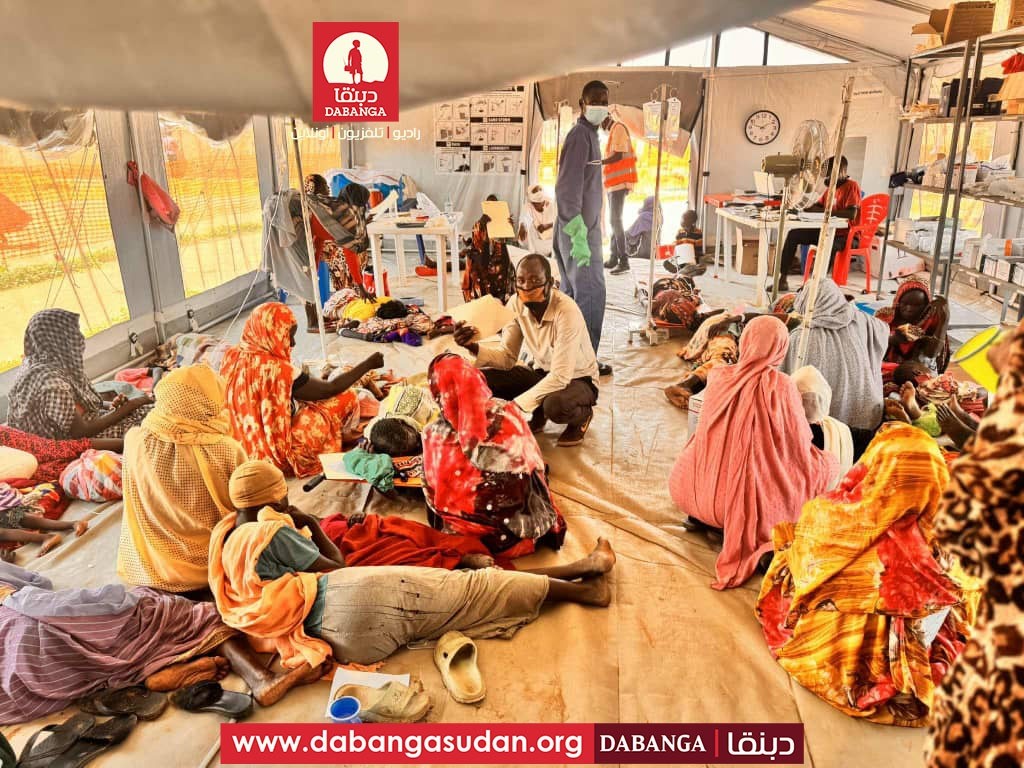
Cholera patients in Tawila, North Darfur (Photo: Radio Dabanga)
Sudan’s Federal Ministry of Health has declared the country free of the cholera epidemic, confirming that since January 14, no case of infection has been recorded in any state, according to scientific data and international health regulations, the Ministry reports via the official Sudan News Agency (SUNA).
Sudan declared the outbreak of the epidemic in August 2024 “amid extremely complex circumstances,” and the ministry considers the containment of the disease “a major medical achievement in light of the existing challenges”.
The Ministry stressed that “the national campaign included the distribution of more than 20 million vaccination doses, the implementation of more than 100 medical campaigns, in addition to the holding of 130 meetings of the Central Health Emergency Room to follow up on the response”.
Dengue, malaria, measles
Reports presented at the meeting of the Emergency Operations Centre in Khartoum on Tuesday confirmed an increase in the rates of dengue fever, malaria, and measles.
In its meeting in Khartoum, in the presence of the Federal Minister of Health, Prof. Haitham Mohamed Ibrahim, the centre confirmed the high rate of dengue fever in the states of Khartoum, El Gezira, White Nile, River Nile, and Northern State, pointing to a significant increase compared to the same date last year, where 6976 infections were recorded cumulatively, including 5 deaths.
The surveillance and information report indicated a rise in malaria cases, especially in the states of Khartoum, River Nile, White Nile, and El Gezira.
The report also noted that the island state is still recording cases of hepatitis E, despite a decrease compared to last week.
The report warned that the locality of Tawila in North Darfur, and the localities of El Duwaim and Dalti in White Nile state, record the highest rates of measles infection.
Interventions and Response
The response report pointed to the most prominent interventions to confront dengue fever in the north, including activating the emergency room headed by the state and local governments, financing the response plan and sending supplies. The report also pointed to the interventions to confront hepatitis C in the island, and the activation of the technical committee to follow up on meningitis cases in the affected states, announcing that the number of displaced people reached 58,158 families and 227,519 individuals, in addition to the interventions implemented in the host states.
The supply report acknowledged that there was a disparity in the availability of epidemic, cholera and dengue medicines and consumables in the states, as well as malaria drugs.
The report of the supervisory visit to the locality of Meroe recommended training of therapists on the treatment protocol for dengue fever, increasing the number of health workers, and providing additional supplies and mobility.
Decisions
The Minister of Health, Prof. Haitham Mohamed Ibrahim, directed to intensify work to confront the measles epidemic and arrange for control campaigns, stressing the need to raise the level of preventive work for hepatitis E in the state of El Gezira, and to address the problem of malaria drugs by identifying the available and lacking, especially as the autumn season is just around the corner.
The minister announced the approval of the budgets for the dengue fever campaigns in the north and Khartoum, calling on the states and localities to play a pivotal role in implementation.
Cholera – key facts
- Cholera is an acute diarrhoeal disease that can kill within hours if left untreated.
- Cholera is a disease of poverty affecting people with inadequate access to safe water and basic sanitation.
- Conflict, unplanned urbanisation and climate change all increase the risk of cholera.
- Researchers have estimated that each year there are 1.3 to 4.0 million cases of cholera, and 21 000 to 143 000 deaths worldwide due to cholera.
- Most of those infected have no or mild symptoms and can be successfully treated with oral rehydration solution.
- Severe cases need rapid treatment with intravenous fluids and antibiotics.
- Provision of safe water and basic sanitation, and hygiene practices is critical to prevent and control the transmission of cholera and other waterborne diseases.
- Oral cholera vaccines should be used in conjunction with improvements in water and sanitation to control cholera outbreaks and for prevention in areas known to be high risk for cholera.
- A global strategy on cholera control, Ending cholera: a global roadmap to 2030, with a target to reduce cholera deaths by 90% was launched in 2017.
Source: World Health Organization



 and then