




Sudanese women turn to enterprise after war and displacement
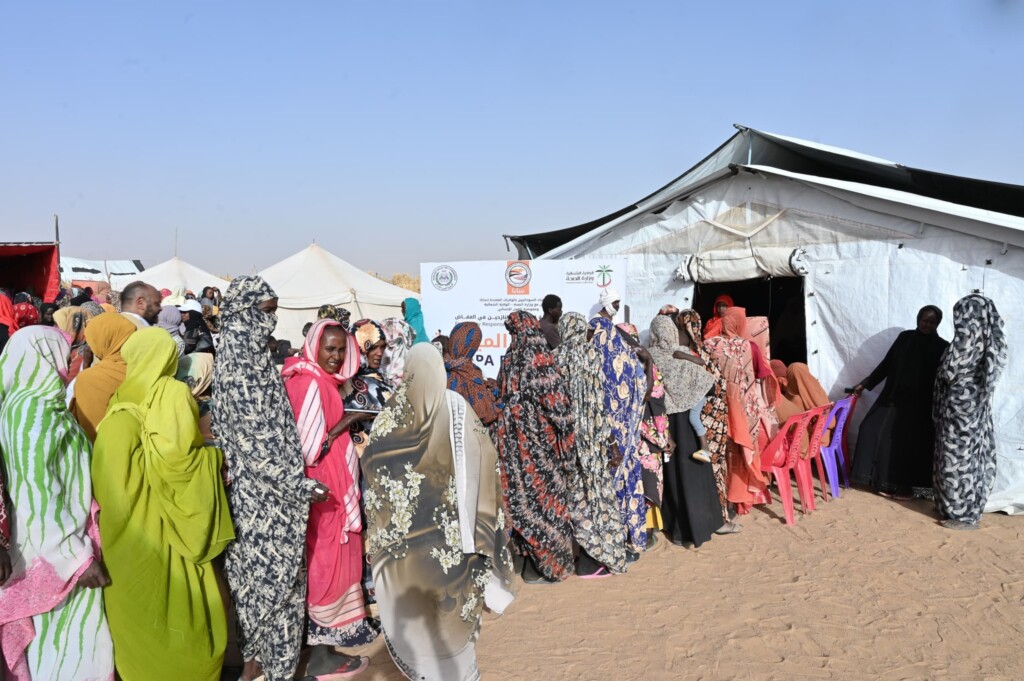
Displaced people at El Afad shelter in Northern State (File photo: Saba)
Report by Radio Al-Burair for Sudan Media Forum
In a country worn down by nearly three years of war, mass displacement and economic collapse, many Sudanese women are forging new roles as entrepreneurs and community leaders.
Since fighting erupted between the Sudanese Armed Forces and the Rapid Support Forces, thousands of families have lost their incomes and been forced to flee the capital, Khartoum, and other conflict zones. Many have sought safety in cities such as Atbara and Port Sudan, as well as in northern and eastern states.
For many women, displacement has brought unprecedented responsibility. With households fractured and traditional income sources cut off, family stability has increasingly depended on their ability to generate earnings.
Community activists say a notable proportion of small businesses that have emerged in host cities over the past two years are run by women. These ventures range from clothing and food sales to cosmetics, domestic services, and online trading via social media platforms.
Starting again from nothing
In a residential district of Atbara, one young woman — displaced with her family after losing both their home and income — has built a small but growing enterprise from scratch.
Arriving with limited savings and modest sales experience, she began by marketing products from her home, using social media groups to attract customers. According to neighbours, she handled orders herself and occasionally delivered goods in person, choosing to reinvest profits rather than spend them.
Within months, her operation expanded. She later rented a small shop in the city’s local market. Today, the premises are a recognised destination for regular customers. She works with suppliers from outside the city and state and stocks seasonal goods tailored to market demand.
Her presence in the labour market, observers say, represents more than short-term adaptation. It reflects a broader economic shift led by women displaced by conflict who have chosen to reshape their circumstances.
Beyond income generation
The transformation is not limited to commerce. Sudanese women have also taken prominent roles in voluntary and humanitarian work, leading initiatives to distribute food, organise shelter centres and provide psychological support for children affected by the conflict.
In many areas, women have stood at the forefront of informal community support networks, helping to manage local crisis responses.
Social specialists argue that these developments are reshaping traditional perceptions of women’s roles. Rather than being seen solely as victims of events, women are increasingly viewed as active partners in crisis management and recovery efforts.
Ongoing challenges
Despite these advances, significant obstacles remain. Women entrepreneurs continue to face limited access to finance, disrupted supply chains and high transport costs. The absence of consistent institutional support programmes has compounded the difficulties.
Meanwhile, fragile security and economic conditions mean the sustainability of many small enterprises remains tied to broader national stability.
Nevertheless, observers suggest the war has triggered a lasting shift in women’s self-perception and confidence in their ability to achieve financial independence and make decisions.
Redefining recovery
As discussions turn to Sudan’s eventual reconstruction, women’s participation in economic and social life is increasingly seen as central to any sustainable recovery plan.
Stories such as that of the young entrepreneur in Atbara point to a wider structural change within Sudanese society. While the scale of loss caused by the conflict cannot be overstated, the resilience and initiative demonstrated by many women underscore their growing importance in the country’s political and economic rebuilding.
The Sudan Media Forum and its member organisations publish this report, prepared by Radio Al-Banat, to highlight the determination shown by Sudanese women amid the ongoing conflict. It concludes that many have discovered previously untapped capabilities — and, through their perseverance, established themselves as key actors in Sudan’s recovery and reconstruction.
Find Sudan Media Forum on Facebook and on X (formerly Twitter): #StandWithSudan #SilenceKills #الصمت_يقتل #NoTimeToWasteForSudan #الوضع_في_السودان_لايحتمل_التأجيل #SudanMediaForum

 and then