




Disabled people in Darfur displacement camps face ‘double suffering’
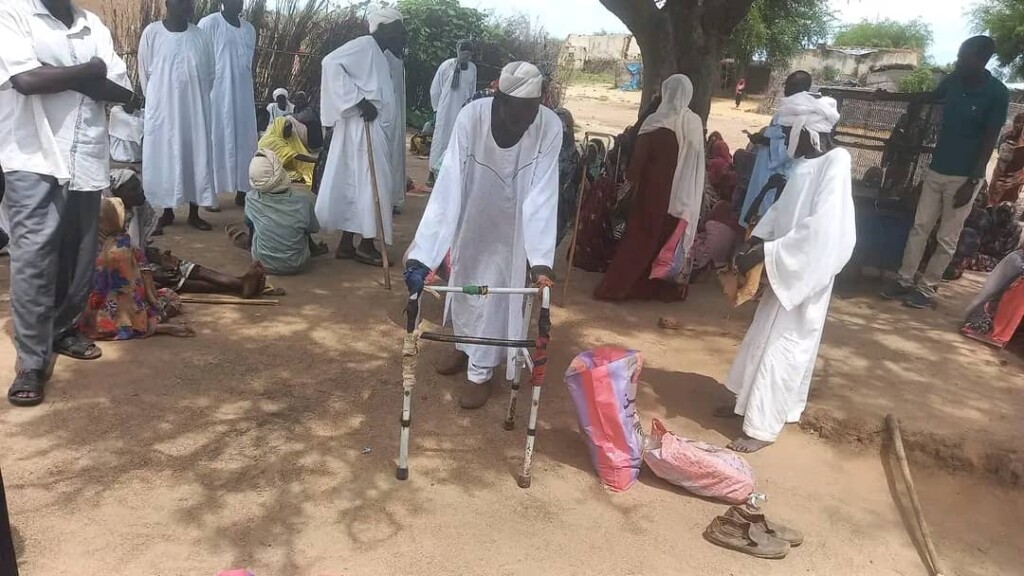
A disabled Sudanese refugee (File photo)
Report by Sudan Tribune for Sudan Media Forum
Thousands of disabled Sudanese people living in displacement camps in Darfur are facing what aid workers describe as a “second chapter” of hardship, as conflict, inaccessible terrain and a lack of specialist support deepen their isolation.
Nearly three years into the war between the Sudanese Armed Forces and the Rapid Support Forces, many civilians who fled bombardment have found themselves in camps ill-equipped to meet the needs of people with disabilities. In some cases, individuals were forced to abandon wheelchairs and assistive devices during their escape.
In sprawling camps such as those in Tawila, North Darfur, sandy and uneven ground makes basic movement difficult. For those reliant on wheelchairs or crutches, accessing water points or food distribution centres can become an insurmountable challenge.
International reports warn that disabled people are among the most marginalised groups within the humanitarian response, which remains overstretched amid the scale of the crisis.
Patchy figures, limited oversight
Field estimates inside Sudan suggest that people with disabilities may account for as much as 22% of displaced households in camps around Tawila. However, comprehensive official data is lacking.
In Ardamata camp in eastern Chad, 846 disabled people have been registered — including 400 men, 256 women and the remainder children. Aid workers caution that these figures almost certainly understate the true scale of need, as displacement continues and no unified registration system has been established by international agencies.
Humanitarian organisations say the absence of reliable data has serious consequences. Without accurate records, thousands risk being excluded from targeted assistance programmes designed to address specific mobility, health and educational needs.
Risk of permanent harm
Medical professionals warn that the lack of specialist follow-up care is turning war-related injuries and temporary impairments into permanent disabilities. Limited access to rehabilitation services and assistive equipment compounds the problem.
Children with disabilities are also at risk of losing access to education. Makeshift “tent schools” in camps frequently lack adapted learning materials, Braille resources or teachers trained in sign language, entrenching exclusion from an early age.
Daily challenges
Camp residents describe daily life as a continual struggle. Sand tracks and uneven pathways hinder movement, while rigid food and clothing distribution systems often fail to account for those unable to queue for long periods.
Some disabled people report surrendering part of their already limited food rations in exchange for help transporting supplies to their shelters. Others face a stark choice between enduring lengthy queues or going without.
Funding gap and limited expertise
International and local organisations acknowledge a significant shortfall in support. Available assistive devices reportedly cover less than 10% of registered cases. The deficit is attributed to acute funding shortages, a lack of specialists trained in disability inclusion, and logistical challenges in supplying durable medical equipment suited to Darfur’s harsh environment.
Activists say that “disability inclusion” often remains a line item in policy documents rather than an operational reality on the ground.
Grassroots initiatives
Despite limited institutional backing, local initiatives have emerged. Volunteers with disabilities have formed mobile teams within camps to assist those with more severe mobility challenges. Some disabled women are also attempting to generate income through small-scale handicrafts, seeking to demonstrate that disability stems as much from inaccessible environments as from physical impairment.
Campaigners argue that continued neglect of disability issues in humanitarian planning represents a moral test for the international community. They contend that the credibility of relief efforts depends on their ability to ensure accessibility and inclusion for the most vulnerable.
The Sudan Media Forum and its member organisations publish this report, prepared by Sudan Tribune, to highlight the particular hardships faced by disabled people amid Sudan’s ongoing conflict. It warns that without adequate care and accurate data collection, even minor impairments risk becoming lifelong disabilities in camps already strained by years of war.
Find Sudan Media Forum on Facebook and on X (formerly Twitter): #StandWithSudan #SilenceKills #الصمت_يقتل #NoTimeToWasteForSudan #الوضع_في_السودان_لايحتمل_التأجيل #SudanMediaForum
 and then