





Sudan govt ‘might reconsider dealings with countries organising and sponsoring Berlin conference’

The Brandenburg Gate in Berlin, Germany (File proto: Thomas Wolf, www.foto-tw.de CC 3.0)
The Sudanese government in Khartoum has rejected the convening of the conference scheduled to begin in the German capital of Berlin on Wednesday, without its participation, approval, and consultation on all arrangements, and submitted an official memorandum to that effect to the German Foreign Ministry on Friday, emphasising that “the tutelage approach reflected in the Berlin Conference might prompt Sudan to reconsider its dealings with the countries organising and sponsoring the conference, based on the principle of reciprocity…”
On the third anniversary of the outbreak of the current conflict on April 15, the German government will host an international conference on Sudan together with France, the United Kingdom, the United States, the European Union (EU), and the African Union (AU). Foreign ministers from key countries as well as representatives of the United Nations, humanitarian organisations, and Sudanese civil society are expected to attend. However, the Khartoum government has rejects the conference, with Malik Agar, the Vice Chairman of the Sovereignty Council, said that the Berlin conference “is against the wishes and aspirations of the Sudanese people”, noting that “the problems and solutions for Sudan are determined by the Sudanese themselves only”.
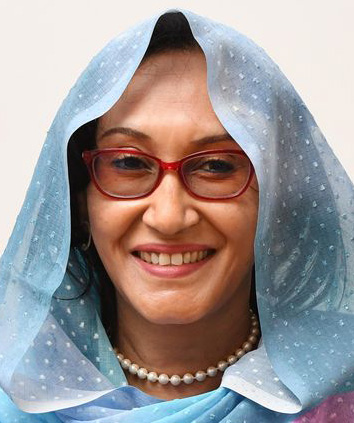
After handing over the memorandum to the German Foreign Ministry, Sudan’s ambassador to Berlin, Ilham Ibrahim Mohamed Ahmed, said that “any attempt to discuss or report on Sudan without involving its government represents a flagrant violation of international law and the UN Charter, and an infringement on state sovereignty and established diplomatic norms. She emphasised that any attempt to discuss or report on Sudan without involving its government represents a flagrant violation of international law and the UN Charter, and an infringement on state sovereignty and established diplomatic norms.”
The ambassador stressed her rejection of excluding the Sudanese government, “which enjoys the support of the vast majority of the Sudanese people”, from the conference under the pretext of equating the nation-state and its legitimate institutions with what she termed a “terrorist militia”. She warned that this would undermine the nation-state, encourage the emergence of parallel entities, render the conference deliberations meaningless, and would not lead to peace or stability.
She also expressed Sudan’s concern regarding the invitation of what she called countries directly or indirectly involved in the war, stressing that this undermines the credibility of the conference and encourages the continuation of interventions that fuel the war and undermine security and stability in Sudan and the region.
The Ambassador reiterated Sudan’s commitment to a just and sustainable peaceful solution in accordance with the roadmap presented by the Chairman of the Transitional Sovereignty Council in March 2025, and the subsequent peace initiative presented by the Prime Minister to the Security Council in December 2025, as a practical framework for achieving peace and stability, while welcoming any regional and international efforts that support and complement it, and expressing readiness to engage positively with any serious initiative that respects Sudan’s sovereignty, unity and territorial integrity.
The ambassador concluded by emphasising that the tutelage approach reflected in the Berlin Conference might prompt Sudan to reconsider its dealings with the countries organising and sponsoring the conference, based on the principle of reciprocity.


 and then