




Bahri Observatory for Human Rights: Secret graves, 4k+ detained, disappeared after 1,000 days of Sudan war
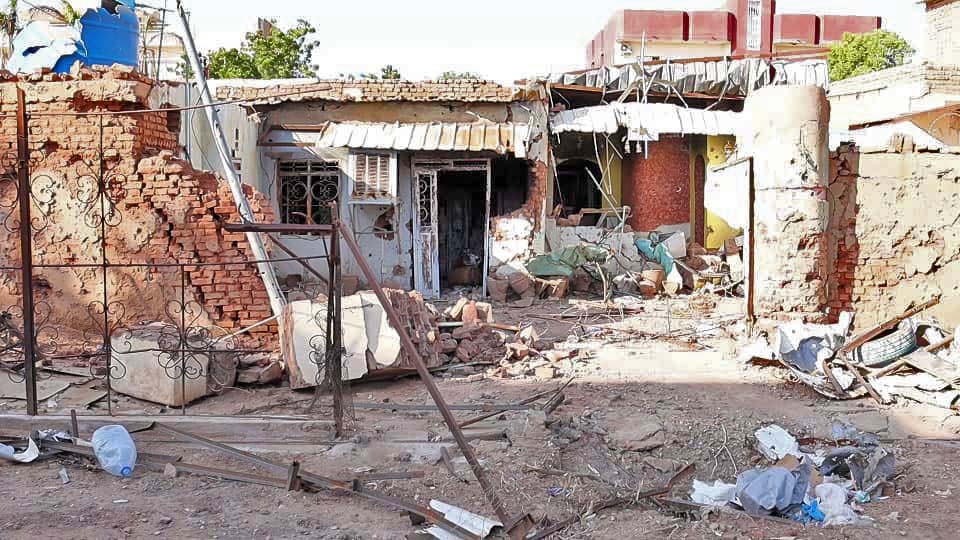
Homes and shops in Burri in Khartoum destroyed by bombing (File photo: Saeed Abdelmajeed)
The Bahri Observatory for Human Rights has revealed testimonies indicating the existence of secret graves inside the weapons camp in El Kadro and the Jabal El Hamir area of Hattab, for victims believed to have died under torture.
The Observatory published a report on the occasion of the 1,000th anniversary of the outbreak of the war in Sudan, seen by Radio Dabanga. After the army entered the city of Bahri in January 2024, a new chapter of the tragedy was observed, represented by the documentation of some 3,000 detainees and detainees in Soba prison and Dar El Taibat without fair trials, as well as the issuance of nearly 500 judicial verdicts on charges of “cooperation,” which it said lacked the standards of justice.
The Observatory confirmed that more than 1,000 people are still among the disappeared and forcibly disappeared, most of them in the custody of the Rapid Support Forces, in the absence of any official information about their fate, in addition to the presence of bodies still buried inside the courtyards of houses and in public squares in the neighbourhoods of El Droshab and Samrab, awaiting burial worthy of human dignity.
Neighbourhoods turned into battlefields
The Observatory said that since April 15, 2023, the neighborhoods of Hillat Khojali, El Baburat, Shambat, El Mazad, El Shabiya, Halfaya, El Samrab, Kafouri, El Ezba, Darduk and Nabta have turned into open battlefields and forced displacement, after using civilian homes as military barracks, and exposing infrastructure and basic services to widespread destruction, which led to an almost complete collapse in livelihoods and safety.
Health targeting and epidemic outbreaks
It also documented the targeting of health facilities, including the burning of El Baraha Hospital, the storming of El Darushab Hospital and the death of a health worker in the line of duty, as well as the looting of pharmacies and medicine centers, the destruction of a marine water plant, and the continuation of prolonged power cuts, which exacerbated the health and living crisis in the city.
In light of this collapse, epidemics have spread, with 300 deaths recorded as a result of dengue and cholera, in the context of a health blockade and severe shortage of medical services, reflecting a serious failure to protect civilians and guarantee their right to health.
The Observatory pointed out that the military operations affected vital facilities, including the Jili refinery, the Shambat and Halfaya bridges, which caused severe damage to the arteries of life and the economy, and deepened the suffering of the city’s residents.
The report stressed that what has happened and is taking place in the city of Bahri after 1,000 days of war cannot be considered collateral damage to the conflict but rather represents a recurring pattern of grave violations that require accountability and impunity.
He reiterated his demand for the disclosure of secret grave sites, the release of those arbitrarily detained or subjected to fair trials, the disclosure of the fate of the forcibly disappeared, the guarantee of the dignity of the victims, living and dead, and the accountability of all those responsible for these violations in accordance with international standards. The Observatory expressed its commitment to continue documentation and advocacy, believing that every testimony collected represents a step towards accountability, and that the city of Bahri, with its suffering, will not be just a passing page in the record of the war, but an ongoing issue that requires fairness, justice and the restoration of rights.

 and then