





US ‘deeply concerned’ by El Burhan call for military solutions to Sudan crisis
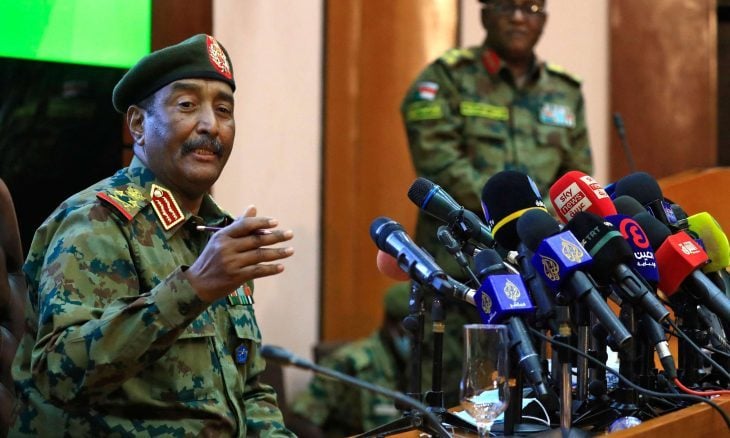
Lt Gen Abdelfattah El Burhan (File photo: SUNA)
The USA has expressed “deep concern” over the rhetoric issued by the leadership of the Sudanese Armed Forces, which has calls for military solutions to the crisis and imposes preconditions for any ceasefire. The US State Department’s Deputy Spokesperson, Tommy Pigott, posted on X on Tuesday, in direct response from Washington to the speech delivered by the Chairman of the Sovereignty Council and Commander of the Army, Lt Gen El Burhan, in Türkiye.
“As tens of millions of Sudanese are suffer, Sudan’s military leaders should be pursuing a path to peace, not the continuation of conflict.”
Earlier, El Burhan announced that “Sudan will not accept any truce or ceasefire” as long as the Rapid Support Forces remain “on any inch of the homeland’s territory”, stressing that “restoring security and asserting state sovereignty are top priorities”.
Speaking during a meeting with Sudanese figures and civil society organisations at the Sudanese Embassy in the Turkish capital, Ankara, on Sunday, he said: “We are not advocates of war; however, ending the rebellion is a fundamental condition for any political solution,” explaining that “a military solution does not necessarily mean the continuation of fighting, but may end in surrender”. He also expressed confidence in “achieving victory with the support of the popular will and its rallying around the armed forces”.
The US State Department spokesperson reiterated his country’s concern over the discourse coming from the leadership of the Sudanese Armed Forces, which calls for military solutions to the crisis and sets preconditions for any ceasefire. He affirmed that achieving lasting and stable peace requires arrangements reached through negotiation that immediately end violence, facilitate sustained access for humanitarian assistance, and establish a clear path towards a permanent ceasefire and the launch of a civilian dialogue.
Dr Suleiman Baldo, Executive Director of the Sudan Transparency and Policy Tracker, commented on the statements by the US State Department spokesperson, saying: “This is the second step following the visit by a delegation of UN relief agencies to El Fasher .”
He told Radio Dabanga that this post should be read alongside the statement by the US State Department spokesperson regarding Washington’s pressure on the United Nations to rationalise the financial management of major humanitarian operations. According to Baldo, this represents a prelude to funding upcoming operations in Rapid Support Forces-controlled areas unilaterally, should Port Sudan persist in its refusal of a humanitarian truce.



 and then