




With intensifying external pressures and escalating tensions on the ground, Sudan’s El Burhan is seeking a way out in Türkiye
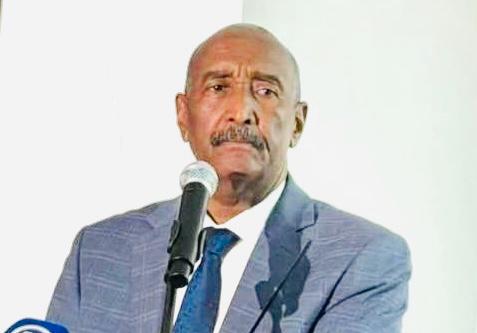
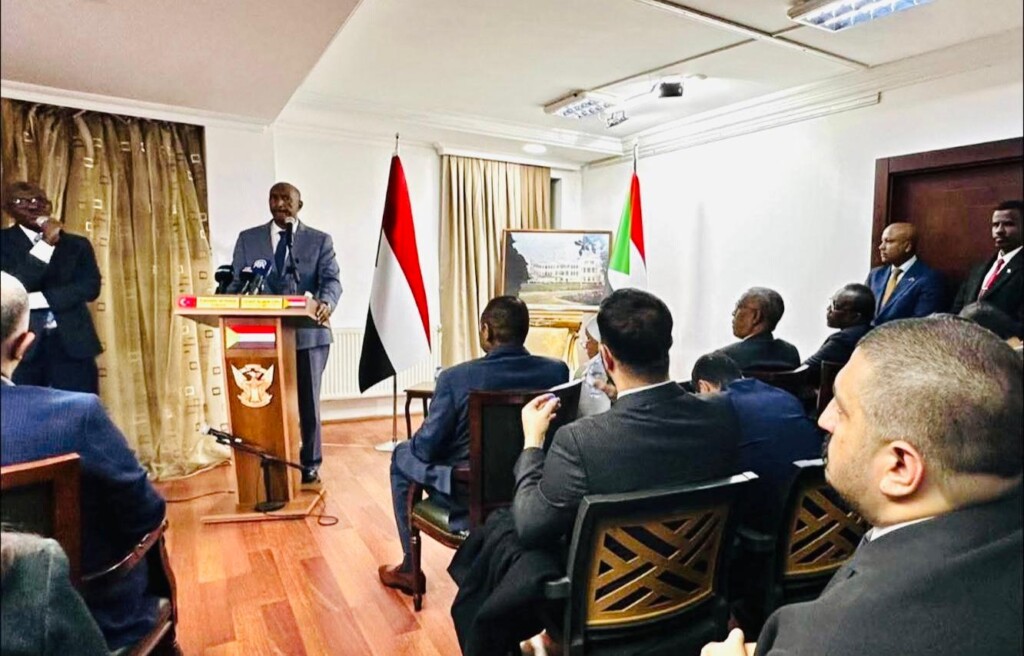
Al-Burhan, during a meeting with Sudanese and Turkish figures at the Sudanese Embassy in Ankara on Saturday, December 27, 2025: (Phorto: Radio Dabanga)
Report by Suleiman Siri
Regional and international pressure is mounting to end the war in Sudan, amid an escalating internal crisis of economic collapse and deteriorating security and military conditions, with the Sudanese army retreating on the battlefronts in Kordofan after the Rapid Support Forces took control of large parts of Darfur. In light of these circumstances, the Chairman of the Transitional Sovereignty Council, Lieutenant General Abdel Fattah El Burhan, is visiting the Turkish capital, Ankara, these days at the official invitation of President Recep Tayyip Erdoğan. This may be his third visit since the outbreak of the war on April 15, 2023.
During the meeting, Burhan held official talks with his counterpart, Erdoğan, at the presidential palace. They discussed a number of complex and sensitive issues related to the latest developments in Sudan and efforts to end the war, as well as political, military, and economic cooperation between the two countries. They also addressed regional and international issues of mutual interest, particularly the situations in the Middle East and the Horn of Africa and their implications for Sudan. Türkiye reaffirmed its unwavering support for the unity, sovereignty, and territorial integrity of Sudan.
This visit came in the wake of similar tours by Burhan to both Riyadh and Cairo, amid attempts to persuade him of the Quartet Mechanism initiative, which includes, in addition to the United States, Saudi Arabia, Egypt and the UAE, and to complete those efforts by involving Türkiye and Qatar, according to previous statements by President Trump’s advisor for Africa, Massad Boulos.
Although the visit was official in nature, it was not without intensive meetings that Burhan held with leaders of the former regime from the Islamic movement, in addition to the fact that the visit was of a social and personal nature related to checking on his family residing in Ankara, which led to the extension of the visit period to more than five days, making it the longest visit of a Sudanese president outside the country.
The strategic cooperation triangle:
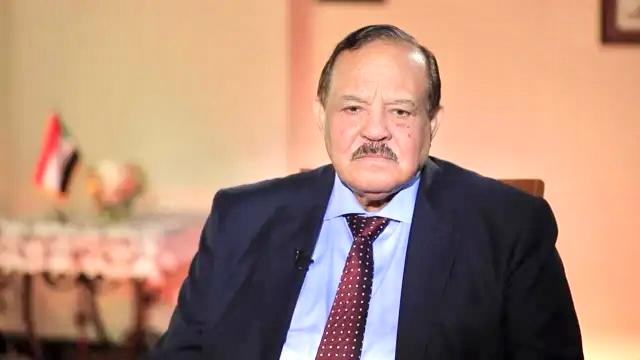
Former Foreign Minister Ambassador Dr. Ali Youssef described the visit of the Chairman of the Transitional Sovereignty Council, Abdel Fattah El Burhan, as very important and having multiple dimensions related to the political, military, economic and commercial spheres.
In an interview with Radio Dabanga, Youssef says that relations with Turkey are of strategic importance to Sudan at this stage, noting that it is an important country with its own weight and is economically and commercially developed and plays major roles in what is happening in the Middle East and the African continent, in addition to being a member of NATO, and one of the countries that has had distinguished relations with Sudan throughout previous periods.
He adds that the visit comes as a continuation of understandings reached in previous meetings at the Cooperation Forum hosted by the Turkish capital, Ankara, a few months ago.
Ambassador Ali Youssef believes that the visit comes in the wake of major developments that have occurred during this period, the first of which relates to the formation of the Quartet Mechanism, then its statement on the situation in Sudan, and developments in Sudan’s position regarding this mechanism.
In the interview with Dabanga, he sees that Burhan’s visit to Türkiye comes in the wake of Saudi Crown Prince Mohammed bin Salman’s visit to the United States, and then Burhan’s visit to both Saudi Arabia and Egypt. He continued, saying: “Now the triangle of strategic cooperation between Sudan and these countries is completed with Burhan’s visit to Türkiye, and what will result from it, in terms of important agreements… This is my assessment.”
Former Foreign Minister Ambassador Dr. Ali Youssef points out that the composition of the delegation indicates that this visit is important and is related to ongoing security, military, and political issues.
El Burhan was accompanied on this visit by the Undersecretary of the Ministry of Foreign Affairs, Muawiya Othman Khalid, the Director of the General Intelligence Service, Lieutenant General Ahmed Ibrahim Mufaddal, and the Director General of the Defence Industries System, Lieutenant General Mirghani Idris.
Ambassador Ali Youssef affirms that there are great efforts from all parties to end the war and reach a peace agreement in Sudan, noting that Türkiye will be one of the countries striving to achieve this goal.
The ‘predicament’ of proof:
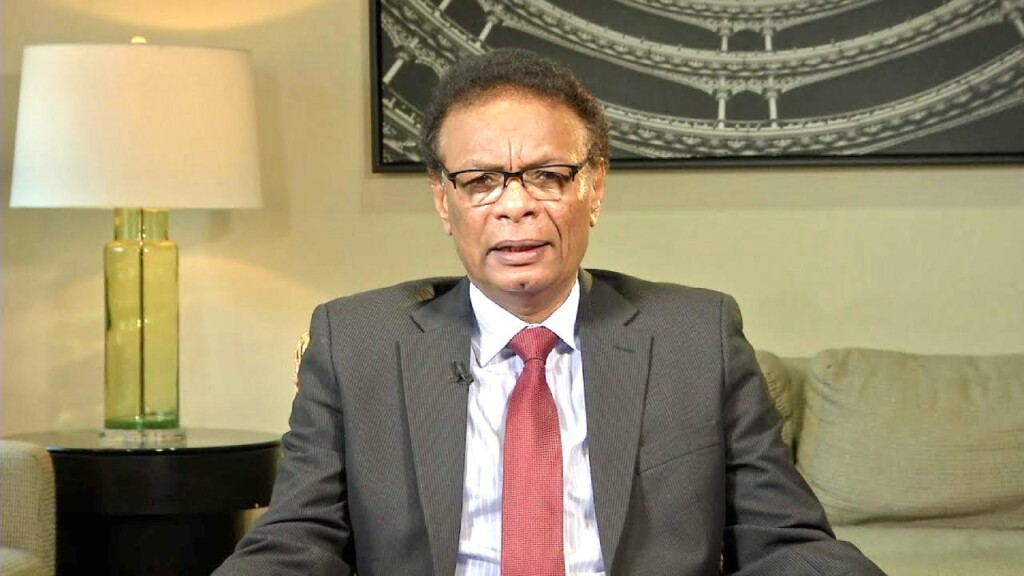
On the contrary, thinker, political researcher, and academic Dr. El Nour Hamad believes that General Burhan has gotten himself into trouble since he tore up the constitutional document and staged a coup against the transitional period on October 25, 2021.
Hamad says in an interview with Radio Dabanga that Burhan has been buying time all this time, in an attempt to win the war and achieve a victory over the Rapid Support Forces.
He notes that the Sudanese army, led by Burhan, began attacking the Rapid Support Forces in the sports city south of Khartoum, but the Rapid Support Forces overpowered the army units and took control of their headquarters.
He asserts that the armed forces were subsequently unable to regain control except with extensive external support and by using chemical weapons, which are “internationally prohibited,” which enabled them to expel the Rapid Support Forces from Khartoum and the states of El Jazirah and Sennar.
Following that, as Dr. El Nur Hamad says, the Rapid Support Forces redeployed towards their social bases in western Sudan, where they began to take control of a number of cities successively, until the entire Darfur region came under their influence, with continued progress towards the Kordofan region, which is about to fall into their hands.
Accordingly, political analyst and academic researcher Dr. El Nour Hamad believes, in an interview with Dabanga, that the visit may be to seek military support and bring in more drones. He points out that there have been recent reports of a twinning agreement being signed between the ports of Port Sudan and Mersin, Türkiye, but he believes it is to cover up the search for military support.
He did not like what the Saudis were saying:
Political researcher and academic Dr. El Nour Hamad says that Burhan made three visits in the past two weeks, to Saudi Arabia, Egypt, and in the last two days he visited Türkiye.
It is believed that during his visit to the Saudis, he did not like what took place in the dialogue there, noting that after that he went to Egypt, which announced the activation of what it called the “Joint Defence Agreement,” stressing that it has no basis after it was violated during the government of former Prime Minister Mr. Sadiq El Mahdi.
The academic researcher concluded in his interview with Radio Dabanga that Burhan felt he needed to go to Turkey as well to look for what he described as a “predicament,” adding: “It is as if he is trying to circumvent the initiative of the Quartet Mechanism, which he said was clear in removing the military force from power and the economy and that the transitional period be managed by civilians.”
He reiterated that the Quartet, according to the sequence stipulated, would agree on a 3-month truce to allow for the delivery of humanitarian aid, which would then be extended to 9 months to begin thinking about the political process.
Hamad believes that Burhan is trying, “at the direction of Egypt,” to circumvent the Quartet Mechanism initiative, but he doubts that Egypt, despite its membership in the Quartet, is constantly working against it to undermine it. He continued, saying: “I believe that these three visits are an attempt to abort the Quartet initiative and also to send Kamil Idris to the United Nations in Washington and present a new initiative before the Security Council.”
He concluded that there is an Egyptian-Sudanese scenario and action being prepared, represented by Burhan, to abort the quartet, and he believes that they are trying to find political and military support from Turkey, and he says that this is what prompted Burhan to make these three visits in this short period.
Political analyst and academic researcher Dr. El Nour Hamad concludes his remarks by saying: “We are waiting to see what will happen and what the United States will do regarding the Quartet initiative, as it announced and as agreed upon by the other members, whether the United Arab Emirates, Egypt, and the Kingdom of Syria joined the channel.”
Searching for a document:
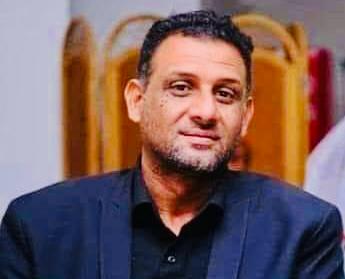
From the perspective of Professor of Political Sociology Dr. Abdul Nasser Ali El Faki, Burhan’s visit to Türkiye came after similar visits to Saudi Arabia and Egypt. He believes it is understood within the regional movement of the government, which he believes needs political support after the pressure exerted by the US government and the Quartet countries, on the necessity of reaching a ceasefire truce before the end of this year, and also in light of the weakening of the Sudanese army’s military field situation, after the fall of Babanusa and the siege of Kadugli by the Rapid Support Forces and “establishment”.
Abdel Nasser El Faki, in his interview with Radio Dabanga, does not rule out that the visit may have other objectives as well, namely, it may be a request for more political and military support and security cooperation, given Turkey’s regional and international power and influence, which could bring about a field shift in favour of the Sudanese army.
And perhaps manoeuvring in coordination, as El Faki believes, necessitates including Türkiye and Qatar within the Quartet Mechanism initiative.
A professor of political sociology told Radio Dabanga: “El Burhan also hopes that Türkiye will play supportive political roles by virtue of its membership in NATO as a strategic ally of the United States of America.”
He adds: “This is in addition to strengthening economic cooperation in all commercial, mining, and agricultural fields in general. The visit comes to emphasise the strategic alliance since the era of the Salvation regime (the previous regime) between Sudan and Türkiye with the army.”
Professor of Political Sociology Dr. Abdel Nasser El Faki believes that Türkiye wants to strengthen its military and commercial bases in East African and Horn of Africa countries, including the port of Suakin in eastern Sudan, within the framework of regional and international security in the Red Sea region.
After official and organisational procedures:
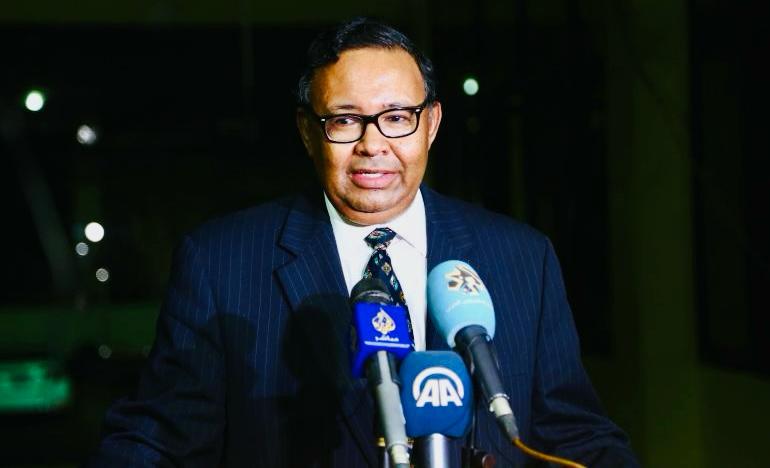
Ambassador and university media professor Dr. Haider Badawi, the former spokesman for the Sudanese Ministry of Foreign Affairs, believes that Burhan’s visit has an official and organisational dimension, and the latter is intended to meet with Islamist leaders from the remnants of the former regime residing in Türkiye.
Speaking to Radio Dabanga, Badawi said, “Given the intransigence of the de facto authorities, I don’t know if Turkey’s involvement will help in finding quick solutions, especially since there is Turkish military support for the Sudanese army.” He added, “The army wants to tip the scales in its favour on the battlefield, and Turkey is one of its sources for bolstering this objective.”
However, he believes that “the visit will certainly include discussions on bilateral economic and political dimensions, especially as Türkiye is looking for a foothold in the Red Sea.”
Ambassador Badawi addressed previous statements attributed to US mediator Massad Boulos regarding the possibility of involving Türkiye and Qatar in finding a peaceful solution to the war in Sudan, saying that such a solution might not hold. He cited the overt and covert support provided by Egypt, Türkiye, and Qatar to the Sudanese army, adding, “I expect the Rapid Support Forces will not yield to pressure, especially after the balance of power on the ground has shifted in their favour.”
He will not accept any truce with the Rapid Support Forces.
On Sunday, the head of the Sovereignty Council, Lieutenant General Abdel Fattah El Burhan, announced his “complete” confidence in the intentions of Saudi Arabia, Egypt, and the United States to resolve the crisis and achieve peace in Sudan.
Burhan called on US President Donald Trump to look at the Sudanese issue from the perspective of the Sudanese people and said that he is “capable of addressing the crisis, especially since he wants to be the man of peace this year.”
During his meeting with Sudanese and Turkish figures, civil society organisations, and media outlets at the Sudanese Embassy in the Turkish capital, Ankara, Burhan added that “Sudan will not accept any truce or ceasefire” as long as the Rapid Support Forces are “present in any part of the homeland,” stressing that “restoring security and extending state sovereignty are top priorities.”
He explained in that meeting that the initiative, which was presented by Prime Minister Dr. Kamil Idris at the United Nations, “represents the Sudanese government’s initiative to address the crisis, and has received the approval of the Sovereignty Council and the Council of Ministers, to be completed with practical measures through state institutions to put in place the necessary mechanisms for its adoption and promotion as a comprehensive national initiative.”
He added, “We are not warmongers, but ending the rebellion is a prerequisite for any political solution,” explaining that “a military solution does not necessarily mean continued fighting, but may end in surrender,” and expressing his confidence in “achieving victory with the support of the popular will and its rallying around the armed forces.”


 and then