




University of Khartoum counts cost of Sudan war as 71% of academics remain abroad, infrastructure destroyed
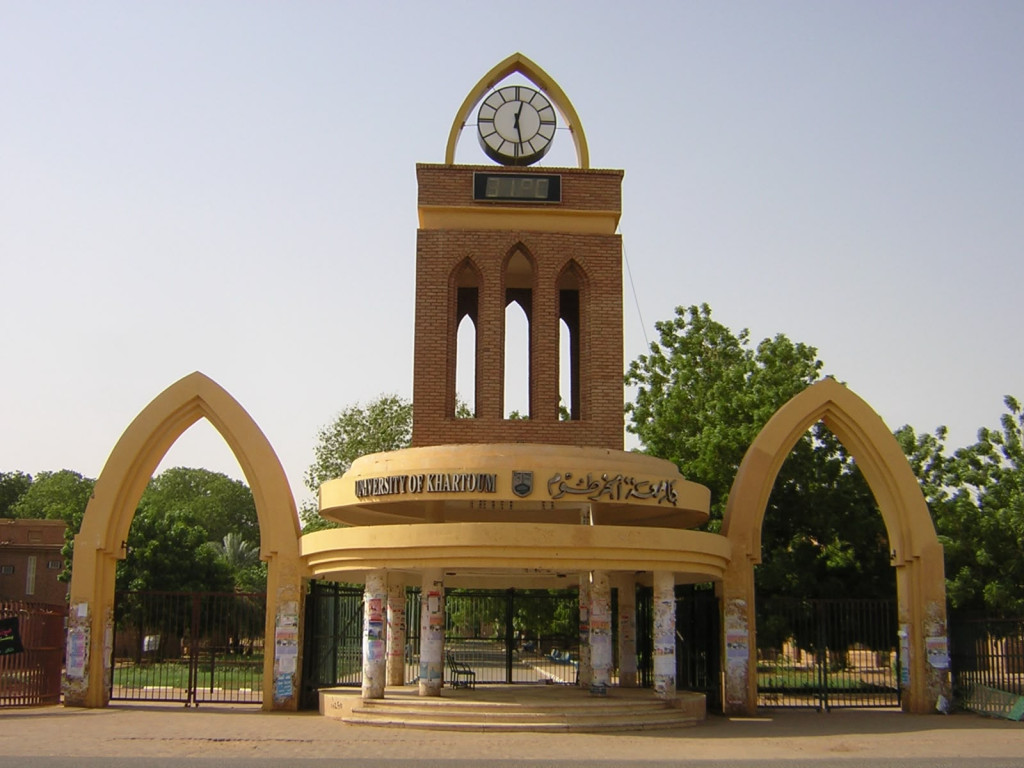
University of Khartoum (File photo)
More than seven in 10 academics at the University of Khartoum remain outside Sudan, while the war has destroyed or damaged much of the institution’s infrastructure, threatening plans for a full return to face-to-face teaching.
The University of Khartoum has lost more than half of its staff housing and the operational capacity of its lecture halls, laboratories, and hospitals, while more than 90% of its information and communications technology infrastructure has been damaged, according to a new report by the university’s Academic Staff Association.
The report, prepared by the association’s Committee to Ensure the Continuity of the Educational Process, says a full and immediate return to face-to-face teaching faces major obstacles, including the absence of large numbers of students and academics, fragile infrastructure, and the incomplete rehabilitation of university facilities.
The university administration asked academic staff to return and resume work by 1 August 2026, as part of plans to resume face-to-face teaching for all levels from September and close internal and external teaching and examination centres. However, a survey of 381 staff members found that 71% remained outside Sudan, while 29% were inside the country.
Other data shows that the average number of returning staff in departments at one faculty on the Central Campus was about 20%, while the average in the three best-performing departments at a faculty on the Shambat Campus was about 50%. Attendance at the Education Campus reached 68% by 15 August, compared with only 35% at the Faculty of Arts by 23 August.
A transitional plan for a full academic year
The association warns that an inflexible return could lead the university to lose more academic staff and proposes a transitional plan lasting a full academic year.
Among medical students, about 42% are outside Sudan. Only about 54% express confidence in their theoretical knowledge, while more than 75% have major gaps in clinical skills. More than 90% are concerned about clinical training because of shortages of teaching staff and supervisors, and the lack of readiness of medical facilities.
At the Faculty of Engineering, data covering 1,351 students shows that more than 50% are refugees or displaced outside Sudan, while 27% live inside Sudan but outside Khartoum State, meaning that 77.8% are not currently in Khartoum.
The data also shows that 74.7% of engineering students do not have accommodation in Khartoum after examinations end, while 57% say they are either completely unable to afford travel costs or can only afford them with extreme difficulty.
The report warns that closing external examination centres could prevent more than 80% of students from sitting their exams. Student associations have submitted at least 15 memorandums to faculty deans, as well as another to the university’s vice-chancellor, without receiving a response.
At the Faculty of Pharmacy, the proportion of admitted students who enrolled was close to 90% before the war, but fell to about 46% for the deferred 2023 intake and 41% for the deferred 2024 intake.
At the Faculty of Education, about 73% of students enrolled, despite the number admitted after the war across two intakes being roughly equivalent to the number previously admitted in a single intake.
Laboratories completely destroyed
Some university assets have sustained damage of up to about 40%, which could be addressed through maintenance and rehabilitation. Damage to other assets exceeds 40%, while some have been damaged so severely that complete replacement would be more appropriate.
The Faculty of Science has lost about 12 laboratories, including around seven that have been completely destroyed. The Faculty of Pharmacy and the main examination hall have also sustained severe damage, alongside near-total losses of vehicles, furniture, computers, servers, network systems, and digital assets.
Despite the destruction, the university continued online teaching during the war, held six examination sessions, and graduated about 8,000 students. A seventh session was later held in person at university premises in Khartoum, but saw a noticeable absence among students registered to sit the exams.
Before the war, the university’s Academic Council approved a system allowing 50% online teaching to address the accumulation of student cohorts.
Phased system for academics
As part of rehabilitation efforts, the estimated cost of repairing the Baghdad Hall at the Faculty of Medicine is about $130,000, while repairs to the Anis Hall are estimated at about 300m Sudanese pounds. Rehabilitation work has also been carried out at the Faculty of Engineering and several other faculties, with support from graduates and the private sector.
The committee proposes a phased participation system for academics over one academic year, divided into three categories: full return, hybrid participation, and remote online work.
Under the proposal, academics in the hybrid category would spend between four and six weeks on campus during each semester, while carrying out the remainder of their duties remotely. The university would cover one return air ticket per semester and provide living expenses during their stay.
The committee also recommends reopening external centres for a full academic year, adopting blended learning over the same period, and automatically renewing monthly contracts during the transitional year.
Those unable to return after the end of the academic year would be allowed to apply for statutory leave in accordance with university regulations.
The committee calls for a specialist academic committee on blended learning, as well as a higher committee for rebuilding the university, involving academics, students, and graduates.
It also calls for a reconstruction strategy aimed not simply at restoring the university to its pre-war condition, but rebuilding it according to a new vision.
The University of Khartoum, whose history dates back to 1902, had about 44,000 undergraduate and intermediate diploma students in 2025, as well as about 10,000 postgraduate students.
It employed 5,501 staff, of whom academics accounted for 36% and non-academic employees 64%.
The university includes 23 faculties, 12 research institutes, 10 research centres, four university hospitals, and five main campuses. Its housing facilities previously accommodated more than 20% of academic staff and senior employees, while it was linked to about 1,395 cooperating institutions through academic and research partnerships and agreements.
Note: This report has been translated from Arabic with the assistance of artificial intelligence tools, and subsequently reviewed and adapted by a human editor before publication.

 and then