





UN High Commissioner: ‘Darfur atrocities could spread to Kordofan’, ICC probes Sudan
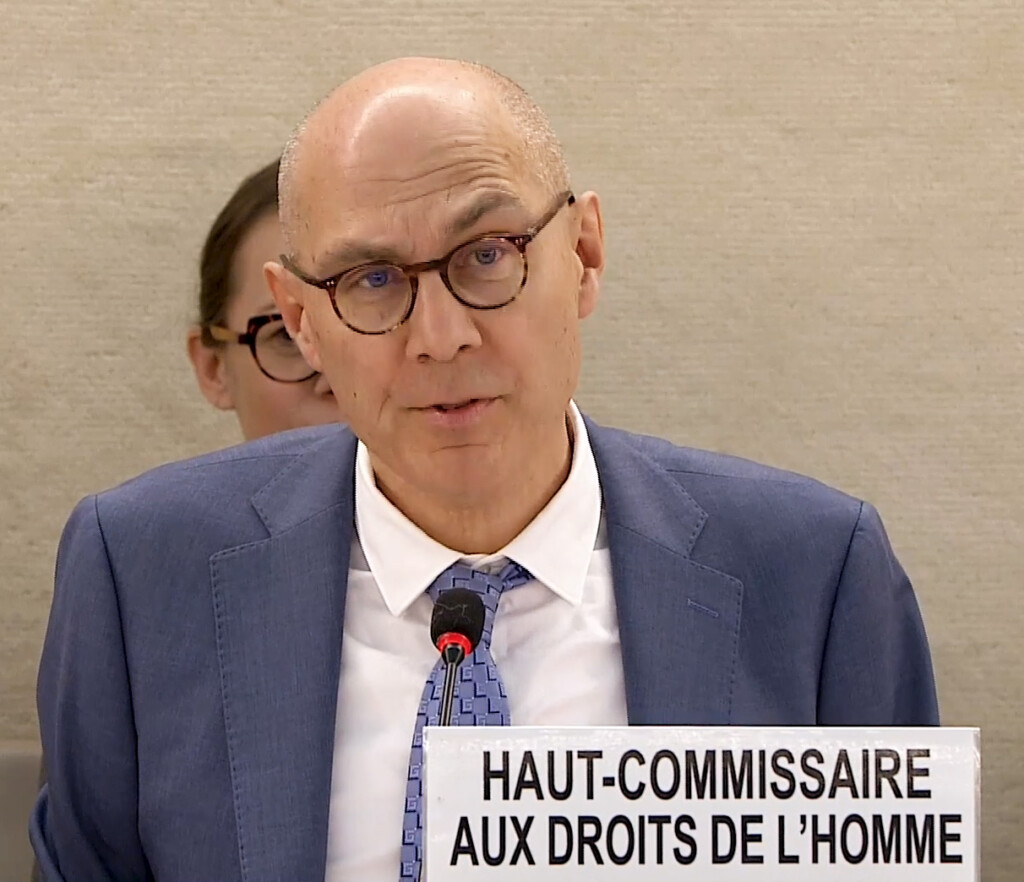
UN High Commissioner for Human Rights, Volker Türk, addresses 55th session of the Human Rights Council on the human rights situation in Sudan (File photo: UNHCHR)
The UN High Commissioner for Human Rights, Volker Türk, has warned that the atrocities committed during and after the paramilitary Rapid Support Forces’ (RSF) takeover of North Darfur’s capital of El Fasher could be repeated in Kordofan, as fighting moves closer to Kadugli amid severe food insecurity.
Speaking at a press conference in Kenya’s capital of Nairobi following the conclusion of his five-day visit across Sudan on Sunday, Türk said he had received “stories of large-scale summary executions carried out by RSF during their attack on El Fasher”, stressing that Sudanese civilians had suffered grave atrocities and that his team will “document and report on these violations and abuses, to pave the way for accountability.”
He urged both the RSF and the Sudanese Armed Forces (SAF) to immediately halt attacks on civilian objects, warning that strikes on vital infrastructure may amount to war crimes. He cited attacks on the Merowe Dam, which caused electricity cuts affecting hospitals and farms, and called for the protection of civilians, critical infrastructure and the opening of safe corridors for people fleeing conflict zones.
Türk said sexual violence was being used as a weapon of war in Sudan, with indications it was widespread and systematic. He also revealed that civilians in El Fasher were forced to survive on animal feed during an 18-month siege that led to famine. He voiced concern over restrictions on journalists, including smear campaigns that hinder their work. The High Commissioner said the war had derailed Sudan’s transition to civilian, democratic rule and called for an immediate end to the fighting.
“It is despicable that large sums of money are being spent on procuring increasingly advanced weaponry – funds that should be used to alleviate the suffering of the population,” he said, warning of the growing militarisation of Sudanese society.
RSF meeting with Türk
The RSF said a delegation led by its legal counsellor, Maulana Muhammad Mukhtar El Nour, met Türk in Nairobi. In a statement seen by Radio Dabanga, the RSF described the crimes in El Fasher as “individual acts” and said it had taken measures to hold those responsible to account.
The RSF said Türk welcomed these steps but told the delegation they were insufficient and raised concerns about escalating violence in South Kordofan’s towns of Kadugli and Delling, urging both sides to stop the fighting.
The RSF delegation accused the SAF of targeting infrastructure, using humanitarian aid as a weapon of war, carrying out air strikes that killed thousands in Darfur and Kordofan, and even deploying chemical weapons. It said it supported Türk’s proposal for confidence-building measures and called for further UN visits to Darfur and Kordofan.
‘ICC Sudan probe’
ICC Deputy Prosecutor Nazhat Shameem Khan told the UN Security Council today, that her office had gathered information confirming war crimes and crimes against humanity committed by the RSF in El Fasher.
She said the violence mirrored atrocities previously committed in West Darfur’s capital of El Geneina and warned that such crimes could be repeated “from town to town” unless impunity ends.
Khan urged Sudan’s authorities to prioritise the arrest of former president Omar Al-Bashir, Ahmed Haroun and Abdelrahim Hussein, calling for Haroun to be handed over to the Court without delay. She said investigators were analysing satellite imagery, documenting attempts to conceal crimes, and collecting testimony from affected communities, despite major obstacles including lack of access and security risks to witnesses.
She described the conviction of former Janjaweed commander Ali Muhammad Ali Abdelrahman, known as ‘Ali Kushayb’ and feared in Darfur as the “Colonel of Colonels”, sentenced to 20 years in prison, as a historic milestone for Darfur and its victims, and called for greater international and African cooperation to bring an end to the crimes and suffering in Sudan.

 and then