





UN Deputy High Commissioner for Human Rights: ‘Int’l pressure had temporary positive effect in North Kordofan
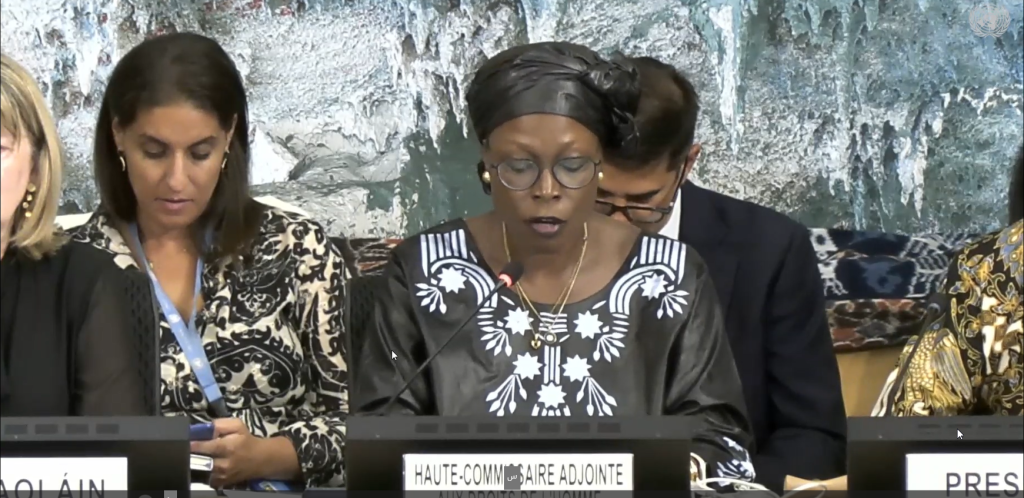
UN Deputy High Commissioner for Human Rights, Awa Dabo, addressees the 63rd session of the Human Rights Council at the Palais des Nations in Geneva, Switzerland yesterday (Photo: UN)
The UN Deputy High Commissioner for Human Rights, Awa Dabo, says international pressure over the situation in El Obeid has had a temporary positive effect, although she says the situation remains critical. Dabo says the Office of the UN High Commissioner for Human Rights has documented at least 1,120 civilian deaths resulting from drone attacks in Sudan during the first six months of 2026.
Addressing the 63rd session of the Human Rights Council at the Palais des Nations in Geneva, Switzerland yesterday, she said those deaths account for 80 per cent of all civilian fatalities documented by the UN human rights office, and that drone attacks declined in July because of international pressure.
Dabo says the Sudanese Armed Forces and the Rapid Support Forces are competing for control of key supply routes linking North Kordofan, El Obeid, and Khartoum. She says ground offensives resumed to the south and east in August, severely restricting water supplies.
According to Dabo, civilians fleeing the intense conflict are heading towards El Obeid, where they face shortages of resources and growing distrust of new arrivals. She says humanitarian workers are also facing continuing hostility, and warns that violence has expanded geographically to include South Kordofan, Blue Nile, and North Darfur.
Dabo says civilians are facing extrajudicial killings, sexual and physical violence, arbitrary detention, abduction, and looting.
She also warns of continuing tensions between communities, which she says are being fuelled by hate speech. In some areas, she says, Rapid Support Forces leaders are exacerbating those tensions and shifting alliances, increasing violence between communities.
National investigations
Sudan’s Attorney General and head of the National Investigation Committee, Intisar Abdelaal, says the committee has made progress in monitoring and gathering evidence relating to what she describes as attacks by the Rapid Support Forces.
Abdelaal says the committee’s investigations are focusing on attacks involving what she describes as “strategic drones”, and the alleged targeting of vital facilities and civilians.
She describes the alleged attacks as terrorist acts and as violations, crimes, and breaches of international humanitarian law.
According to Abdelaal, the main targets of the alleged attacks included health facilities, infrastructure and services, civilian centres, and cemeteries.
She says residential neighbourhoods, clubs, hotels, banks, factories, and commercial shops were also targeted.


 and then