





STPT: Drugs – an illicit economy fuelling Sudan war
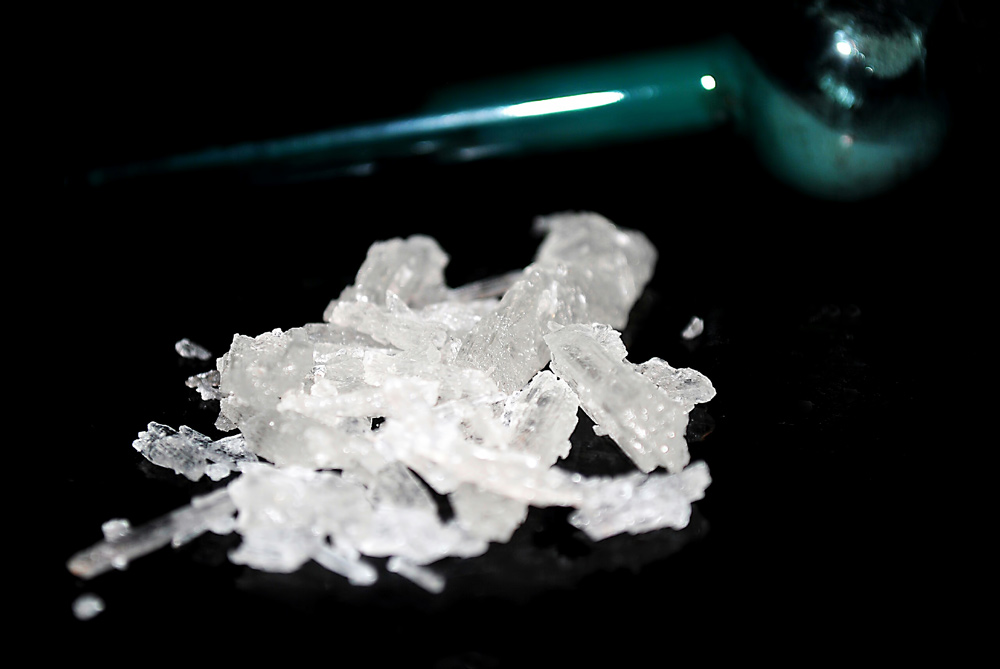
Crystal meth (File photo: Creative Commons 2.0)
Production capacity for synthetic drugs has expanded dramatically under cover of the ‘fog of war’ in Sudan – a January 2026 seizure in Red Sea State captured nearly half a tonne of drugs, mainly crystal meth. This is a signal of Sudan’s integration into a broader economy in the wake of the December 2024 collapse of Syria’s state-sponsored Captagon industry, which is relocating toward environments characterised by conflict, fragmented authority, weak border controls, and entrenched illicit networks, a new report by the Sudan Transparency and Policy Tracker (STPT) asserts.

The collapse of Syria’s state-sponsored Captagon industry following the fall of the Assad regime in December 2024 triggered a geographic redistribution of synthetic drug production into conflict-affected environments with weak governance. This shift is unfolding amid a broader global expansion of synthetic drug markets, where record levels of supply and demand—including the emergence of new synthetic drugs—are giving of the world drug problem new contours with associated health, security, and environmental harms, the STPT report asserts.
“Since the outbreak of the war in April 2023 between the Sudan Armed Forces (SAF) and the Rapid Support Forces (RSF), Sudan has emerged as a significant new nodes in this reconfigured landscape. New empirical data indicate that Sudan is transitioning from a peripheral transit corridor to a manufacturing hub for Captagon. According to the New Lines Institute for Strategy and Policy Captagon Seizure Database, 19 seizure and manufacturing incidents were recorded in Sudan between 2015 and 2025, with a sharp acceleration following the outbreak of civil war in April 2023,” the report highlights.
Since then, three production laboratories in Sudan have been seized, comparable to emerging production centres such as Iraq, Kuwait, and Türkiye.
Production capacity has expanded dramatically in Sudan — from a facility capable of producing 7,200 pills per hour (June 2023) to an industrial-scale laboratory in February 2025 equipped to manufacture 100,000 pills per hour, with equipment valued at approximately $3 million.
Recently, a large Captagon-producing facility was captured by SAF when it recaptured Khartoum, and ever larger caches of drugs are being seized. Indeed, a January 2026 seizure in Red Sea State captured nearly half a ton of drugs, mainly crystal meth.
Multiple interdictions have occurred in Red Sea State, including near Port Sudan, underscoring Sudan’s strategic maritime access to Gulf consumer markets, and possibly further afield.
These developments signal Sudan’s integration into a broader post-Assad Captagon economy relocating toward environments characterised by conflict, fragmented authority, weak border controls, and entrenched illicit networks.



 and then