




Returnees face severe challenges in Khartoum as Sudan’s capital struggles to recover from war
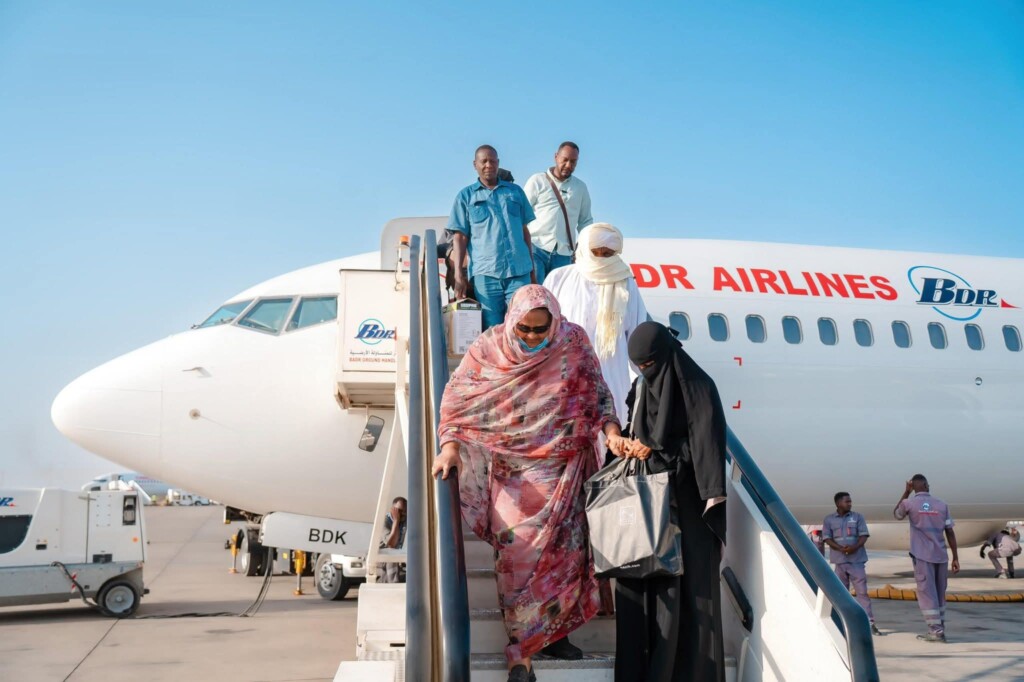
Sudanese returnees arrive in Khartoum from Oman, July 2025 (Photo: Sudan News Agency)
Sudan’s capital, Khartoum, is caught between a slow attempt at recovery and a difficult daily reality, with eyewitnesses telling Radio Dabanga about the hardships facing residents and people returning after more than three years of war in the capital.
The UN says about 2.1m people have arrived in Khartoum state after being displaced internally or across borders, out of 4.7m people who have returned to their homes. In its latest report, the UN refugee agency (UNHCR) says returnees to Khartoum state face major challenges involving housing, health services, water, livelihoods, security, and education.
Power and water cuts, and rising prices
One resident describes part of the situation following the return of people who fled the horrors of war. Health and education services are gradually beginning to recover, he says, but frequent power cuts remain the biggest obstacle to restoring normal life.
The resident paints a bleak picture of the economy, with unemployment affecting most of the population as most activities have stopped, leaving only government employment and a narrow range of commercial activity operating. This has deprived most families of their main sources of income.
He tells Radio Dabanga that rising transport costs and the complete paralysis of movement after sunset, together with continuing fluctuations in the prices of goods, place an additional burden on residents. The hardship is compounded by the onset of the rainy season and the accumulation of rubbish, which has blocked drainage channels and created a growing environmental crisis.
Education and the struggle facing schools
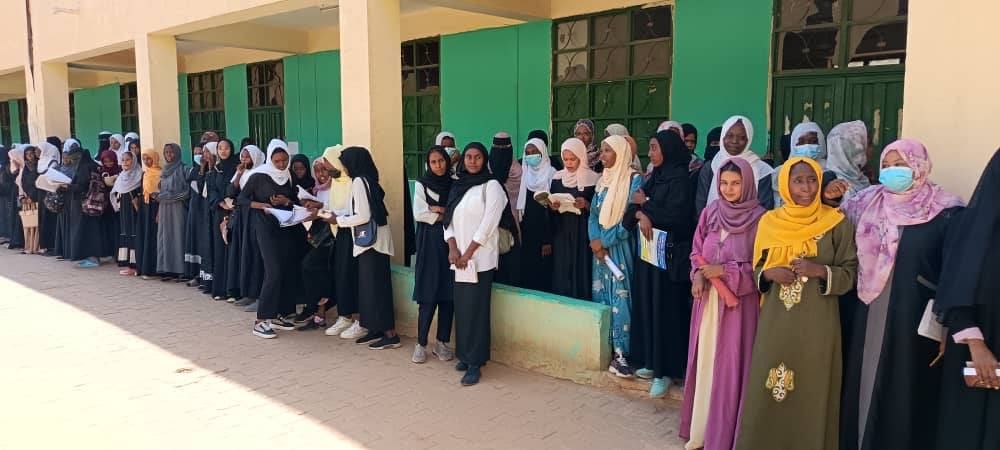
On education, a resident tells Radio Dabanga that the situation in Khartoum and the states has become extremely difficult and painful. The crisis over teachers’ wages is one of the biggest obstacles, she says, prompting many schools to impose monthly charges on pupils or rely on contributions from parents. This has directly contributed to rising levels of educational loss and children dropping out of school.
Repeated teachers’ strikes have also affected the coverage of school curricula, she says, while the displacement of pupils and their continual movement between states has disrupted their academic progress.
She gives the example of her own children, who enrolled in school halfway through the academic year only to find themselves facing hefty financial demands from teachers to make up for missed lessons. Private and commercial schools are also proliferating, she says, many lacking even the minimum conditions for a suitable learning environment or qualified staff.
Healthcare and treatment
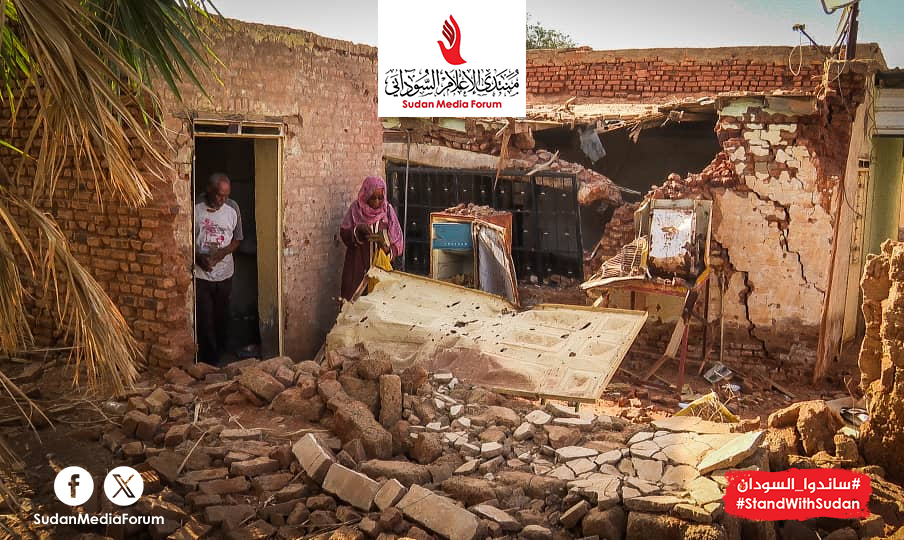
Another resident tells Radio Dabanga about the scale of the health disaster that has befallen Khartoum, pointing to the extensive destruction of health facilities and the deterioration in the quality of services as a result of shortages of medical supplies and continuing power cuts.
These conditions force patients to visit more than one hospital in search of comprehensive treatment, increasing the financial burden of transport and medical care. There is also a severe shortage of life-saving medicines and exorbitant costs for laboratory tests, while the health ministry is unable to bridge the gap and is concentrating its efforts on providing dialysis fluids and cancer treatments.
Fears are growing with the arrival of the rainy season and the spread of mosquitoes, raising the prospect of epidemics. This is one of the challenges that has led thousands of people who fled to hesitate before returning.
The resident says he has refused to allow his father to return to Khartoum, where he himself lives in these conditions, because both his parents suffer from chronic illnesses, including diabetes and high blood pressure. To risk their lives when medical services are so poor, he says, would be a gamble with potentially serious consequences.
Destroyed homes and difficult repairs
In its latest report on returns, the UN refugee agency says that “when returnees arrive in Khartoum state, they face a range of interconnected challenges that limit their ability to sustainably reintegrate”.
It says safety risks from unexploded ordnance remain in some areas, while shortages of electricity, disrupted services, and power cuts in some areas affect daily life and people’s ability to adapt.
Access to basic services, income-generating opportunities, and adequate housing remains limited, particularly in areas where infrastructure has suffered extensive damage, the agency says.
Housing and high rents
Many returnees report being unable to reach or repair their damaged homes because of mines and unexploded ordnance, the report says, forcing them to rely on rented accommodation or support from relatives.
Some residents have returned to homes where most possessions, including furniture, personal documents, and certificates, have been looted.
Owners of damaged or uninhabitable homes have been forced to rent flats or residential units with limited finishing and facilities, including accommodation with temporary roofs and no electricity, the report says.
Rents, which returnees describe as unsustainable, range from SDG 300,000 a month in Jebel Awlya, south of Khartoum, to SDG 600,000.
The refugee agency warns that these conditions are increasing pressure on host families and worsening overcrowding, the risk of gender-based violence, and social tensions. They are also leading to disputes, evictions, or renewed displacement.
The agency reports a major decline in reliable supplies of clean water. Returnees and members of the local community in Omdurman’s Ombada district say supplies through the national system are now far below pre-war levels.
“In some areas, the shortage of safe drinking water has forced families to buy water from markets despite their limited financial resources, while the quality of this water is not monitored,” the agency says.
Theft and insecurity
Most areas covered by the monitoring are described as relatively stable during the day, the report says. But returnees report insecurity at night, including theft, gunfire, drone activity, and other criminal activity.
Jebel Awlya has experienced the most acute threat, with several drone attacks taking place in April and May, including an attack on a hospital that kills five civilians, the report says.
Government authorities tell the agency that more than 200 schools in Khartoum state remain closed. Sending children to schools far from where they live increases transport costs, it says.
Parents also express concern about children being left without educational activities, with economic pressures forcing families to prioritise food, housing, and other basic needs over education, according to the report.
The refugee agency bases its report on monitoring carried out in May, including discussions with families at 12 community centres, interviews with staff from local partner organisations, and 11 telephone interviews with Sudanese refugees who have recently returned from Libya.
Editor’s note: This article has been translated from Arabic with the assistance of artificial intelligence, and subsequently reviewed and adapted by a human editor before publication.

 and then