




IGAD envoy to Sudan: ‘Quintet to convene meeting for those absent from Berlin conf’
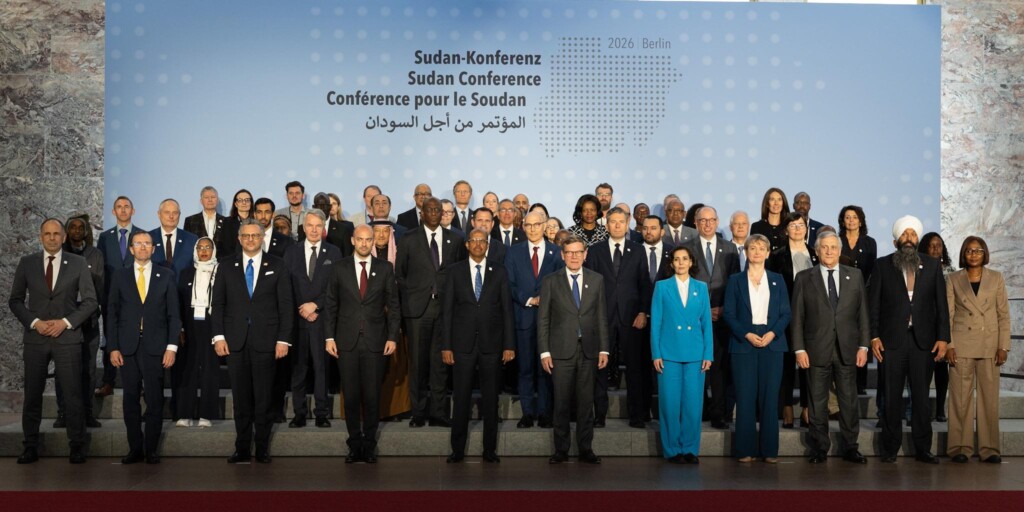
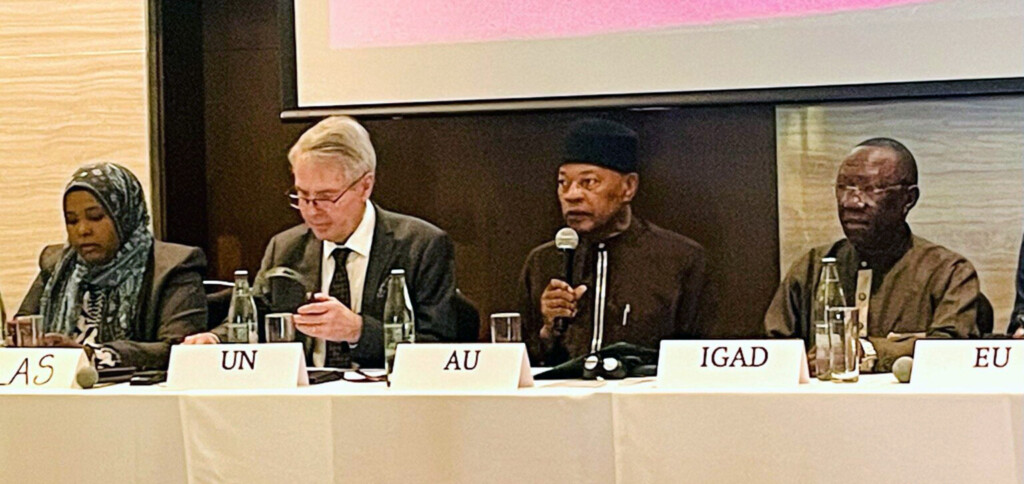
Participants in the Berlin Conference on April 15, 2026 (Photo: Supplied)
The Intergovernmental Authority on Development (IGAD) envoy to Sudan, has said that the ‘quintet’ group — comprising the African Union, IGAD, the United Nations, the European Union, and the League of Arab States — will organise more advanced meetings next month bringing together all Sudanese who did not take part in Third International Conference on Sudan, held in Berlin on Wednesday, May 15).
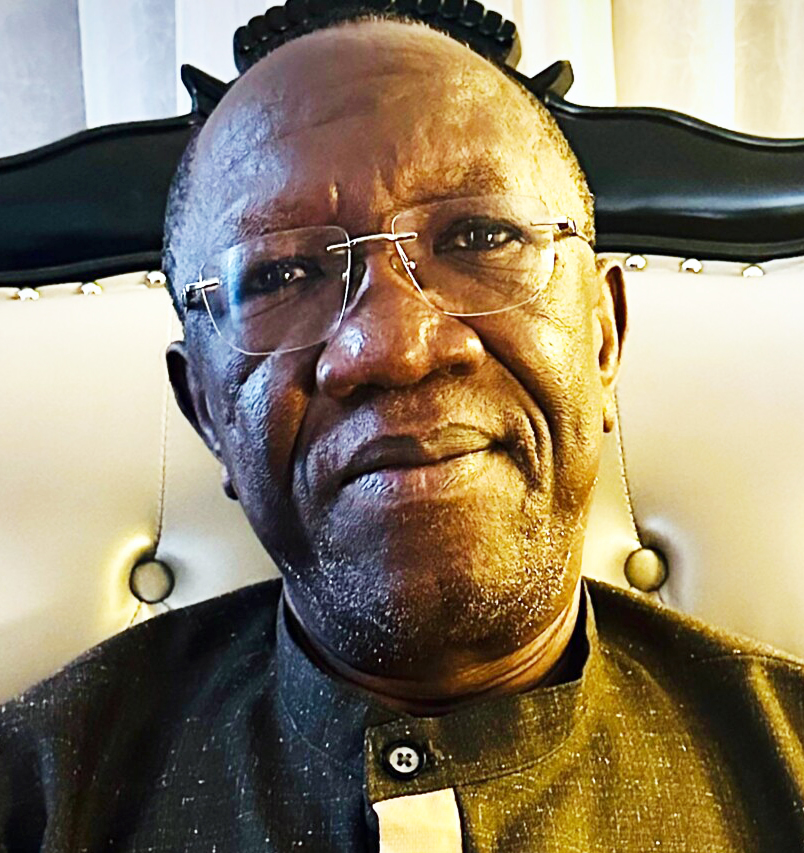
Speaking to Radio Dabanga from Berlin in an interview for the programme Plain Speaking, broadcast on Saturday, April 18, special envoy Lawrence Korbandy confirmed that the meetings would include all Sudanese who were absent from the Berlin gathering. He added that the quintet would support the formation of a Sudanese committee to determine the programme, agenda, and participants for the dialogue.
He said the quintet supports a comprehensive Sudanese-led dialogue, with Sudanese ownership, whereby Sudanese themselves would define both the agenda and attendance.
He stressed that neither the quintet nor IGAD would impose an agenda, and that the aim is a fully Sudanese-owned process in which participants and topics are decided by Sudanese themselves, without exclusion — unless agreed upon by them.
A total of 25 political and civic groups aligned with the armed forces — most notably the Justice and Equality Movement — have rejected what they described as selective invitations to the Berlin conference. Other civilian groups also criticised what they saw as a lack of inclusivity.
Berlin call ‘a step forward’
Regarding the statement issued by Sudanese civilian forces, Korbandy said the joint appeal agreed at the Berlin conference represented a positive and advanced step towards a peaceful solution in Sudan, moving beyond previous “red lines” that had prevented different Sudanese factions from meeting.
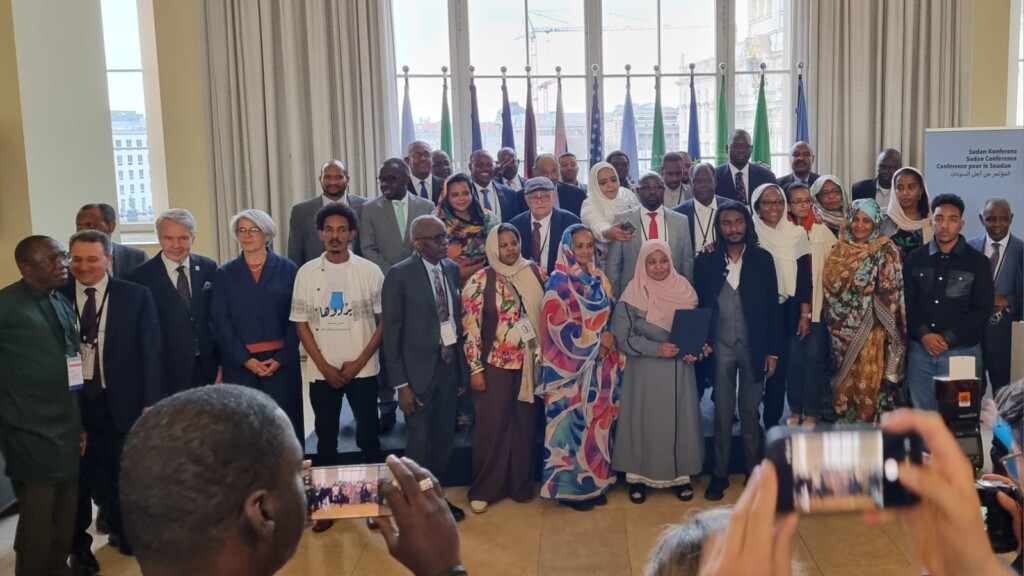
He noted that, for the first time, Sudanese political forces, civil society, women, and youth opposed to the war — both from Sudan and abroad — had gathered under one roof in Berlin.
The appeal, issued by a meeting of 40 representatives of political and civilian groups, covered seven key areas, including an immediate ceasefire, humanitarian access, protection of civilians, Sudan’s unity, a Sudanese-led political dialogue, and justice.
IGAD special envoy Korbandy acknowledged criticism over the absence of some civilian groups, but maintained that the substance of the appeal was inclusive and reflected the aspirations of all Sudanese.
On the absence of the warring parties, he said they had not attended because the conference was intended to exert pressure on them to stop the war and to create conditions for a civilian dialogue, rather than to hold direct talks with them.
Prime Minister Kamil Idris criticised the failure to invite the government to the Berlin conference at a press conference on Wednesday, saying it was therefore not concerned with its outcomes. He described the omission as a mistake and said the government would have participated had it been invited.
Meanwhile, the Sudan Founding Alliance also criticised the Berlin conference, stating that it included figures aligned with the army and the Islamic movement.
Comprehensive Sudanese dialogue
Korbandy said the quintet’s role is focused on advancing peace efforts, facilitating political dialogue among Sudanese civilian actors, and unifying them towards a shared vision and peace.
He added that the group was established to coordinate international and regional efforts on Sudan and to avoid fragmented agendas.
By contrast, the ‘quartet’ group — comprising Saudi Arabia, the United Arab Emirates, Egypt, and the United States — is tasked with issues related to ending the war, ceasefires, and humanitarian truces.
Objectives of the Berlin conference
IGAD special envoy Korbandy described the Berlin conference as the third in a series of meetings — following Paris and London — aimed at mobilising humanitarian assistance for the Sudanese people affected by the war. He added that another key objective was de-escalation, ending the conflict, and protecting civilians and infrastructure.
He said Germany hosted the conference due to its international relationships, its role within the European Union, and its significant development investments in Sudan, including in energy, railways, technology, and healthcare.
The Berlin conference resulted in funding pledges totalling €1.5 billion, more than half of which came from the European Union and its member states.
‘War is a worthless commodity’
Korbandy said the war was “a worthless commodity” that could neither be sold nor accepted, calling on Sudanese people to reject and confront it.
He stressed that a solution would not come from external actors, but must stem from the will and consensus of Sudanese themselves. He cited past peace experiences as evidence that solutions are not achieved through military victory, but through dialogue and negotiation.
He urged Sudanese — both civilians and military — to prioritise the interests of their country and to avoid being drawn into classifications and divisions that serve external parties seeking to dominate Sudan.

 and then