





FEWS NET: ‘Famine risk in Sudan could worsen until January’
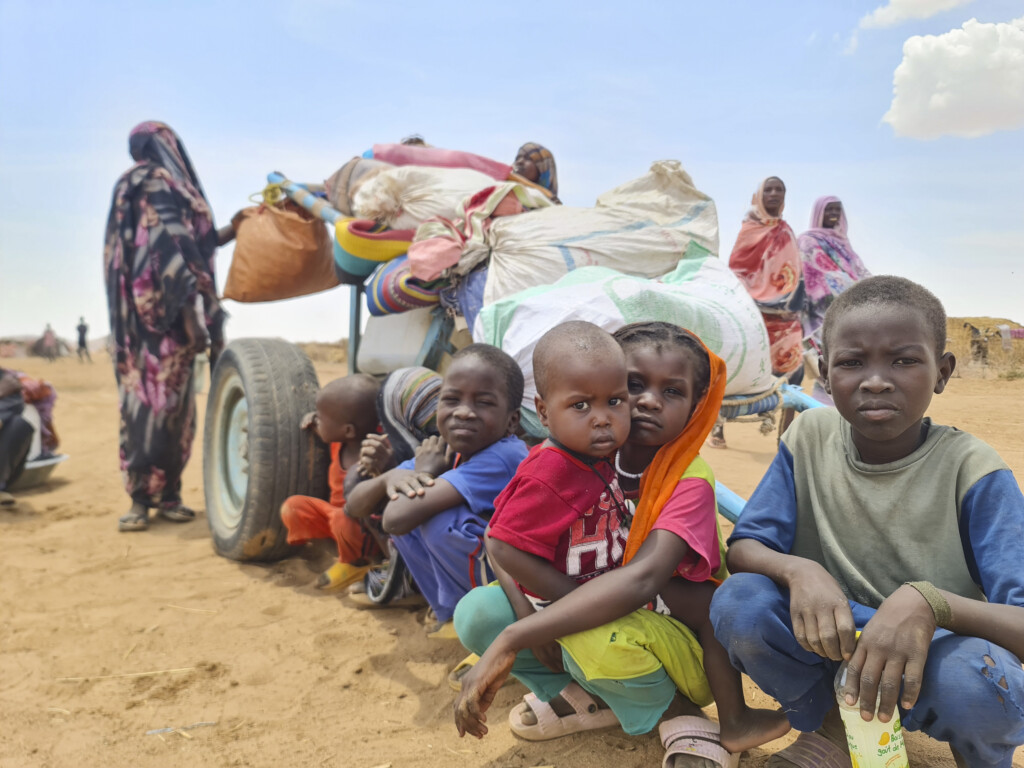
People who fled violence in Darfur arrived in Tawila with little or nothing (Fie photo: ©WFP/Mohamed Galal)
Up to 23 million people in Sudan are expected to face acute food insecurity during 2026. In a new report published on Monday and seen by Radio Dabanga, the Famine Early Warning Systems Network FEWS NET warns that acute food insecurity is expected to spread to IPC Phase 4 (Emergency) across many parts of the country, particularly in Darfur and Kordofan, as well as parts of central and southern Sudan. It says the deteriorating situation is being driven by the continuing conflict, widespread displacement, the destruction of livelihoods, and restrictions on humanitarian access and trade.
The report says IPC Phase 4 emergency conditions are expected to expand across large areas of North, Central, South and East Darfur, most of Greater Kordofan, and Blue Nile State.
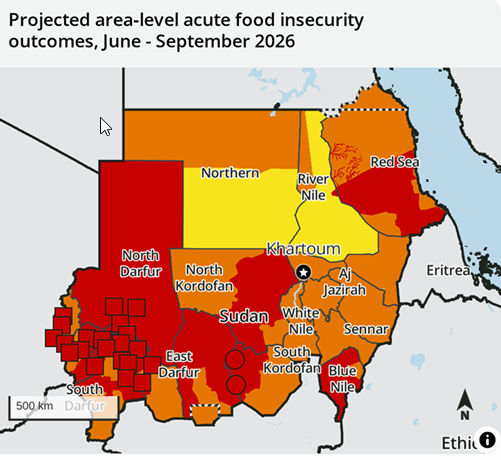
It adds that some households are likely to face IPC Phase 5 (Catastrophe) – the highest level of food insecurity – in Ambro, Karnoi and Tina in North Darfur; the towns of Dilling and Kadugli and surrounding areas in South Kordofan; El Obeid and its surrounding areas in North Kordofan; and among some displaced communities in Darfur and Kordofan.
The report warns there is a genuine risk of famine developing in seven areas of North Darfur, as well as in Dilling, Kadugli and neighbouring rural districts. It says any escalation in fighting or the imposition of new sieges could drive hunger, malnutrition, and death rates to famine levels.
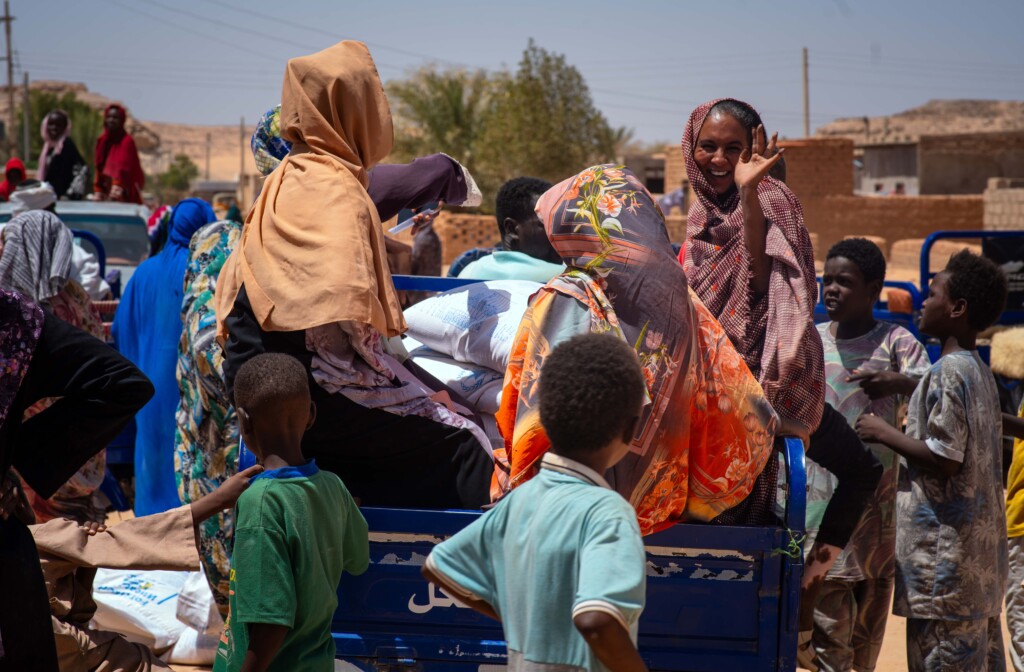
(Archive photo WFP / Abubakar Garelnabei)
Emergency levels of food insecurity are expected to persist in areas along active frontlines, where access to food is likely to remain severely restricted until the harvest season.
The report also warns that continued conflict, combined with climate conditions linked to the El Niño weather pattern, is expected to reduce harvests, limiting agricultural employment opportunities and further restricting access to food.
People living in the worst-affected areas are already experiencing severe food consumption gaps, with acute malnutrition approaching extremely critical levels. In some areas, the prevalence of acute malnutrition exceeds 30 per cent.
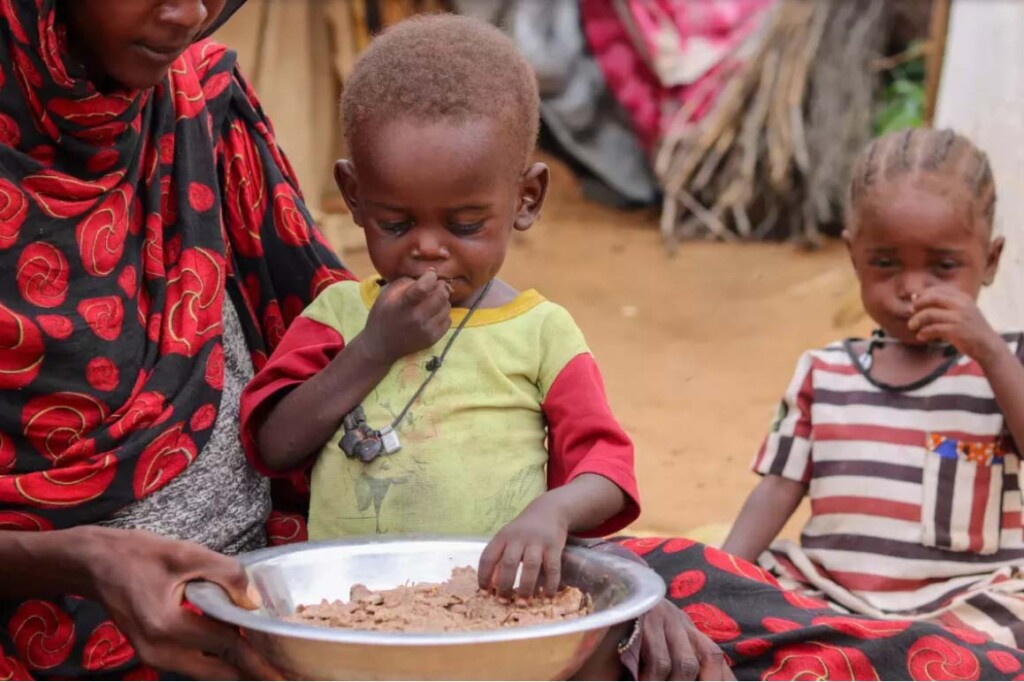
(Photo: UNICEF)
Background
The war between the Sudanese Armed Forces and the Rapid Support Forces, now in its third year, has caused widespread damage to infrastructure and the economy, while disrupting supply chains and markets.
As the conflict has spread, growing numbers of people have been forced to flee their homes, while humanitarian access has been severely restricted.
Sudan is also facing simultaneous outbreaks of cholera, malaria, and dengue fever, further compounding the humanitarian crisis.
Survey data cited in the report show that malnutrition rates have exceeded the critical threshold of 15 per cent in many areas and have risen above 30 per cent in places including Karari and Bahri.
Several regions are also experiencing acute shortages of food, soaring prices, deteriorating basic services, prolonged water, and electricity outages, and increasing difficulties in reaching local markets.
The report warns that these conditions are likely to continue until the next harvest, with only limited improvements expected in some of the less severely affected areas.




 and then