





Economist: ‘Sudan should channel half its cash supply into sovereign fund’
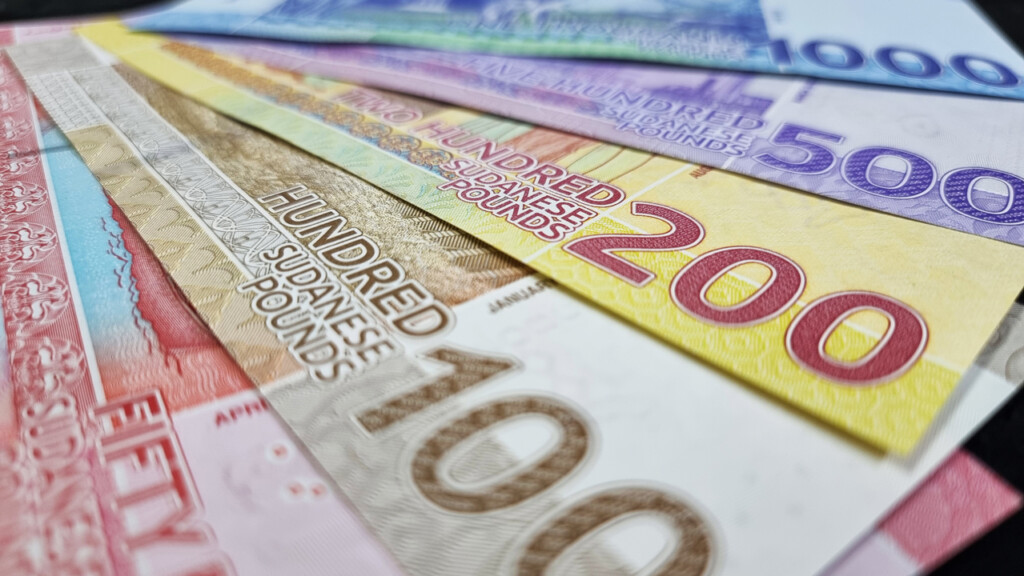
Sudanese Pounds (File photo: Andrew Bergman / RD)
A Sudanese economist has called for a fundamental overhaul of the economic model that, he argues, has concentrated the country’s wealth in the hands of a small minority. He says the current war presents an opportunity to rebuild the economy on new foundations and reshape development so that productive investment is no longer centred on the capital.
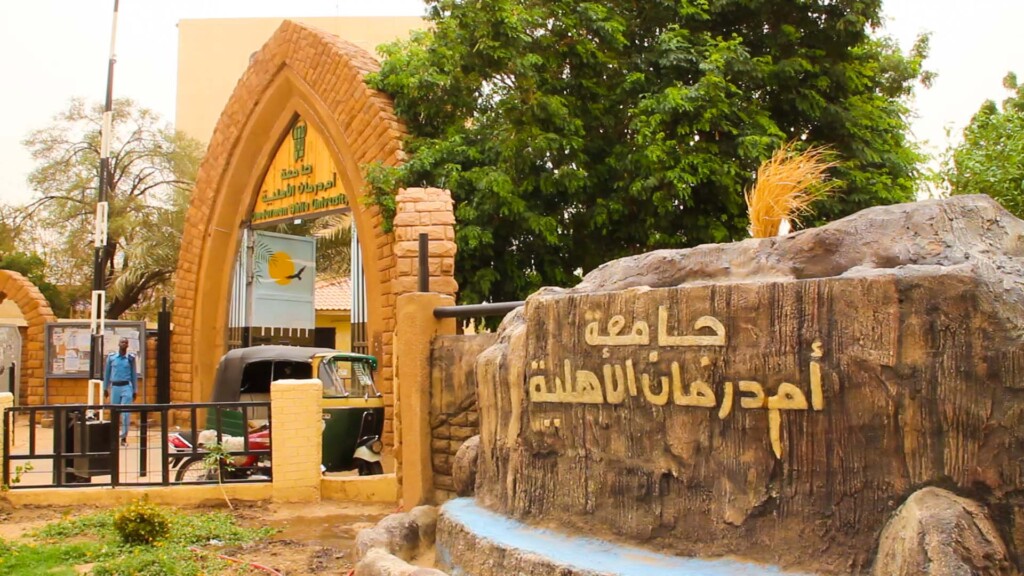
Speaking at a recent online seminar entitled Reconstruction Plan, organised by the Mohamed Omer Bashir Centre for Sudanese Studies at Omdurman Ahlia University, Dr Mohamed Sheikhoun, an economist and university professor, proposes transferring around SDG450 billion—half of Sudan’s estimated SDG900 billion money supply—into a national sovereign wealth fund.
He says the money remains outside the formal economy and that the proposed fund could help reduce regional disparities, finance government operating budgets and redistribute investment more equitably.
Sheikhoun argues that reconstruction should extend beyond repairing war damage to rebuilding the country’s economic programme itself. He says Sudan should rely first on its own resources while making use of support from international partners willing to assist, with the aim of creating a fairer and more sustainable economy.
He also proposes decentralising development by establishing tanneries, abattoirs, grain silos, flour mills, and other basic industries across all states rather than concentrating productive projects in Khartoum.
War offers chance to rebuild
Sheikhoun says the conflict offers an opportunity to rebuild Sudan’s economy instead of restoring the previous model, adding that Sudanese economists have the expertise to turn these ideas into comprehensive economic policies.
He argues that the rapid expansion of the money supply is one of the main drivers of rising poverty. He notes that the exchange rate on the parallel market rose from around SDG15 to the US dollar when the former National Salvation regime came to power in June 1989 to around SDG60,000 before the currency redenomination that removed three zeros from the Sudanese pound.
He says the sharp depreciation of the currency has dramatically reduced purchasing power. Whereas one Sudanese pound once bought 100 loaves of bread, he says, SDG100 can no longer buy a single loaf.
Sheikhoun criticises the economic policies pursued over recent decades, particularly economic liberalisation, privatisation, market deregulation and the removal of state protection and subsidies. He argues that these policies were driven by external pressure rather than national priorities and have concentrated wealth while expanding poverty.
‘Grey companies’
Turning to corruption, Sheikhoun refers to private-sector companies described during the final years of the former National Congress Party government as ‘grey companies’. He notes that a former finance minister estimated their number at around 8,000.
He says these companies were labelled ‘grey’ because, according to official statements at the time, they were not registered with the commercial registrar at the Ministry of Justice, paid neither taxes nor profits due to the state, and had unidentified owners, despite government shareholdings in some of them.
According to Sheikhoun, a committee established by the military to review the companies begins by examining 443 firms but finds that only 12 are officially registered, all of them loss-making.
He says the committee succeeds in reviewing only one company, but when members return a month later it has disappeared, prompting some to describe such firms as ‘briefcase and letterhead companies’ that exist only on paper.
Importing ‘garlic and nabag’
Sheikhoun says that after state employees’ salaries are transferred to banks in 2018, many people struggle to access their money because banks and cash machines suffer severe cash shortages.
Following the fall of the former government, he says, the National Economic Committee finds that at least 95 per cent of the money supply is being held outside the banking system in containers and other locations by a limited group of individuals.
He says this cash is used mainly to purchase and smuggle around 77 per cent of Sudan’s gold production, capture remittances sent by between six and nine million Sudanese living abroad, and finance exports of major agricultural commodities—including oilseeds, cotton, gum arabic, livestock and meat—while keeping export earnings outside the state treasury.
Part of the money, he says, finances imports, allowing imported goods to dominate around 95 per cent of Sudan’s markets, to the extent that products such as garlic and nabag fruit are imported.
He argues that these practices deprive Sudan of revenues that once finance free education, healthcare and subsidies for bread, medicines, fuel, electricity, and water.
The hidden economy
Sheikhoun describes the large volume of cash circulating outside the banking system as part of a ‘hidden economy’ based on the appropriation of gold export revenues and speculation in land, property, and financial assets.
He argues that it is unjust for such wealth to remain in the hands of a small group that benefited under the former government while, according to the figures he cites, around 75 per cent of Sudan’s population lives below the poverty line.
He says the aim is not to target any particular group but to achieve a fairer distribution of wealth and redesign the Sudanese economy to serve all citizens.
As part of a currency replacement programme, he proposes transferring 50 per cent of the money supply held outside the banking system into the sovereign wealth fund to finance reconstruction, compensation, the rebuilding of public services and productive facilities, strategic development, and the restoration of privatised public institutions.
He also calls for rebuilding public institutions and restoring their role, arguing that before privatisation around 55 per cent of the proceeds from major agricultural exports went to the state.
National resources
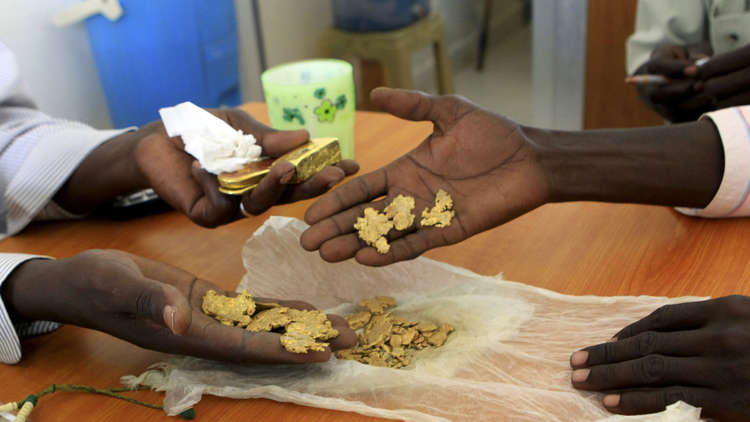
Sheikhoun says Sudan’s foreign exchange earnings should be built on three main pillars: gold, remittances from Sudanese abroad and revenues from agricultural exports.
Citing figures he says are published by the World Bank, he states that Sudan produces around 905 tonnes of gold between 2013 and 2024, worth an estimated US$54 billion, but that between 77 per cent and 80 per cent of production is smuggled out of the country.
He also cites other figures showing gold production of 827.4 tonnes between 2006 and 2018, valued at about US$49 billion, arguing that these resources should benefit the Sudanese people.
Referring to Ghana, Sheikhoun says the country treats gold as a sovereign commodity, making the state the final purchaser so that part of the production supports the national currency while the remainder is exported and the proceeds deposited in the public treasury.
Gold as a sovereign commodity
Sheikhoun argues that Sudan does not need new legislation because laws enacted in 1959, 1973, 2005 and 2015 already classify gold as a sovereign commodity, although, in his view, they have never been implemented.
He says Sudan’s transitional government also decides at a meeting in Soba to treat gold as a sovereign commodity and tasks the Central Bank of Sudan with purchasing and exporting it, but the decision is never implemented.
He argues that recovering national resources requires independent political will free from external influence. Remittances from Sudanese abroad are another key source of foreign exchange, he says, citing a Ministry of Finance estimate that they totalled around US$27 billion between 2011 and 2018.
Before South Sudan’s secession, he says, oil production generated export revenues of US$162 billion over nine years. According to Sheikhoun, revenues from oil, gold and remittances did not enter the public treasury during the years of the former National Salvation government but were managed through specific entities.
He argues that addressing this imbalance is not only an economic necessity but also a matter of social justice, referring to the Islamic principle of solidarity as a means of reducing inequality between rich and poor.
Sheikhoun concludes by pointing out that Europe’s post-WWII reconstruction began with reliance on domestic resources and cooperation between European countries in productive sectors, laying the foundations for what later became the European Common Market.


 and then