





Darfur-bound aid destroyed, 20 civilians dead as drones hit eastern Chad market
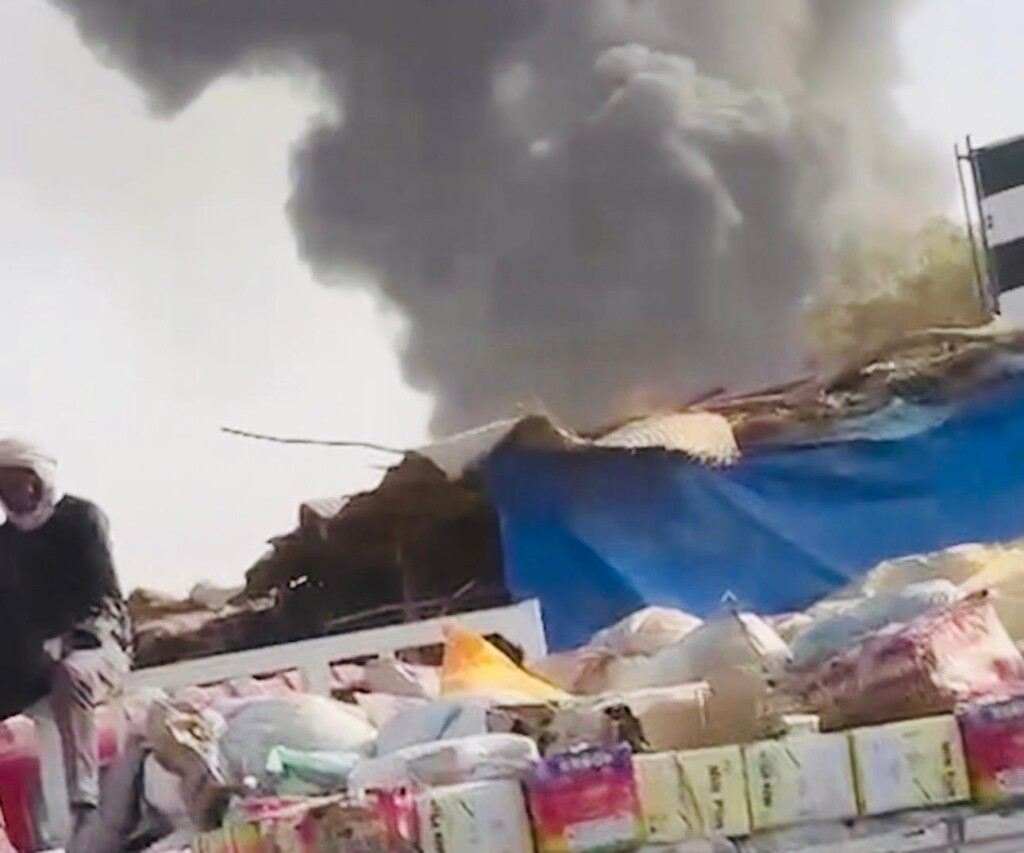
A screenshot from a video posted by survivors on social media shows the aftermath of the attack on the Adkon market at the Adré border crossing between Sudan and Chad on Friday
A drone strike on the weekly market in Adikon, near the Adré crossing at the Sudan–Chad border, left a large number of civilians dead and injured on Friday afternoon after a missile hit the market area, as well as humanitarian aid trucks en route to North Darfur and Kordofan. A resident of Adikon said the drone struck the market directly, causing heavy civilian casualties. She reported that more than ten charred bodies were recovered from shops that were completely destroyed by the explosions and ensuing fires.
Badr El Din Dawoud, Executive Director of the Isenga Administrative Unit, said a Turkish-made Bayraktar drone had fired two missiles at the weekly market, killing between 18 and 20 people, most of them Chadian traders. He added that many others were wounded, some critically, and that dozens of people remain unaccounted for. Those with severe injuries were transported to hospitals inside Chad.
Dawoud said a truck carrying humanitarian supplies bound for Babanousa and El Fasher was completely burned in the attack, with several aid workers on board killed. He noted that the majority of those who died at the site were Chadian civilians working as traders in the market.
The head of the Civil Administration in West Darfur, Tijani Karshoum, said authorities had taken urgent measures following the incident, including forming a committee to assess loss of life and property, a security committee to protect civilians, and a technical committee to reorganise the market. Karshoum stressed that the crossing used for aid delivery is a recognised humanitarian corridor approved by the United Nations and the Security Council. He confirmed that aid trucks had been burned in the attack and urged the UN and the international community to take firm action to prevent further targeting of relief convoys.
Abdel-Baqi, head of the West Darfur Founding Council, said a government delegation visited the area after the strike and assessed the scale of the damage. He stated that the airstrike targeted traders and civilians going about their daily activities, emphasising that there were no military sites in the area. He condemned the attack, describing it as a deliberate strike on innocent and unarmed civilians.
Eastern Chad hosts at least 1.2 million (UN estimates) Sudanese refugees, many of whom have fled from Darfur since the outbreak of the current hostilities in April 2023.
Carl Skau, Deputy Executive Director of the World Food Programme (WFP), said that airdropping aid into Sudan has become a likely last-resort option to break the blockade and save lives. His comments came as the Rapid Support Forces (RSF) accused the Sudanese army of shelling the Adré border crossing with Chad, claiming the strike directly targeted the Adikon gate of the crossing in order to obstruct the flow of humanitarian aid and hinder relief efforts.
Speaking to Al Jazeera, Skau announced that convoys of aid and lorries remain stranded awaiting permission to enter, highlighting the major logistical and security challenges they face. He noted that a WFP aid truck bound for the Tawila area in North Darfur was struck by a drone a few days earlier, leaving the driver critically injured.
Earlier, UN spokesperson Stéphane Dujarric strongly condemned an attack on a WFP truck near Hamrat al-Sheikh in North Kordofan last Thursday evening.
In his daily press briefing in New York, Dujarric said the truck was part of a larger convoy of 39 vehicles on its way to deliver “vital food assistance to support hungry families who have fled to the Tawila area in North Darfur.”
Skau described the situation in Sudan as “the world’s worst food crisis,” revealing that around 20 million people are suffering from malnutrition, including six million on the brink of famine.
He stressed that the WFP’s current focus is on South Kordofan, where villages and localities are under severe siege by the RSF. He noted confirmed reports of people starving inside these areas, emphasising that the world must learn from the “atrocities” that occurred in El Fasher to prevent the same scenario from unfolding in other parts of Sudan.



 and then