





Amnesty calls for RSF drone attacks on civilians in North Kordofan to be investigated as war crimes
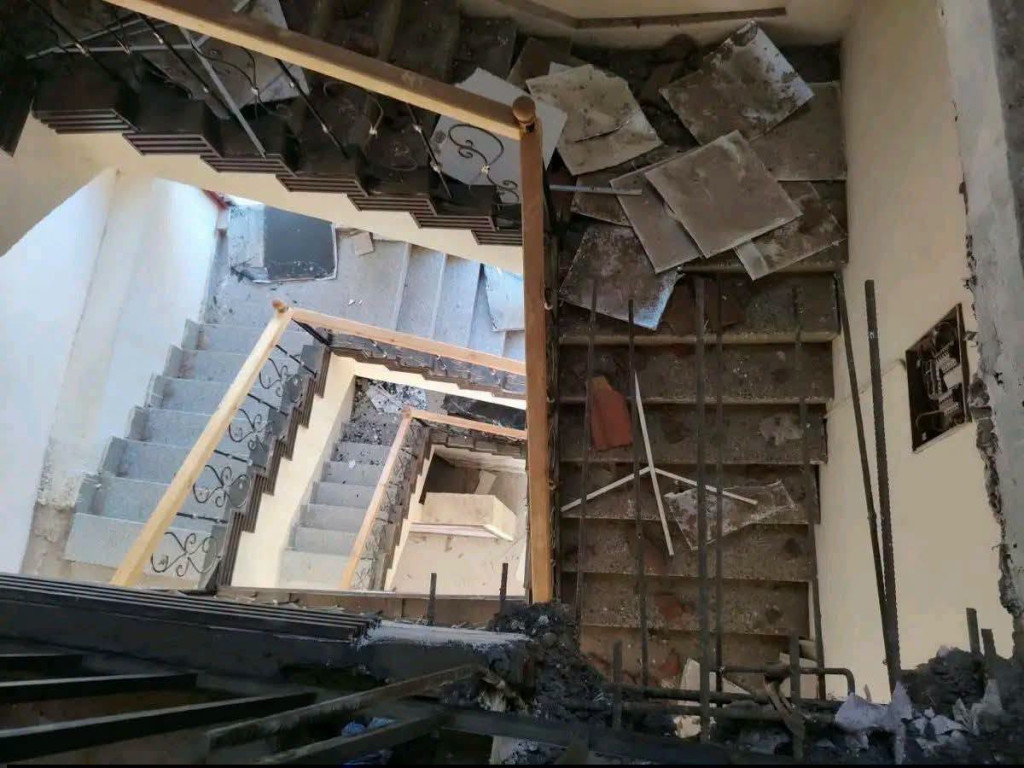
The drone attacks on Shikan College in El Obeid on September 28, 2026, sparked outrage (Photo: RD correspondent)
Amnesty International has called for an investigation into possible war crimes after documenting nine Rapid Support Forces (RSF) drone strikes that killed at least 37 civilians and injured 10 others in and around El Obeid, North Kordofan, between June and August 2026. The organisation’s secretary general, Agnès Callamard, has urged the United Nations and African Union to take immediate action to protect civilians, including considering the deployment of an international protection force in Sudan.
In a statement issued on Wednesday, Amnesty International says its investigation found that RSF drone attacks struck residential neighbourhoods, essential civilian infrastructure, and moving vehicles in and around El Obeid, the capital of North Kordofan.
The nine attacks investigated by the organisation killed 37 civilians and injured 10. Three strikes hit residential areas, four targeted key civilian infrastructure, including the city’s main electricity plant, fuel stations, and the main market, while two struck moving vehicles.
Amnesty says its investigation found no military objectives in the vicinity of the locations at the time they were attacked.

“The RSF drone attacks we’ve documented must be investigated as war crimes. They indicate how the Sudan conflict is moving into a new phase where all parties are increasingly using drones and other advanced weapons not only to kill and injure civilians, but also to disrupt essential and lifesaving services,” says Dr Agnès Callamard, Amnesty International’s secretary general.
“There is no time to wait. With deadly drone attacks on civilians on the rise, immediate action is needed. The UN and the African Union must urgently work together to propose and implement concrete civilian protection measures, including deployment of a protection force to Sudan,” she adds.
Civilian casualties and destruction
According to Amnesty, one of the deadliest attacks occurred on 6 July, when an RSF drone struck a vehicle carrying wedding guests near al-Sha’toot village, south of Jabratal Sheikh locality, killing 13 civilians.
On 10 June, a drone struck civilians transporting a body for burial at Dalil cemetery in north-western El Obeid, killing at least five people and injuring three others.
The following day, RSF drone attacks hit several neighbourhoods, including El Matar and El Muwazzafin. One strike hit a residential house in El Matar, killing at least nine civilians.
A 41-year-old doctor whose house was hit told Amnesty that she and her husband had rushed outside after hearing two explosions at about 02:20. They found one of their rooms on fire and evacuated their four children.
Neighbours came to help extinguish the fire, but a second drone strike killed her husband, her uncle, and seven neighbours.
On 12 August, another drone attack struck the Agricultural Bank near El Obeid’s main market, killing two civilians, including a 52-year-old woman, Zeinab Babu, and injuring five others.
Attacks on essential infrastructure
Amnesty says the attacks also severely disrupted essential services and civilian livelihoods.
On 18 June, an RSF drone struck El Obeid’s main electricity station, triggering a fire and a citywide power blackout. The loss of electricity further aggravated shortages of water and food, with residents and humanitarian workers reporting serious disruption to water supplies.
The organisation says satellite imagery taken on 20 June confirmed a newly visible area of burning at the facility. Data from NASA’s nighttime satellite observations also showed a significant reduction in the city’s light emissions on 19 June.
Several fuel stations were repeatedly targeted in June and July. On 6 June, a drone struck the El Mithaq fuel station near the Omdurman bus terminal, killing at least five civilians and destroying several civilian vehicles.
Another attack on 22 June hit the El Nahla fuel station in northern El Obeid, killing two civilians and burning five vehicles waiting for fuel. A further strike on 25 June hit the Agip fuel station in the western market area, destroying 10 civilian vehicles.
By July, Médecins Sans Frontières (MSF) reported that almost no fuel stations remained operational in El Obeid. The price of a litre of petrol had risen to nearly USD 15, and possibly more on the parallel market, according to the organisation.
Call for international action
Callamard says the war in Sudan is being sustained by external support, including military supplies to the warring parties.
“This is a war on civilians which is being sustained by third parties including the UAE, the primary backer of the RSF. All those manufacturing and supplying drones and other military equipment to the warring parties must immediately cease doing so,” she says.
Amnesty says it has previously documented the supply of weapons, ammunition, armoured personnel carriers, and drones from the United Arab Emirates (UAE) to the RSF. Its investigations have also identified Chinese-made Wing Loong II and FeiHong-95 drones used by the paramilitary force, which the organisation says were supplied by the UAE.
The organisation is calling on the UN Security Council to extend the existing arms embargo on Darfur to the whole of Sudan and explicitly include drones among the military equipment covered by the restrictions.
It is also urging the UN, African Union, European Union, Intergovernmental Authority on Development (IGAD), Arab League, United States, United Kingdom, UAE, and other countries with influence over the warring parties to work towards an immediate ceasefire and strengthen accountability mechanisms.
Amnesty further says the RSF must immediately end all drone attacks against civilians and civilian infrastructure.
Investigation and RSF response
Amnesty says its findings are based on interviews with 29 people from El Obeid, including survivors, relatives of victims, eyewitnesses, and residents, conducted between July and September 2026. The organisation also examined five photographs and videos, satellite imagery, and reports from humanitarian organisations and UN agencies.
On 8 October, Amnesty wrote to the RSF outlining its findings. The group responded on 24 October, denying responsibility for attacks that caused civilian casualties in El Obeid and blaming the Sudanese Armed Forces (SAF), without providing evidence to support its allegations.
The RSF said it was considering establishing a specialised investigative committee to examine incidents involving civilian casualties and damage to civilian property, including those in El Obeid.
Amnesty notes that the city remains under the control of the SAF and allied forces. The RSF began drone attacks there in October 2025, with the strikes escalating sharply in June 2026 amid reports that the paramilitary force was preparing a ground offensive.
The organisation warns that the escalation raises fears of a repeat of the atrocities committed when the RSF seized El Fasher in North Darfur in 2025.
According to the UN Office of the High Commissioner for Human Rights (OHCHR), drone attacks killed at least 1,120 civilians across Sudan during the first half of 2026, accounting for 80 per cent of all conflict-related civilian deaths documented by the office during that period.
While the latest investigation focuses on RSF attacks in El Obeid, Amnesty says it is also investigating drone strikes by the SAF that have resulted in civilian casualties.


 and then