




Wheat cultivation halved in Sudan’s El Gezira scheme

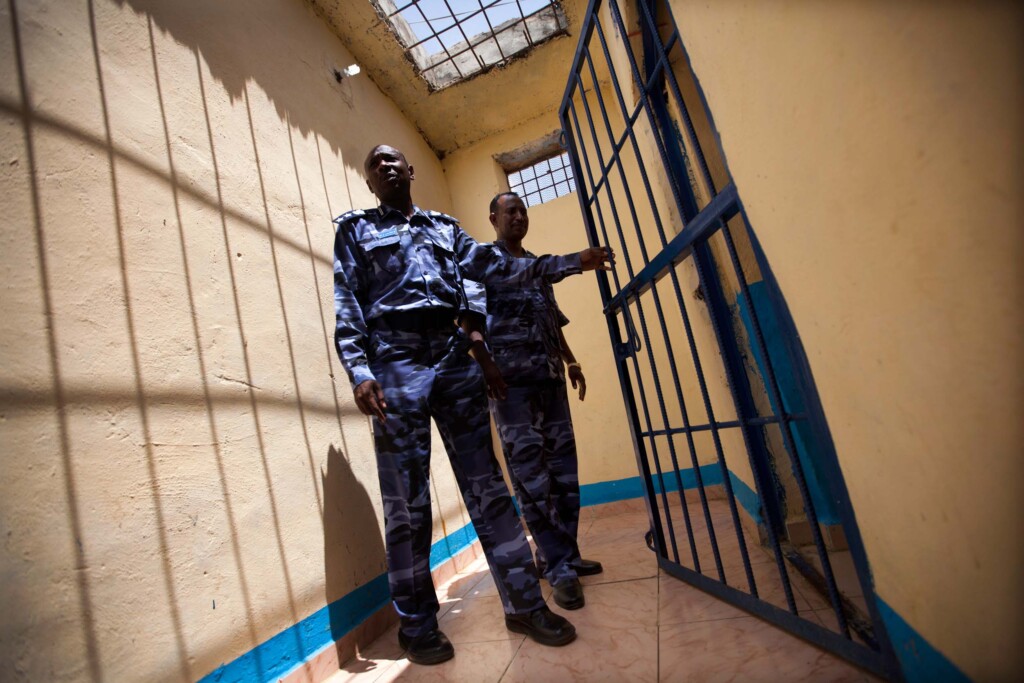
The governor of El Gezira agricultural scheme, Ibrahim Mustafa, during the press conference (Photo: SUNA)

The area of wheat cultivation in Sudan’s vast El Gezira and Managil agricultural scheme*, located between the Blue and White Nile in the area south of Khartoum, has halved in recent years, according to the governor of the El Gezira agricultural scheme, Ibrahim Mustafa. At a press conference in Barakat near Wad Madani, Mustafa confirmed the decline in the areas cultivated with wheat from 400,000 feddans (acres) to 210,000 feddans, attributing this to the high prices of production inputs and the financing difficulties faced by farmers.

Mustafa says that the scheme’s plan for the next season aims to lead a revolution for the renaissance of the El Gezira agricultural scheme.

In this regard, the governor revealed the allocation of a commissioner for the assets of El Gezira agricultural scheme, the continuation of the formation of associations of agricultural production professions, and the formation of the scheme’s board of directors to support the administration’s efforts to revive the El Gezira scheme to provide food for the people of Sudan.

Agriculture in El Gezira Scheme (Archive photo CC)

Mustafa announced that 9,000 acres will be allocated for seed production in order to cover the needs of the next season of improved seeds. He said that efforts are underway to disinfect irrigation canals and provide fuel to farmers to enable them to continue agricultural operations during the winter season.

He explained that the project plan for the next season also aims to qualify companies specialised in flowing irrigation to rehabilitate the irrigation system in the scheme, complete the legal procedures and provide the necessary financing for the rehabilitation of the Al-Junaid wellway by the Austrian company implementing the wells to irrigate the eastern sections.

Mustafa reiterated his administration’s keenness to open channels for national and foreign companies from China and Türkiye to invest in the scheme.

A farmer in a field of sorghum in the Al-Jazeera / El Gezira Agricultural Scheme (File photo: FAO)

Agriculture in Sudan’s El Gezira is collapsing after three years without harvest

A report by Maab Al-Mirghani of Jubraka News for Sudan Media Forum carried by Radio Dabanga in July 2025, shows that the agricultural sector in the Managil Extension Project in El Gezira state is experiencing a critical phase that threatens its continuity in light of the worsening repercussions of the war and the decline of infrastructure, amid a complete absence of government and banking support. Farmers express a painful reality embodied by the significant increase in input prices, lack of financing, and the collapse of irrigation systems, which have led to a decline in production and an alarming decrease in cultivated areas.

Forced switch from wheat

Farmer Mustafa, from the eastern part of the island, expressed his disappointment after being forced to abandon his wheat farming, which he had relied on, and turn to vegetable farming after the outbreak of the war.

He explained that this shift was the result of a lack of fertiliser and seeds, and the absence of any official support, despite the continued suffering from the failure of previous seasons.

He added in an interview with “Jubraka News”: “There are no accurate statistics on the areas planted in either the winter or summer season, but they have declined significantly.”

Mustafa stressed that the Gezira Scheme, despite the destruction it has suffered, is still capable of achieving high productivity that meets the country’s needs if basic requirements are provided.

He called on the relevant authorities to expedite the removal of weeds from the canals, provide pumps and fertilisers, and secure the necessary funding for the preparation phase so that farmers can enter the new season fully prepared.

Collapsed productivity and complete lack of management

For his part, farmer Omar El Nima Arbab, from the Kuwait District Office in the Shawwal Section of the Managil Extension Project, pointed to a decline in productivity following the invasion of Wad Madani by the Rapid Support Forces, noting that major crops, such as beans, corn, and wheat, had achieved high yields before that.

He explained that the productivity of beans reached 30 sacks per acre, while the average productivity of corn and wheat reached 12 sacks per acre.

Arbab told Jubraka News: “We used to obtain seeds and fertilisers on credit and payment after harvest, but that stopped after the invasion of Wad Madani in late 2023. Even before that, agricultural inputs were arriving late, affecting the timing and efficiency of planting.”

He added that rising input prices and water shortages or irregularities have caused floods that have submerged crops, particularly last year. Despite the liberation of Wad Madani this year, the preparation and planting process is still proceeding very slowly due to the canals being filled with filth and weeds, and the lack of cleaning. Furthermore, there are fractures in the canals that threaten the lands of the Kuwait Office with submersion.

Arbab pointed out that the prices of seeds and fertilisers have become beyond the reach of subsistence farmers, given the absence of any entity responsible for providing them.

He said that fuel is available, but that machinery—especially excavators, canal cleaning machines, and “Ab 20s”—is unavailable, or its prices are if it is available.

He pointed out that agricultural management was “absent or indifferent,” and said that the government had no tangible role in El Gezira State, which had prompted many farmers to abandon farming. Some had rented out their land, while others had left it fallow.

Despite this bleak reality, Arbab expressed some optimism, noting that hope still exists if there is the will. He suggested starting with repairing broken canals and ditches, and providing seeds and fertilisers for the winter season, stressing the need to begin this immediately before the onset of autumn. He also pointed to the complete absence of any significant role for trade union bodies such as the (Alliance of Farmers of El Gezira and El Managil) at the present time.

Three seasons without a harvest

Hussein Saad, a former farmer in the Gezira region and a member of the Gezira and Managil Farmers’ Alliance, also highlighted the depth of the crisis, emphasising that conditions were much better in times of peace.

He told Jubraka News, “Before the war, the price of a bag of fertiliser did not exceed 20,000 Egyptian pounds, but now it has jumped to 120,000 Egyptian pounds. The cost of preparing one acre with tractors has increased from less than 10,000 Egyptian pounds to about 30,000 Egyptian pounds.”

Saad pointed out that the cultivated areas in the summer season exceeded 500,000 acres, and 250,000 to 300,000 acres in the winter season. However, today it is unlikely that the cultivated areas in this year’s summer season will exceed 150,000 acres.

Hussein spoke about the last good season, which coincided with the transitional government’s term (August 2019-October 2021), when farmers produced a bountiful harvest of wheat and presented it to the Agricultural Bank as a symbolic gift in support of the new phase. This was in light of the good relationship at the time with the bank, which financed farmers and provided them with the necessary facilities.

Today, he said, everything has changed. The bank no longer provides any support, especially in the northern part of the scheme, which has been completely looted in the areas of El Kamlin, El Ma’aliq, and Abu Ashar. Bags of corn and salt allocated to farmers have been stolen, and funding has completely ceased.

He added, “I have not been able to cultivate my land this year due to the lack of water, and we are now facing our third season without a harvest since the outbreak of the war.” He pointed to the lack of seeds and fertilisers, or their skyrocketing prices, along with the exorbitant costs of preparation, which have burdened farmers.

Security extortion and legislative deterioration

Saad pointed out that farmers were subjected to direct extortion, with the Rapid Support Forces demanding that they pay 60,000 Egyptian pounds as “harvest fees,” and imposing fines amounting to 1.75 million Egyptian pounds on some of his relatives.

He spoke about the complete destruction and looting of the agricultural office in El Mu’aliq, stressing that policies enacted under the previous regime played a significant role in diminishing the role of farmers, even leading to some being imprisoned.

He said that previous administrative changes had transferred the irrigation authority from its original administration to another, causing major problems in the canal system and leading to a deterioration in the production system, seeds, and pesticides.

Saad confirmed that the Farmers’ Alliance has repeatedly issued statements alerting authorities to the extent of the disaster, but to little response. He noted that many farmers have abandoned agriculture due to the high costs and have turned to alternative professions.

Hussein asserts that successful farming cannot be expected in the scheme while the war continues. However, he emphasises the need for local and international organisations to support farmers directly through emergency rooms, independent of the government. He asserts that this alone will enable farmers to resume their activities and production once again.

Uncertain future

Farouk El Badawi, a member of the secretariat of the Gezira and Managil Farmers’ Alliance, points to an alarming deterioration in the agricultural situation in the scheme due to the war and the flawed economic policies that preceded it.

El Badawi said that agriculture in the scheme was operating at 100% efficiency before the war, but that it declined to only about 45% after the outbreak of the war, especially in areas under the control of the Rapid Support Forces, which suffer from a lack of funding and insecurity.

He pointed out that the last successful agricultural season was in 2019-2020, during the revolutionary government headed by Abdullah Hamdok, when 500,000 acres of wheat were cultivated with funding from the Agricultural Bank, and the average yield per acre reached 17 sacks, with some fields recording record yields of up to 35 sacks.

However, in subsequent seasons, production declined significantly due to what he described as “farmer-unsupportive” policies adopted by the Ministry of Finance and Minister Gibril Ibrahim. These policies included the failure to adhere to the concentration price and irregular agricultural financing, which pushed thousands of farmers into heavy debts that the Agricultural Bank continues to pursue to this day.

With the war, farmers have missed four consecutive agricultural seasons, due to the state’s inability to provide the dredgers needed to clear irrigation canals and repair damage caused by the conflict. Furthermore, water has been delayed to large areas of the scheme, despite promises from the Irrigation Department.

El Badawi emphasised that the exorbitant costs are beyond the reach of the exhausted farmer: “Preparing an acre costs 150,000 Egyptian pounds, a bag of urea costs 100,000 Egyptian pounds, and the price of a sack of urea exceeds 120,000 Egyptian pounds, while the farmer lost his equipment due to looting.” He pointed out that the lack of funding and the delay in the official planting season, as determined by agricultural research, complicate the chances of success of the current season.


* El Gezira Scheme, located between the Blue and White Nile in the area south of Khartoum, is a vast region irrigated through gravity by the waters of the Blue Nile. The Scheme is one of the world’s largest irrigation projects. It has remained for nearly 80 years the sole source of hard currency for the country, through the cultivation of cotton. However, the size of cotton production has reduced to less than 100,000 acres over the last few decades. About 12 cotton gins in El Gezira state have closed their doors, the alliance stated last month, when Khartoum announced to reserve around 100,000 acres (40,000 ha) of Sudanese farmland to Egyptian farmers.

Welcome

Install
×