





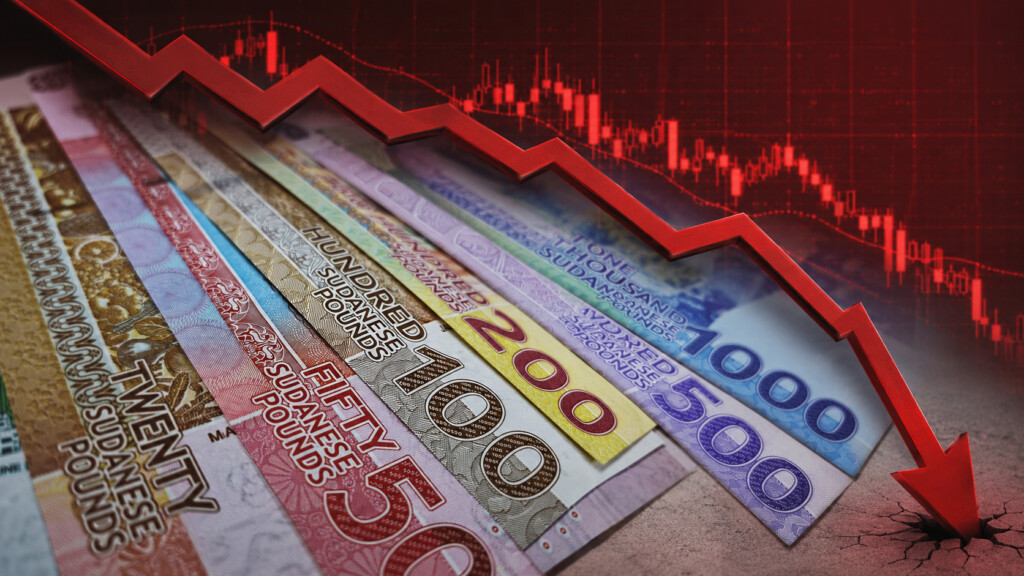
Weaker demand eases US Dollar rate to SDG 7,400 on Sudan’s parallel market
(Graphic RD)
Foreign currency traders in Sudan have reported that the exchange rate for the US dollar against the Sudanese Pound fell to SDG 7,400 on Monday, after exceeding SDG 8,400 last week. Traders attributed the decline since the end of last week to weaker demand, while Faisal Islamic Bank set its Dollar buying rate at SDG 4,334 today.
A shop owner in El Gezira reported a relative decline in prices, with a malwa of wheat falling to SDG 16,000, while the price of animal feed dropped from SDG 170,000 to SDG 140,000.
Reasons for the decline
Economic analyst Ahmed bin Omar told Radio Dabanga that one of the main reasons for the sharp decline in the Dollar exchange rate in recent days is an increase in the supply of foreign currency on the parallel market, coinciding with a relative easing in demand after the sharp rise seen last week. With supply increasing and the pace of buying slowing, the exchange rate quickly moved to lower levels.
The economic analyst explains that an easing of the fuel supply bottleneck has helped reduce pressure on the foreign exchange market, particularly as several fuel-carrying vessels have completed their movements and supplies have improved. This development has reduced some of the demand linked to financing fuel imports, which has been one of the largest sources of demand for foreign currency in recent months.
He says another influential factor is the announcement by Khartoum Bank that it will provide about USD 1 billion in revolving finance for the import of strategic commodities. The availability of this financing gives importers greater access to foreign currency through banking channels, reducing the volume of demand that goes directly to the parallel market.
The announcement itself also affects traders’ expectations, he says, prompting some foreign currency holders to sell as expectations of a continued rise diminish.
“The current decline can be understood as the result of several factors coming together at the same time, most importantly increased foreign currency supply, weaker demand following a strong surge, improved fuel import flows, and the emergence of new bank financing sources for imports,” he says.
Traders remain cautious
At the same time, bin Omar says the rapid decline in the Dollar exchange rate is creating a sense of uncertainty among traders and importers, particularly because some of their current stock was purchased or financed when the exchange rate was higher. The market therefore needs a period of stability before prices begin to respond more clearly to the fall in the Dollar.
He points out that commodity prices usually move more slowly than the exchange rate because inventory costs include the previous purchase price, transport, insurance, fees, and financing costs. The impact of a lower Dollar becomes more pronounced when new shipments financed at lower exchange rates enter the market.
He says a continued decline in the Dollar, combined with stable fuel supplies and expanded bank financing, could support buying and selling activity and gradually ease price pressures, particularly for goods with short inventory cycles.
However, he questions whether the decline can be sustained without fundamental solutions, stressing that ensuring a sustained supply of foreign currency through official channels remains the decisive factor. Any decline in the financing available to importers through banks, or any weakening in foreign currency inflows, would push some demand back towards the parallel market. If that demand returns, pressure on the exchange rate could resume, sending the Dollar higher again.
Impact of the war on the private sector
Finance and Economic Planning Minister Dr Jibril Ibrahim says the war has had a severe impact on the private sector, causing gross domestic product to fall by more than 40% during 2023 and 2024.
Jibril says the state has lost more than 80% of its tax revenues, while oil and export revenues have also halted, creating significant pressures.
He says stability is a fundamental condition for investment and economic activity to return, and that the government is working to establish an institutional and economic foundation.
Note: This report has been translated from Arabic with the assistance of artificial intelligence tools, and subsequently reviewed and adapted by a human editor before publication.

 and then