






MSF: Sudanese clinics close amid aid cuts, leaving millions with shrinking access to healthcare
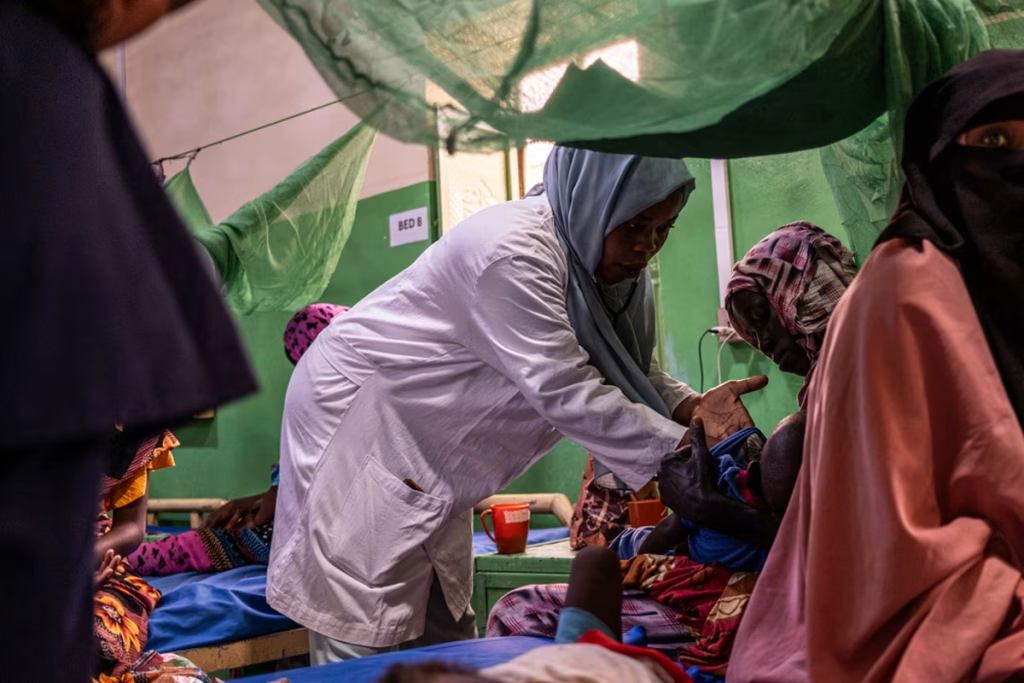
Paediatrician carries out an exam on a child in the MSF run inpatient therapeutic feeding centre at the Zalingei Teaching Hospital, Central Darfur (File photo: Tadeu Andre/MSF)
Humanitarian funding crisis is forcing patients to travel further for treatment as remaining hospitals struggle to absorb the growing demand, Médecins Sans Frontières (MSF) warns international aid cuts are forcing clinics across Sudan to close, leaving people to make longer and more dangerous journeys for healthcare and pushing the country’s remaining hospitals towards breaking point.
In a statement published yesterday, the medical NGO says the effects of cuts to humanitarian funding are becoming increasingly visible amid Sudan’s continuing war and humanitarian crisis. As aid organisations withdraw support, clinics are being left without the funding and medicines needed to operate, forcing patients to seek treatment elsewhere.
Between January and April 2026, admissions to MSF-supported facilities in Zalingei and Rokero, in Central Darfur, rose by 22.5 per cent compared with the same period last year, the organisation says. The pressure increased further in May, when 45 general healthcare centres in Central Darfur stopped receiving support after the organisation funding them ran out of money.
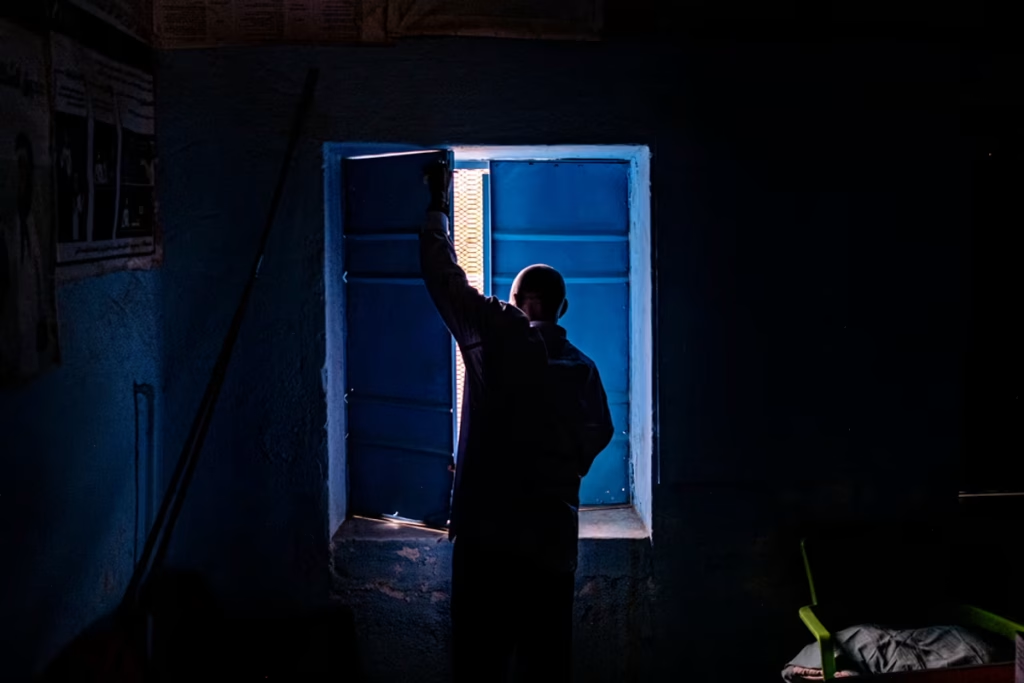
“War is driving Sudan’s needs; funding cuts are shrinking the response,” Muhammad Ibrahim, MSF’s head of mission in Sudan, says. He says that when funding disappears from other health services, clinics close, patients have fewer places to go, and pressure shifts to the facilities that remain.
MSF is calling on governments and institutional donors to protect funding for essential health services and provide flexible transitional financing to prevent facilities from closing.
The consequences are already being felt across the country. In Tanedba camp, in El Gedaref state, which is home to 18,400 refugees, the departure of a humanitarian organisation in June led to the closure of maternity and surgical wards. Pregnant women requiring caesarean sections now face journeys of up to three hours to reach the nearest city, while MSF has taken over the camp’s emergency room until the end of 2026.
In and around Um Rakuba camp, also in El Gedaref state, the number of aid organisations has fallen from about 35 in 2021 to fewer than 10, according to MSF. The camp hosts about 17,000 refugees, most of them women and children.
“Our hospital in Um Rakuba is now the only lifeline left for both refugees and the local Sudanese community,” says Fabrizio Locuratolo, MSF’s humanitarian affairs manager. He says food rations are shrinking, and protection programmes are being dismantled, removing what he describes as the last safety nets for refugees.
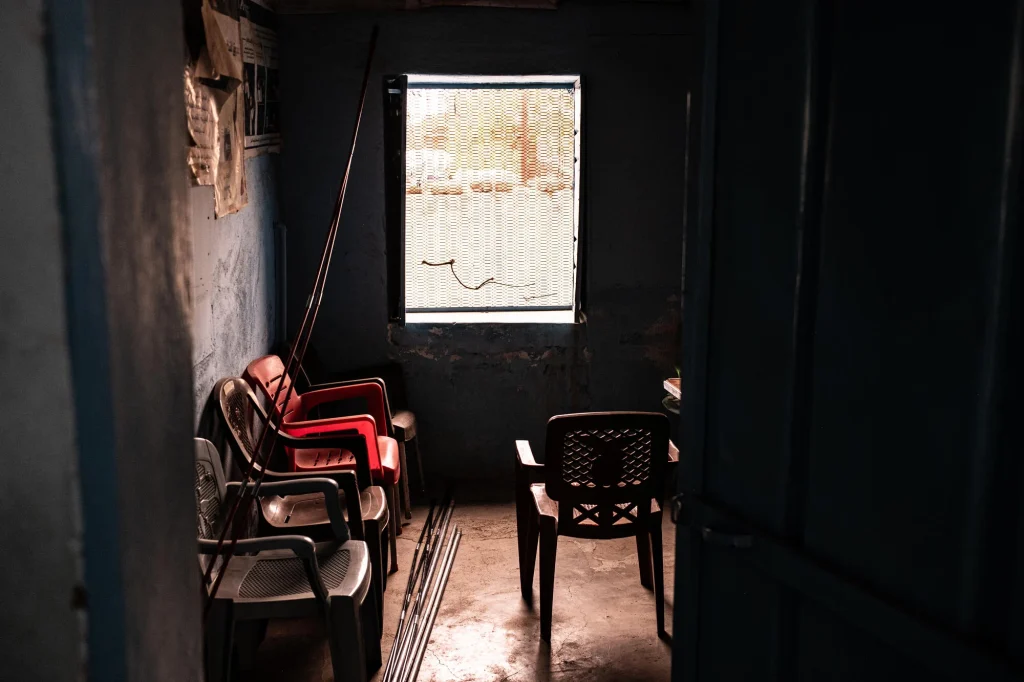
The funding crisis has intensified since the closure of USAID was announced by the US government in 2025, MSF says. Grants to many organisations working in Sudan ended in June this year, and healthcare providers have struggled to find alternative funding to continue their services.
MSF says the pressure has been compounded by reductions in assistance by European governments and a wider contraction in international aid budgets. OECD preliminary figures show that aid from EU institutions fell by 13.8 per cent in 2025, while global humanitarian aid fell by 35.8 per cent.
The figures do not represent equivalent cuts to Sudan, where some European donors have maintained or increased their support, MSF says, but they reflect a contracting international funding environment that is compounding the country’s health crisis.
“Closing a clinic does not remove a single patient. It just sends them to the next facility,” says Sebastián Traficante, MSF’s emergency coordinator in Darfur. Patients often arrive after longer and more expensive journeys in a more serious condition, he says, while hospitals may already be full.
In Hamidiya displacement camp in Central Darfur, a health centre that previously provided maternity, paediatric, and mental health services is operating at sharply reduced capacity after an international aid organisation ended its support.
Daily patient visits have fallen from about 200 to barely 40, while vaccinations have stopped. MSF says the decline does not mean fewer people need healthcare, but that many can no longer justify the journey to a centre unable to provide treatment.
A labourer in Darfur earns roughly $1 a day, according to the organisation, while transport to a functioning clinic can cost $2, forcing some residents to choose between healthcare and food.
“That money could buy food instead,” one patient told MSF. “If there is no food, there can be no health.”
In Tawila, where up to 600,000 displaced people are living, MSF says critical gaps remain despite the presence of about 50 non-governmental organisations. The organisation runs the area’s only 200-bed hospital and says it is the only organisation capable of mounting a large-scale epidemic response.
Cases of malaria and malnutrition are already increasing ahead of the peak of the rainy season, MSF says. In August, its teams admitted 191 children under five with severe malnutrition to an inpatient feeding centre, nearly 22 per cent of whom also tested positive for malaria.
MSF points out that the UN’s $2.87bn response plan is barely 41 per cent funded, while an estimated 37 per cent of Sudan’s health facilities are completely out of service.
The closures are taking place against the backdrop of a large-scale humanitarian crisis. The UN says 825,000 children under five are expected to suffer severe acute malnutrition, while 19.5 million people faced crisis-level hunger earlier this year.

 and then