




Communist Party: ‘Sudan’s war economy deepens the economic abyss’
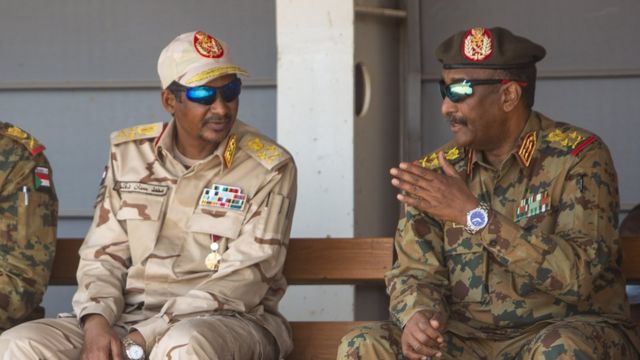
El Burhan and Hemedti before the war (Archive photo: SUNA)
Sudan’s Communist Party asserts the war has pushed the country into the gravest economic and social crisis in its modern history, creating a parallel economy in which military and commercial interests intertwine with smuggling networks.
A detailed statement by the party’s Economic Committee*, seen by Radio Dabanga, suggests that the war has compounded a structural economic crisis built up over decades of failed policies, uneven development, a weakened productive sector, corruption, and reliance on rents and levies rather than productive activity.
Since the war began in April 2023, it says, resources have been drained into armed conflict rather than production, development, and public services. State institutions have collapsed, infrastructure has been destroyed, agriculture, industry, and trade have been disrupted, and unemployment, poverty, hunger, and food insecurity have risen.
The party says the signs of economic collapse include the absence of an auditor-general’s report on what it describes as opaque annual budgets whose details are not published. The war, it says, has halted most economic activity, including industry and agriculture, put much of the banking system out of operation, weakened exports, reduced imports, and driven up inflation and unemployment.
From crisis to the abyss
The Communist Party statement asserts Sudan lost a cumulative 43% of its real output in 2023 and 2024 as economic activity stopped across large parts of the country.
It cites estimates by the Central Bureau of Statistics indicating that 82.8% of the population lives below the poverty line, while food insecurity has spread. Inflation, it says, has remained among the highest in the world, exceeding 200% at times, with prices continuing to rise far faster than incomes.
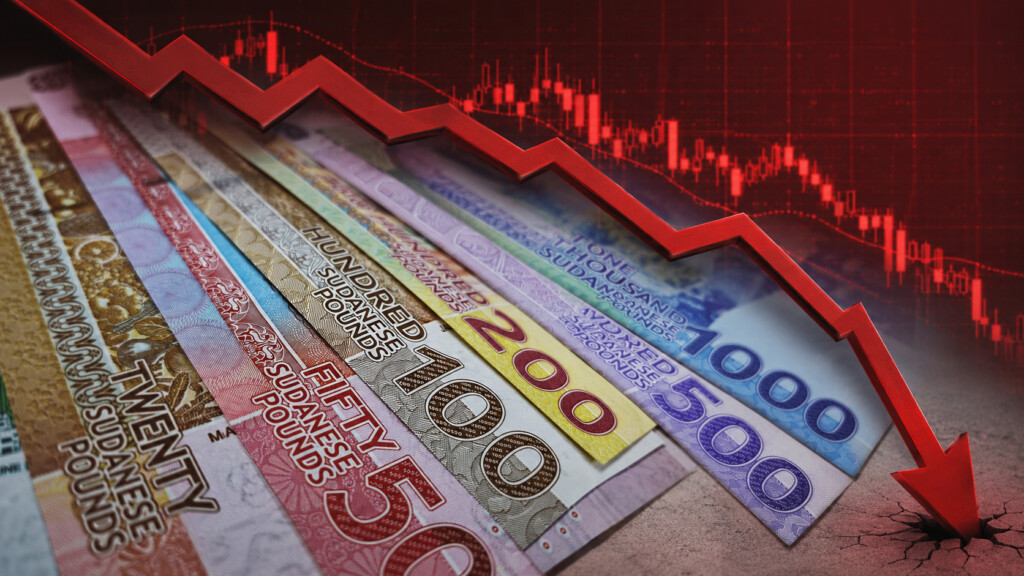
The Sudanese pound has lost most of its value, the party says. The US dollar rose in the parallel market from about SDG 1,100–1,300 during 2024 to nearly SDG 2,900–3,200 by mid-2025, an increase of more than 150% in a year, pushing up the cost of imports and basic goods. By August and September 2026, it says, the dollar had surpassed SDG 6,000.
The customs exchange rate has also risen several times since the start of 2024, the party says, increasing the prices of imported goods and the cost of living. It says the rate exceeded SDG 3,900 in August 2026.
Public revenues have fallen sharply, with the authorities estimating an 80% decline, while the state has become increasingly dependent on fees and levies borne by citizens and producers.
Purchasing power collapses
The most dangerous aspect of the crisis, the party says, is the near-total collapse in the purchasing power of wages.
Salaries for civil servants, teachers, health workers, engineers, labourers, and pensioners now cover only a small fraction of a family’s basic needs, it says.
“Estimates of living costs indicate that average income may cover only about 8–10% of a family’s needs, meaning the living-cost gap exceeds 90%,” the statement says.
Millions of families have consequently reduced spending on food, medicine, and education, and have become dependent on debt or aid, it says.
The party argues that the crisis is not the product of war alone, but also of economic policies based on adherence to the recommendations and policies of the International Monetary Fund and the World Bank.
It says Sudan’s debt burden has exceeded $66bn, while neither donors nor the government have provided transparency over how the debts were spent or who benefited from them.
The party calls for a review of those debts, greater transparency from donors, and the cancellation of debts from which the Sudanese people did not benefit, rather than continued adherence to the recommendations of international institutions and further austerity policies that it says are hostile to economic and social development.
Resources, privatisation, and security companies
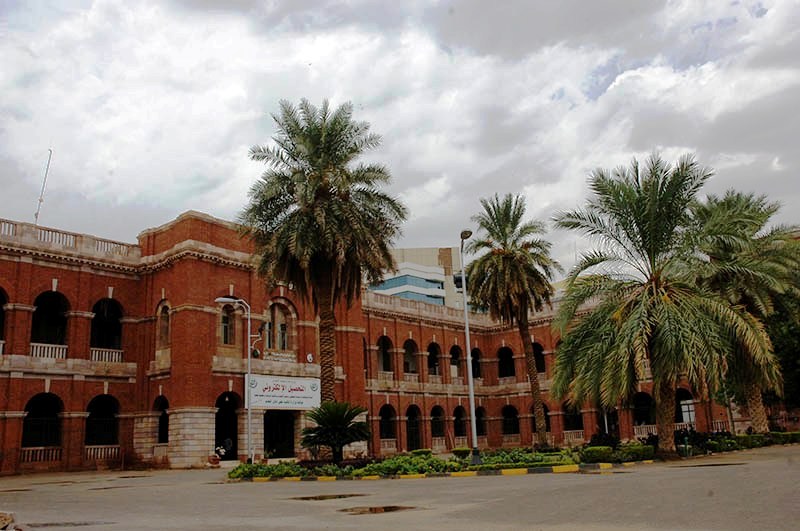
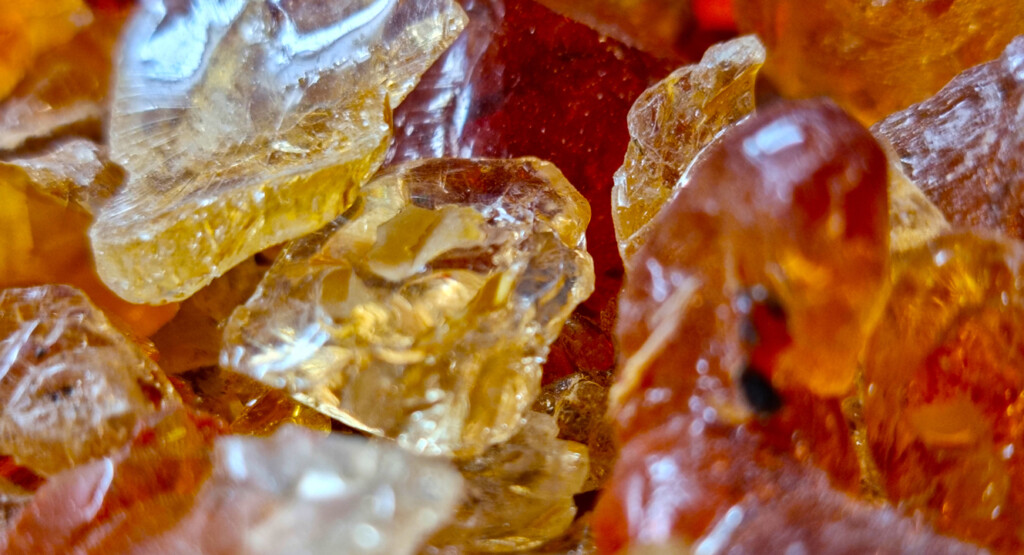
The party identifies the plundering of Sudan’s resources, including gold, gum arabic, and copper, as another factor in the crisis, along with the dismantling of electricity infrastructure.
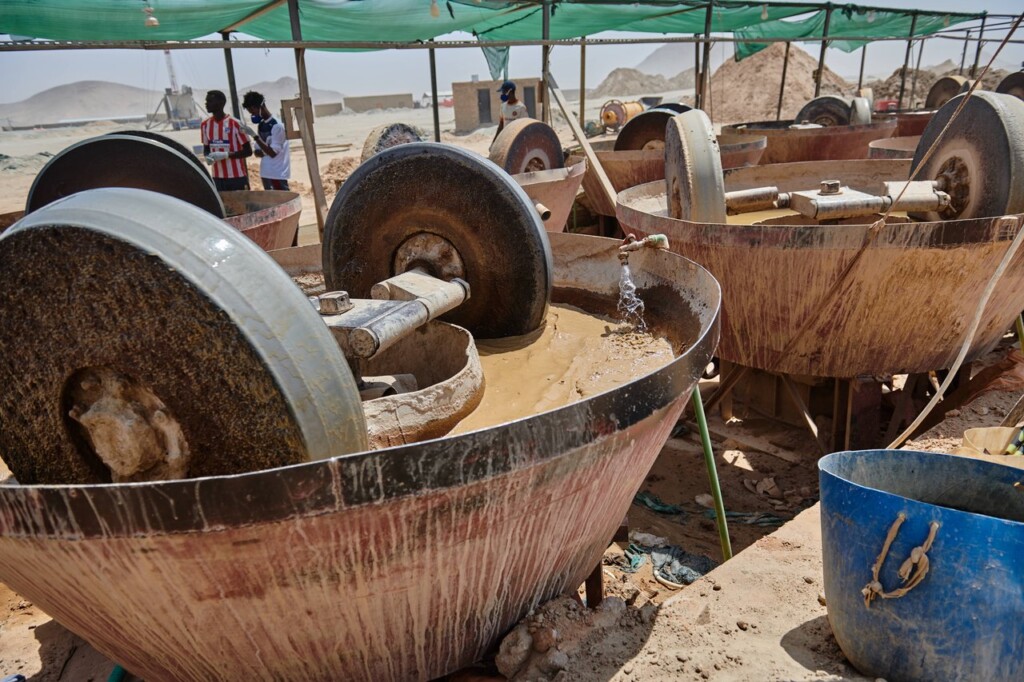
It also points to what it describes as the repeated and organised targeting of mining sites, the seizure of miners’ production and equipment, and the killing of miners.
Another factor, it says, is the sale of public-sector institutions under the banner of privatisation, the failure to support productive sectors, the loss of major sources of public revenue, and the growing reliance on taxes and fees.
It says corruption has also expanded, acting as a form of indirect taxation whose burden falls disproportionately on poor and low-income people.
Public institutions, the statement argues, have been replaced by monopolistic security companies that do not disclose their activities, their borrowing from public funds, their contribution to state revenues, or how they spend their money.
The disruption of agricultural production and mass displacement have also expanded the informal sector, it says, while people in conflict areas and displacement centres face daily struggles to earn a living, particularly women who are responsible for their households.
The party also cites weak humanitarian access and what it describes as signs of systematic corruption in the distribution of aid.
Among other factors, it points to higher prices justified by the removal of subsidies, expanding levies and fees on producers and citizens, neglect of agriculture, industry, and national projects, weak oversight of the gold and foreign-exchange markets, and a lack of transparency and accountability in the management of public resources.
“The war has become a means of draining resources, while people alone pay the price of collapse,” the party statement says.
An existential crisis
The party says Sudan’s economic crisis is no longer merely a financial or monetary one, but a comprehensive humanitarian and cost-of-living crisis threatening the survival of millions.
It says the economy contracted by about 29.4% in 2023, followed by a further 14% in 2024, making it one of the sharpest economic contractions experienced by any economy in recent years.
State revenues, it says, fell from about 10% of GDP in 2022 to less than 5% in 2024 and 2025, sharply reducing the state’s ability to finance basic services, including health, education, water, and electricity.
Prices rose cumulatively by about 848% between 2023 and 2025, the party statement says, adding that a basket of goods costing SDG 100 before the war would now cost about SDG 948.
It says the rising dollar and the collapse in the value of the Sudanese pound are the result of the interaction between war, collapsing production and exports, budget deficits, monetary expansion, weak reserves, and high demand for foreign currency.
Food insecurity has meanwhile reached what the party describes as one of the world’s worst humanitarian crises. About 19.5 million people face acute food insecurity, it says, while hundreds of thousands are living in catastrophic conditions approaching famine in some areas.
The party statement says more than 40% of the population faces acute food insecurity as hunger continues to spread because of war, disrupted agricultural production, displacement, and difficulties in delivering humanitarian aid.
Gold and the war economy
Since April 2023, the party statement says, the war has created a parallel economy in which military and commercial interests intersect with smuggling networks, while transparency and public oversight have deteriorated sharply.
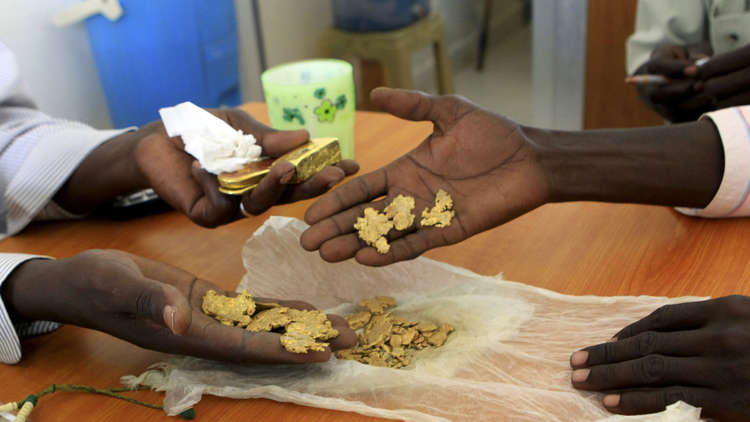
Gold has become the clearest example of a national resource being turned into a means of financing the war rather than a source of public revenue, it says.
According to Bank of Sudan data cited by the party, gold production reached about 70.15 tonnes in 2025, while officially recorded exports amounted to only 14 tonnes. More than 56 tonnes therefore did not pass through official channels, according to that comparison.
The party statement says gold has become one of the most important sources of funding for both sides in the war, with its revenues used to buy weapons, fuel, ammunition, drones, and other military supplies.
The problem extends beyond smuggling, it argues, to the absence of public information and institutional oversight of revenues, spending, contracts, and resources.
During wartime, it says, spending outside the budget expands, while financial resources and public assets can be systematically plundered without accountability.
The party also says the war is being used as cover for what it describes as questionable agreements and projects, including the announcement of the Wadi El Hawad project despite opposition from local residents.
It warns that the danger increases when war is used to justify long-term economic, investment, and strategic decisions under what it describes as illegitimate de facto authorities.
No economic reform without peace
The Communist Party concludes that Sudan now has an integrated war economy based on controlling resources, smuggling gold, collecting money outside official channels, financing military operations, and using the war to weaken oversight and push through strategic contracts and agreements.
“Any talk of economic reform will be meaningless unless it begins with stopping the war, restoring a democratic civilian state, rebuilding the economy on the foundations of production and social justice, holding the corrupt accountable, and recovering looted public funds,” the party says.
The struggle to restore peace and democracy, it says, is ultimately a struggle for bread, work, and human dignity, and for building an independent national economy that places the Sudanese people at the centre of development.
* Disclaimer: The views and opinions expressed in this article are those of the contributing part and do not necessarily reflect the position of Radio Dabanga.
Note: This report has been translated from Arabic with the assistance of artificial intelligence tools, and subsequently reviewed and adapted by a human editor before publication.
 and then