





US moots expanding Darfur arms embargo to cover drones and all of Sudan
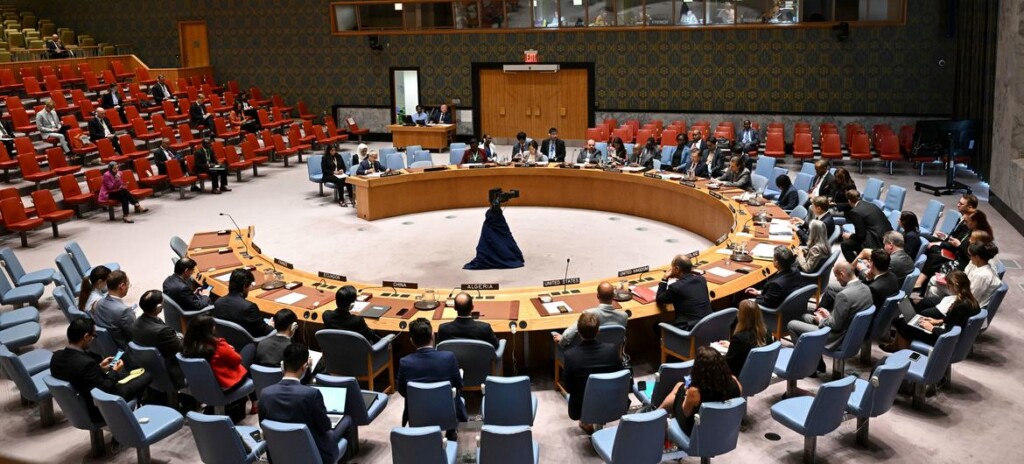
UNSC in session (File photo: UN/Evan Schneider)
The USA has proposed expanding the arms embargo currently imposed on Sudan’s Darfur region to cover the entire country, in an attempt to stem the flow of weapons and drones fuelling the war that has continued since April 2023.

Massad Boulos, the US president’s senior adviser for Arab and African affairs, told the UN Security Council session on Sudan on Monday that more than 12 countries were providing various forms of military support to the two warring parties, helping to prolong the conflict and increase civilian casualties.
The US proposals include clarifying that the arms embargo covers drones, their components, and related technologies, as well as strengthening the capacity of the panel of experts responsible for monitoring sanctions and increasing its cooperation with other UN sanctions teams and panels.
Boulos said the US had “put forward a strong draft resolution that contains four key elements, foremost among them expanding the arms embargo to cover the entire territory of Sudan, with drones, systems, and related technologies falling within its scope”.
He said the draft resolution calls on the secretary general to increase the number of experts on the panel established under Resolution 1591, while urging it to cooperate with other expert panels covering the region. The aim, he said, was to provide the Security Council with better information on violations of the asset freeze, travel ban, and arms embargo.
The existing embargo, under the sanctions regime established by Security Council Resolution 1591 in 2005, is limited to Darfur and does not cover the rest of Sudan. Its extension would require Security Council approval before it could become binding.
Boulos warned that the flow of weapons from abroad had drawn Sudan into an escalating arms race, with military support for one side prompting a corresponding increase in support for the other, turning the war into a “death spiral” for which civilians were paying the price.
He pointed to the growing use of drones by the Sudanese army and the Rapid Support Forces to target hospitals, bridges, humanitarian crossings, and civilian infrastructure. The lack of identifying markings on many drones, combined with their ability to be operated remotely, makes it difficult to establish who is responsible for attacks and hold them to account, he said.
Boulos said the conflict had forced civilians to flee their homes, which were subsequently looted, while many faced horrific atrocities and abuses even as they fled to safer areas. They were also forced to hide from aircraft and drones targeting civilian locations.
He said the growing use of drones had caused widespread destruction, killing more than 1,120 Sudanese civilians during the first half of this year – almost 80% of all recorded civilian deaths in 2026.
Boulos said the army and the RSF were choosing to focus their efforts on escalating violence, seizing new territory, and pursuing an elusive military victory, driven by a desire for revenge and thirst for power, rather than seeking a humanitarian truce and a path towards peace.
He called on the sanctions committee to examine ways of addressing these developments in the methods of warfare, and urged the panel of experts to investigate more extensively the smuggling of gold and links between its proceeds and networks involved in purchasing weapons and drones.
The US official renewed his call for a comprehensive humanitarian truce that would ensure aid could reach civilians across borders and frontlines, paving the way for a permanent ceasefire and an independent, inclusive political process leading to a democratic, civilian-led transition.


 and then