




Water expert urges binding GERD agreement after Nile levels fall in Sudan
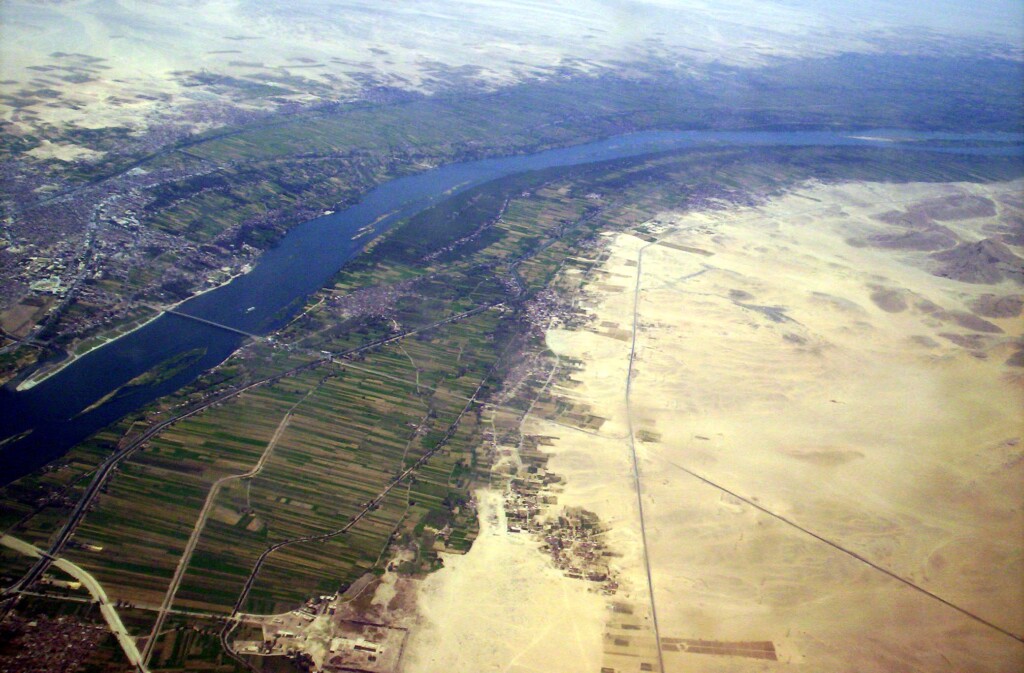
Ethiopia's move to fill the GERD reservoir could reduce Nile flows to fertile land such as Luxor, Egypt, by as much as 25 per cent (Photo: Bionet)
A regional water resources expert has called for a legally binding agreement on the operation of the Grand Ethiopian Renaissance Dam (GERD), warning that the lack of coordination between Ethiopia and Sudan risks repeated water shortages, flooding, and damage to vital infrastructure.
Dr Khaled El Nour Ali told Radio Dabanga that Sudan and Ethiopia must strengthen the exchange of daily operational data and agree clear rules governing the dam’s management to protect Sudan’s water security.
He warned that without regular coordination, Sudan could face recurring drops in Nile water levels or sudden flooding, disrupting drinking water stations, irrigation projects, and causing losses of life and property.
El Nour said Sudan should pursue two parallel measures. The first is to adapt the operation of Sudanese dams to the new hydrological conditions created by the GERD, using daily data and both short and long-term operating plans from Ethiopia.
The second, he said, is to strengthen data-sharing between the GERD and Sudan’s El Roseires Dam in line with the 2015 Declaration of Principles signed by Sudan, Ethiopia and Egypt, as well as a bilateral information-sharing agreement concluded between Sudan and Ethiopia in October 2022.
He stressed that a comprehensive and binding legal agreement on the operation of the dam has become essential. Such a deal, he said, should include clear mechanisms for cooperation during droughts and prolonged dry periods, maximise the shared benefits of the project, safeguard Sudan’s water security, and prevent similar crises in the future.
El Nour also called for the completion of environmental and social impact studies to assess the dam’s effects on Sudan and its population.
‘Falling Nile levels’
El Nour linked the sharp fall in Blue Nile and Main Nile water levels over recent days to reduced inflows from the GERD, citing Sudan’s Ministry of Agriculture and Irrigation.
The decline has forced several drinking water stations out of service, particularly in Khartoum, while also affecting flood-irrigated farmland in northern Sudan.
According to El Nour, such declines usually result from one of two factors: Ethiopia retaining water while filling the GERD reservoir, temporarily reducing the Blue Nile’s flow downstream, or weaker-than-normal rainfall over the Ethiopian Highlands. He added that both factors may also occur simultaneously.
He said the latter scenario is becoming increasingly significant because of climate change. Seasonal forecasts issued by the IGAD Climate Prediction and Applications Centre (ICPAC) in May predicted below-average rainfall across large parts of the Horn of Africa, including the Ethiopian Highlands, during the current rainy season.
‘Lessons from 2020’
El Nour noted that Sudan experienced a similar crisis in July 2020 during the first filling of the GERD reservoir, when several drinking water stations stopped operating after water levels fell unexpectedly.
Just two months later, Sudan suffered devastating floods, illustrating the need for coordinated dam operations, he said.
“The Renaissance Dam should help regulate river flows and strengthen water security,” El Nour said. “Without coordination, however, Sudan can move within weeks from severe water shortages to destructive flooding.”
He also recalled that Sudan wrote to the UN Security Council in September 2020, stating that it did not oppose Ethiopia’s right to development but objected to unilateral decisions on filling and operating the GERD without a prior agreement.
The letter called for a legally binding framework governing the filling and operation of the dam, ensuring regular data-sharing and preventing harm to downstream countries.

 and then