





Sudan inflation accelerates as food and transport costs drive fresh price surge
Graphic: RD / AMB
Report by Suleiman Siri for Radio Dabanga
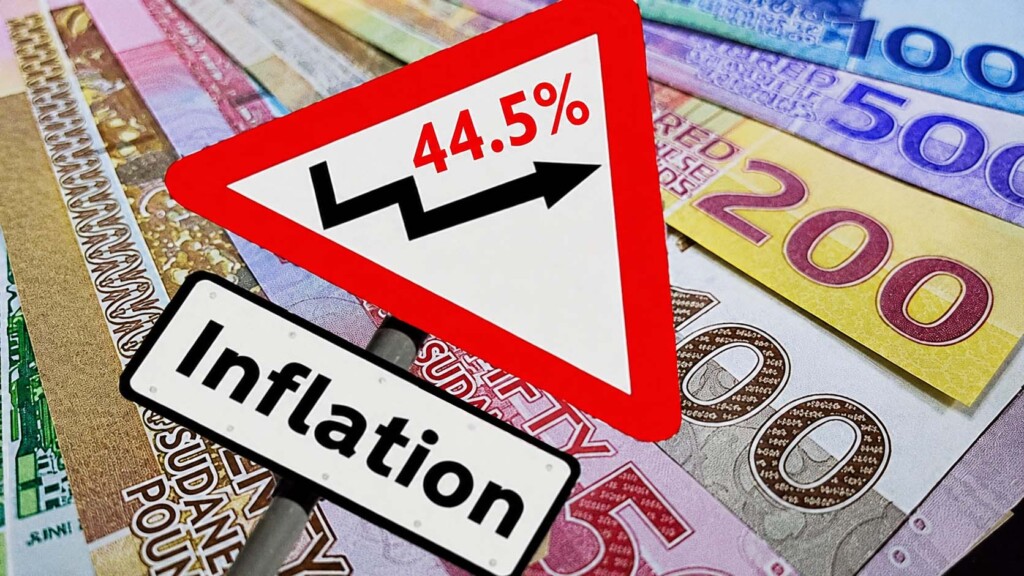
Inflationary pressures are gathering pace again as war, disrupted supply chains and a weakening currency push up the cost of living across Sudan. Sudan’s annual inflation rate climbs sharply to 51.28% in June, up from 44.5% in May, signalling a return of inflationary pressures after a period of relative slowdown, according to the country’s latest consumer price indices.

Speaking to Radio Dabanga, Dr Magda Mustafa Sadig, Dean of the Faculty of Economics, Financial and Banking Studies at Sudan International University, says the increase reflects renewed inflationary pressures, citing figures released by the Central Bureau of Statistics.
The report shows that monthly inflation accelerates to 7.08% in June, compared with 3.97% the previous month, indicating that prices rise much more rapidly during the month.
Dr Sadig says food and beverages remain the main driver of inflation, recording an annual inflation rate of 54.49%, above the national average. As food accounts for around 52.9% of the consumer basket, she says it continues to exert the greatest influence on overall inflation.
Transport records one of the highest inflation rates at 65.89%, underlining the impact of rising fuel and transport costs on the prices of goods and services throughout the economy.
Education costs soar
The economist says education costs have risen exceptionally, with inflation reaching 268.72% following the revision of school fees. Although she described the increase as seasonal, she says it makes a noticeable contribution to the overall consumer price index.
While the Central Bureau of Statistics does not explicitly identify the causes of the increase, Dr Sadig says the continuing war, disruption of supply chains between production areas and markets, higher transport costs caused by fuel prices and insecurity on the roads, declining agricultural and industrial production in several states, and the depreciation of the Sudanese pound are all contributing factors.
She noted that imported goods record inflation of 50.23%, reflecting the higher cost of imports as the currency weakens.
Rising prices for staple foods, particularly meat, fish, dairy products and cooking oils, are also among the principal factors driving inflation higher, alongside significant differences between states resulting from varying security conditions, transport costs, and the availability of goods.
Rural households face greater food pressures
Dr Sadig also highlighted differences between urban and rural areas.
Monthly inflation reaches 8.08% in urban areas compared with 6.3% in rural areas, suggesting that prices rise faster in towns and cities during June. Annual inflation, however, is broadly similar, standing at 51.81% in urban areas and 51.06% in rural areas.
Food inflation paints a different picture. Rural areas record food inflation of 56.8%, compared with 50.81% in urban areas, indicating that rural households face greater pressure from rising food costs.
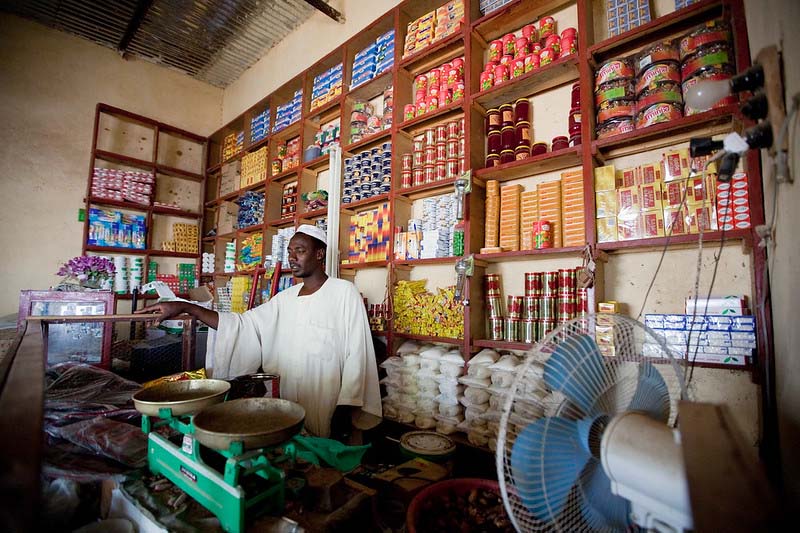
She attributed this to weaker transport networks, the higher cost of delivering goods, reduced local production in war-affected areas and the fact that rural households spend a larger share of their income on food.
Wide disparities between states
According to the Central Bureau of Statistics, North Kordofan records the highest monthly increase in prices at 28.46%, while Blue Nile state records the lowest at just 0.25%.
On an annual basis, Kassala records the highest inflation rate at 151.56%, followed by El Gezira at 75.75% and North Darfur at 66.69%. River Nile state is the only state to record negative annual inflation, at minus 1.05%.
The bureau says the report is based on field data collected in 16 states. Data for Central Darfur and North Darfur continue to be estimated because security conditions have prevented field price collection.
Consumer price data are compiled using a United Nations methodology based on a basket of 663 goods and services across 12 categories, with prices collected from 62 markets covering both urban and rural areas across Sudan.
Estimates for conflict areas
Dr Sadig also questioned the methodology used to monitor inflation in states outside government control, describing it as one of the report’s most important methodological issues.
She noted that the Central Bureau of Statistics has been unable to collect field data in Central Darfur since the outbreak of the war on 15 April 2023 and has instead relied on statistical estimates. In North Darfur, no field data have been available since October 2025, with inflation estimates based on average monthly price changes in neighbouring South and West Darfur.
She stressed that these figures are statistical estimates rather than actual field observations. While this is an internationally recognised practice when data collection is impossible, she says the reliability of the indicators declines the longer estimates replace real data.
Dr Sadig nevertheless praised the Central Bureau of Statistics for continuing to publish inflation data despite the challenges posed by the war, describing this as a significant achievement.
At the same time, she called for the consumer basket to be updated, noting that its weightings are still based on the 2007 Household Expenditure Survey and no longer reflect Sudan’s economic reality after the profound changes in consumption patterns brought about by the conflict.
She also recommended developing new methods of collecting data in conflict-affected areas through digital technologies or local partners, reducing transport costs, which she described as one of the main drivers of inflation, and continuing support for domestic agricultural production to help ease inflationary pressures.


 and then