





Opposition grows to proposed Chinese copper mining in Sudan’s Red Sea state
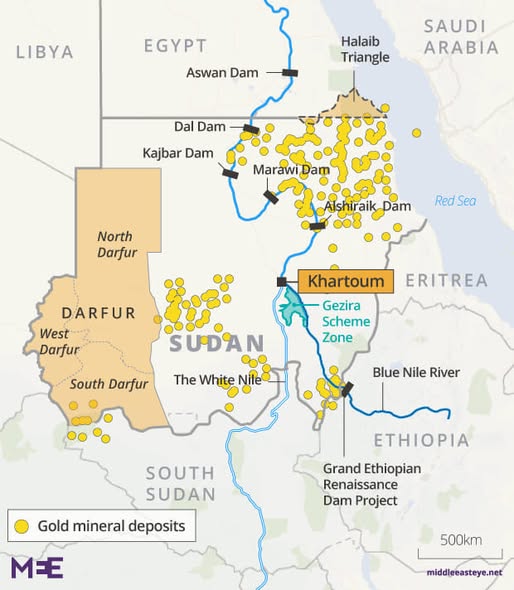
Distribution of mineral resources in Sudan (Source: Sudan Economic Forum)
Opposition is mounting in eastern Sudan over reports that the government is preparing to sign a long-term copper mining agreement with a Chinese company, with local political groups warning that the country’s natural resources should not be committed while war continues and key questions about Sudan’s future remain unresolved.
In separate statements, the Eastern Sudan Advisory Council and the Beja Congress called for an immediate halt to any agreements, understandings or contracts involving the region’s mineral wealth, particularly copper, until the conflict ends and a comprehensive peace settlement is reached.
Sudan holds immense, largely untapped copper reserves, estimated to be among the largest potential resources in the world. While the country’s mining sector has historically focused on gold, global electrification demands and newly signed international deals have triggered a surge of interest in Sudanese copper.
Concerns over a 30-year mining agreement
According to the advisory council, Sudan’s minerals minister, Nour El Daem Taha, has travelled to Beijing to sign an agreement granting a Chinese company the right to explore for copper in Red Sea state.
The council said the proposed deal would run for 30 years and leave Sudan with only 30% of the profits. It alleged that even this share would be reduced through the repayment of outstanding Chinese debts from future extraction revenues.
The total value of the agreement was put at just $300m.
The council called for a freeze on any overseas negotiations concerning regional resources, arguing that no such agreements should be concluded without legislative oversight or consultation with traditional community leaders.
It said the establishment of a national legislative council and elected state assemblies should be a prerequisite for any decisions involving sovereign national resources.
The group also warned foreign companies and international institutions against entering into what it described as agreements lacking full legitimacy, saying such deals could expose investors to future risks and make them complicit in the exploitation of local resources.
Calls for transparency and local consultation
The advisory council said the government should be required to carry out transparent environmental, economic, and social impact assessments before proceeding with any future investment projects.
It argued that local communities, independent experts, and professional bodies should be involved in the process and that the findings should be published for public scrutiny.
The council also pointed to the experience of gold mining in eastern Sudan, claiming that while the region’s gold is exported abroad, local communities are left to deal with environmental pollution and serious health consequences.
Beja Congress opposition
The Beja Congress said it shared the advisory council’s concerns and pledged to continue pressing for what it described as the full rights of eastern Sudan in matters of political representation, resource distribution, development, identity, and cultural heritage.
The dispute comes at a time when copper is increasingly viewed as one of the world’s most strategically important minerals. Demand is expected to surge as countries accelerate the transition to renewable energy and electric vehicles.
Industry forecasts suggest global demand for copper could double by 2035, potentially driving prices significantly higher. Sudan is known to possess confirmed copper reserves in the Red Sea region.
Questions over authority
The proposed agreement has also drawn criticism from academics and researchers.
Abu Fatima Onour questioned how a minister serving in what he described as an emergency caretaker government could make decisions about strategic resources located in a region far from his own political base.
“How can a minister in a temporary emergency administration decide the fate of strategic resources in another region,” he asked, “when fundamental questions about the future of the state remain unresolved?”
He pointed to ongoing uncertainty over Sudan’s future political structure, including the nature of regional governance and even whether the country would remain united.
“The minister’s rush to dispose of eastern Sudan’s resources,” he said, “looks like someone trying to sweep away the ashes before anyone notices what lies beneath.”
Onour also argued that the proposed copper agreement resembled a controversial pre-war deal involving the planned Abu Amama port project and the United Arab Emirates.
“The problem then was poor timing and political instability,” he said. “Those same conditions still exist today, and perhaps in an even more volatile form.”
The debate highlights a broader question facing Sudan as the war continues: who has the authority to make long-term decisions about the country’s wealth while its political future remains uncertain.



 and then