




Reports of amnesty for Sudanese women facing death by stoning: ‘Pardon suspends execution but does not invalidate the sentence’
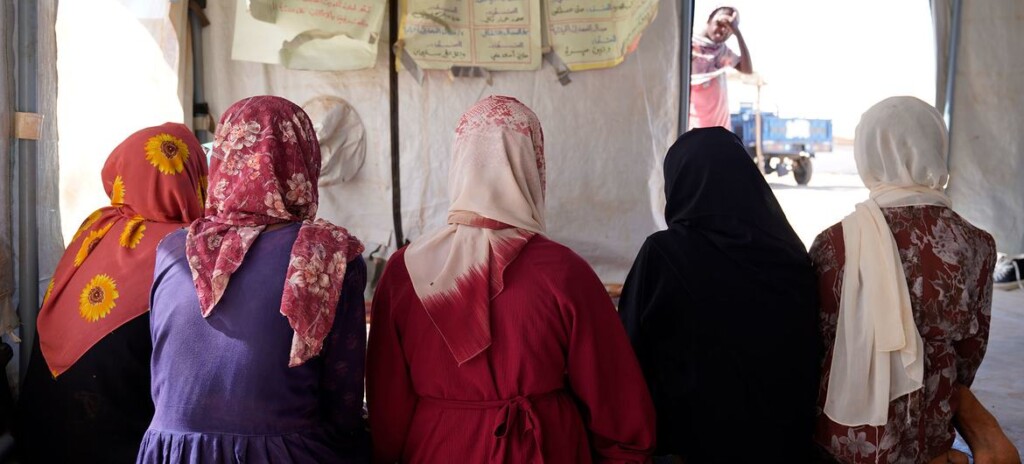
(Image: "No to Oppression of Women" initiative)
Report by Suleiman Siri for Radio Dabanga
The death sentence of two women in two separate cases has sparked widespread controversy and anger among defenders and human rights defenders in Sudan and constituted a public opinion issue, following the publication of the news by the Horn of Africa Women’s Network (CNN). Two women were sentenced to death by stoning by two courts in Blue Nile State and Khartoum Bahri. They were transferred to the women’s prison in Omdurman. Unconfirmed reports that the women might receive a pardon or amnesty from he head of the Sovereignty Council, Lt Gen Abdelfattah El Burhan, have been met with caution.
In a statement seen by Radio Dabanga, the Strategic Initiative for Women in the Horn of Africa (SIHA Network) considers that these sentences are inhumane and come as a direct result of the patterns of criminalization of women and girls included in the Sudanese Penal Code of 1991, noting that it has been systematically used against women and girls even during the war.
The Women’s Network stressed its position that there must be a radical and comprehensive reform of the Sudanese criminal code. It called for an immediate halt to the implementation of laws that target women and girls under the pretext of morality and public morals, especially in light of the “fierce reality of war”.
It also called for a comprehensive and transparent legal review of the Sudanese Criminal Code within the mechanisms and agenda of any Sudanese-Sudanese political agreement, provided that it includes the rights of women and girls and the need to adopt a just legislative framework, based on the foundations of peaceful, inclusive, and democratic governance in Sudan.
She said the legal system in Sudan should protect the rights and dignity of women and girls, rather than enacting and enforcing laws that compound their suffering and legalize discrimination against them.
Protection and dignity of women:
The Head of the European Union Delegation to Sudan, Wolfram Fitter, expressed his grave concern over reports of two death sentences being handed down by stoning against two women, noting that the confirmation of these sentences would represent a dangerous return to extremism and extremism in the judicial system, and indicate that the Sudanese legal system has failed to perform its duties to protect the rights and dignity of women and girls in violation of international conventions.
Meanwhile, news circulated widely in the media about the issuance of a decision by the head of the Sovereignty Council, Lt Gen Abdelfattah El Burhan, to grant a general amnesty for the two women, but the decision was not published on the government’s platforms or the official agency, nor did the Sovereignty Council’s media issue any statement or circular confirming or denying whether the decision was issued or not.
A private source who spoke to Radio Dabanga did not rule out the issuance of a general amnesty decision by the head of the Sovereignty Council, pointing out that it requires time, especially since it came as a result of pressure from internal and external human rights organizations.
He says that there are many other cases of people sentenced to different sentences awaiting the presidential pardon, which may have caused the delay in the issuance of the general pardon decision by El Burhan, and the expectation of the issuance of the decision because the political situation is going through a crisis that the Sudanese government is trying to avoid such sentences that are restrictive to it.
However, lawyer and women’s rights advocate Mona El Tayeb believes that as the head of the Sovereignty Council (and de facto head of state), El Burhan, according to Sudan’s constitutional tradition, has the power to pardon or commute the sentence after the final verdict is issued.
‘A pardon does not invalidate the judicial ruling itself, but rather suspends the execution of the sentence, or replaces it with a lighter punishment, or exempts the convict from it entirely…’
In her interview with Radio Dabanga, El Tayeb said that the pardon does not invalidate the judicial ruling itself, but rather suspends the execution of the sentence, or replaces it with a lighter punishment, or exempts the convict from it entirely.
“But the most dangerous thing that the judiciary can be exposed to is to accuse it of issuing rulings based on political directives, especially from the head of the Sovereignty Council. The judiciary must work through its internal mechanisms (appeals, appeals, review), without any influence from the executive branch, because any external interference shakes confidence in justice and undermines the principle of separation of powers.
She wonders: “But is the solution in the pardon or in the abolition of the law itself?” She adds: “If the debate revolves around the punishment of stoning specifically, the legal problem lies in the legal text itself, which still exists and allows for the punishment.
According to the lawyer and human rights defender, there must be a trend to cancel or amend the legal text, and there must be a radical legislative remedy, because the amnesty is an emergency solution but does not address the root of the problem.
It believes that the real remedy lies in reviewing legislation, reforming the judicial system, and ensuring compliance with the constitutional document and international obligations.
There is no unified judiciary:
Lawyer and human rights defender Mona El-Tayeb describes the issue of the “death sentence of the two women” as very serious, sensitive, worrisome, and can be viewed from many angles, in light of the war and institutional fragmentation in Sudan.
In this regard, she says: There is no unified judiciary, it is difficult to verify the integrity of legal procedures, and the risk of religion and the judiciary being used to perpetuate violence and discrimination is increasing.
This explains why these sentences are described as an indication of the stalemate of the legal system and a return to the use of hudud sentences in a judicial system that already suffers from a lack of independence, weak procedural safeguards, and the collapse of justice institutions due to the war.
She believes that this is what makes women and girls the most vulnerable to these sentences, a direct threat to women’s dignity, evidence of the exploitation of the judiciary in the context of chaos and conflict, and a major setback for human rights.
Lawyer Mona El-Tayeb concluded that any death sentence by stoning is a grave violation of the right to life and the prohibition of torture and cruel or inhuman punishments, which is in direct contravention of Sudan’s international obligations, in particular the International Covenant on Civil and Political Rights and the Convention against Torture.
In that sense, the concern of the Head of the European Union Mission in Sudan is understandable and legally justified.
Back to Legislative Stress:
The view of the researcher and specialist in peace issues, Dr. Hanadi El Mak, agrees with the opinion of lawyer Mona El Tayeb, and believes that the issue is not only related to a criminal punishment, but also a clear political and legal signal, and she wonders: Are we facing a return to legislative rigor that goes beyond the spirit of the reforms announced after 2019, and whether the judicial system, in the context of war and division, is moving steadily towards the protection of rights or is it retreating under the pressure of the context.
She told Radio Dabanga that from a legal point of view, the European concern is understandable. The stoning penalty is internationally classified as cruel or inhumane punishment, which puts Sudan in direct confrontation with its obligations under the Convention against Torture and the International Covenant on Civil and Political Rights. “These are not formal issues, but explicit legal obligations.
As you can see, politically, any sign of judicial toughness in the face of institutional collapse and open war raises a larger question of who is watching who is ensuring the integrity of the procedures and who is protecting the most vulnerable, especially women.
Hence, you see, the statement attributed to the head of the EU Delegation in Sudan, Wolfram Vetter, is not just about two isolated judicial rulings. He reads beyond the event. He reads the direction.
Social Power Scales:
The researcher of peace issues “Mec” points out that the most dangerous thing is that women in the context of armed conflict already live in a dysfunctional environment: displacement, violence, poor access to justice, and unequal social power balances. In such a context, she argues that any maximum punishment that is carried out without strict safeguards transforms from a legal text into a tool that may be used against the weaker.
“But the debate does not stop at international law from the perspective of Sharia, the picture is not as simple as it is sometimes presented. The ultimate purpose in Sharia is self-preservation and the preservation of dignity, and Islamic jurisprudence itself has set strict conditions for the establishment of hudud, and confirmed the rule of preventing borders with suspicions,” according to Dr. Hanadi El Makk, a specialist in peace issues.
It argues that justice is not a procedural elaboration;
Fair Environment:
Researcher Hanadi El Mak raises the question that here is not a belief in the face of human rights. This is a superficial question, while the real question is simpler and deeper at the same time, related to whether the law is applied in a just and stable environment that guarantees human dignity, or is it used in a fragile and turbulent context where guarantees are absent and the balances are imbalanced.
She notes that in a moment of war, justice is not a slogan that protects the idea of the state itself, and that if the sense that the judiciary is fair and just, the damage will not only be legal, but will affect public trust, social peace, and the future of any political transition.
For her part, researcher, feminist leader and former director of the “Gender” Centre, Dr. Nemat Koko, believes that this situation is expected under the current “stateless system” in Sudan.
Speaking to Radio Dabanga, she said: “We are currently in Sudan not talking about a government in Port Sudan and another in Nyala. Rather, we are talking about the complete destruction of Sudan in all its structures and structures, whether political, economic, or social. So, this includes even its legal structure.”
She adds: “In light of the absence of the state in all its institutions, regardless of the political and conceptual framework. It remains that all situations are expected. Including illegal and legitimate rulings, in the sense that they do not derive their legitimacy from any institution, neither legal nor judicial.
She considered that the judiciary itself is part of the structure that exists in Sudan, and accordingly believes that every judge who rules according to his opinion has no law before him. She points out that the punishment of stoning is from pre-Islamic times.



 and then