





A generation without a future: The tragedy of a Sudanese student who war and geography put behind bars
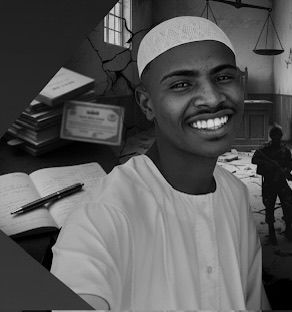
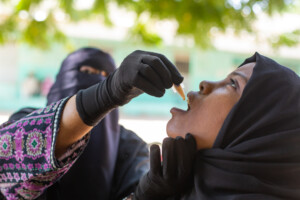
War and geography turned Omar from a student into a prisoner (Photo: Supplied)
Report by: Fath Al-Rahman Hamouda of Al-Taghyeer Newspaper for Sudan Media Forum
Omar, a 21-year-old student, was carrying his pen, a blank notebook and exam papers when the war led to a five-year prison sentence. His only crime was belonging to a region whose inhabitants are viewed with suspicion by the Sudanese army amid the ongoing three-year conflict.
Despite media and human rights advocacy on his behalf, the high school student who later became a university student remains in detention without a specific charge being brought against him.
Omar’s tragedy highlights only a small part of the harsh reality experienced by him and his peers in the Darfur region, who were deprived of schooling for three years and ended up dead, refugees or displaced due to the army’s war with the Rapid Support Forces, in contrast to other students who were able to sit exams in relatively safe areas of the country.
The Ministry of Education is preparing to hold the Sudanese secondary school certificate examinations next April for the 2025–2026 cohort, marking the third such sitting since the outbreak of the war.
Accurate data on the number of secondary schools, students or examination centres in the Darfur region (five states) is unavailable; however, older data indicates there were more than 500 schools, a figure that has changed significantly over the past three years.
In this context, large numbers of students in areas controlled by the Rapid Support Forces and in conflict zones are unable to sit exams, effectively turning education into a tool of war, fragmenting the country, and threatening the future of hundreds of thousands of students, potentially turning them into fuel for the conflict.
Individual solutions
Omar, 21, was a secondary school student in the science track before fate led him to this end. Due to the war between the army and the Rapid Support Forces, he travelled from his hometown in the west of the country to the north to sit the Sudanese Certificate exams. This was his individual solution to the dilemma, as exams had not been held in the Darfur states since the outbreak of war.
But after pursuing his dream — and his family’s — the student’s journey ended behind bars.
Observers believe that the Sudanese Certificate exams scheduled for next April are unfair, given that large numbers of students will not be able to sit them due to their circumstances, especially those residing in areas under the control of the Rapid Support Forces. Parents also fear grim outcomes for their children.
Since the Sudanese government decided to hold the exams under current war conditions, this decision should be accompanied by solutions for these students — though not in the manner experienced by Omar.
The brother of the imprisoned student from the Kordofan region told *Al-Taghyeer* about the ordeal his younger brother suffered about two years ago, saying he was among thousands of students deprived of examination centres in their states because of the war.
In 2024, areas of West Kordofan, including Umm Samima and Al-Khuwai, witnessed violent clashes between the army and the Rapid Support Forces, leading to the cancellation of Sudanese Certificate centres in the state.
Faced with this situation, the family decided to send Omar to his designated exam centre in Dongola, Northern State. His brother said: “Our father was determined that my brother would take the exam despite the war and the long journey.” He added: “Omar left Al-Khuwai on 8 October 2024, travelling along the desert road to Ad-Dabba and then Dongola, carrying his books and documents. He maintained constant contact with his family by phone.”
Omar’s journey ended at the Al-Quld checkpoint, where he was stopped by a group of soldiers. His brother recounts: “They asked my brother, ‘Where are you from?’ He replied, ‘From West Kordofan, from Al-Khuwai.’ After searching him, they asked about his destination. He answered that he was heading to Dongola to sit the Sudanese Certificate exams, but this answer was not enough for them.”
He continued: “Communications were cut off for many hours before Omar’s family received a call from one of the officers informing them that an investigation was under way. Later, the family was shocked to learn that Omar was being tried on charges of belonging to the Rapid Support Forces, simply because he was from West Kordofan and had studied at the Qatari school in Lagawa.”
According to his brother, the detaining authority demanded proof that he was genuinely travelling to sit the exam. “We contacted the administration of the Dongola centre, obtained an official statement and handed it to them, but they said that despite that, he must be brought to trial,” he said.
The case became more complicated when expired Starlink cards were found in Omar’s possession. His brother said: “They claimed these cards pinpoint the locations of the Rapid Support Forces, even though Starlink in West Kordofan was the only way to access the internet.”
The court requested a witness from West Kordofan to swear that Omar did not belong to the Rapid Support Forces. The family sent his uncle from Al-Khuwai to Dongola on a five-day journey, during which Omar remained in prison as the exams approached. His uncle reportedly swore an oath and said he was prepared to bring “500” witnesses to testify that his nephew was a student with no connection to any military group.
Despite this, Omar was sentenced to five years in prison on charges of collaborating with the Rapid Support Forces, without evidence, according to his family. His books and study materials were confiscated, but he did not give up.
Authorities later allowed him to sit the exams from inside prison. He was taken in handcuffs to the exam centre and returned immediately afterwards. He achieved a 55% pass rate in the science stream despite the psychological pressure and harsh conditions he faced.
He subsequently applied for university admission from prison and was accepted into the College of Computer Science at Dongola University. He continues his studies under guard, transported daily from prison to the university at his family’s expense, with no response so far to requests for appeal or release.
“We tried every possible avenue, through lawyers and appeals for clemency,” his brother said, noting that the sentence was later reduced to three years without clear legal justification. As the war intensified in Kordofan, the entire family was displaced to Dongola to be closer to him.
No comment was obtained from the relevant authorities, but Omar’s story reflects a broader reality for Sudanese students who have paid the price of war and division. Education has shifted from being a basic right to becoming another battleground in the shadow of conflict, to the point that the Sudanese Certificate itself has become a symbol of an ongoing crisis.
Shams al-Din Daw al-Bayt, director of the Democratic Thought Project, a non-governmental organisation leading a campaign to safeguard the future of hundreds of thousands of students, said pupils at all educational levels are among the groups most affected by the conflict for the third consecutive year.
He called on fathers, mothers, brothers and sisters to take responsibility for students, based on a national and humanitarian duty that “necessitates doing everything possible to ensure the right of these students to return to their classrooms and sit with their peers across Sudan for the unified Sudanese Certificate Examination this year.”
In a statement outlining the campaign’s aims, he added: “Since last year, the situation has improved for a considerable number of these students in many areas of Sudan. However, hundreds of thousands of our sons and daughters are still deprived of education, especially in Darfur, Kordofan and other areas. At the top of this list are the Sudanese Certificate candidates who have not been able to sit the exam for the third year in a row.”
Daw al-Bayt warned of “dire consequences”, including rising dropout rates and their disastrous social and national effects, increased involvement in violence due to a lack of prospects, environmentally destructive informal economic activity, and child marriage — trends that risk dismantling local communities, undermining stability, and threatening national cohesion.
The Sudan Media Forum and its member organisations are publishing this article, prepared by Al-Taghyeer, to reflect the reality of a generation of Sudanese students who have paid the price of war. Among them is Omar, whose story is particularly stark: he went from being a student striving to sit the Sudanese Certificate exams to a prisoner in Northern State — a case that illustrates the harsh impact of geography and war on innocent students in Darfur and Kordofan.
Find Sudan Media Forum on Facebook and on X (formerly Twitter): #StandWithSudan #SilenceKills #الصمت_يقتل #NoTimeToWasteForSudan #الوضع_في_السودان_لايحتمل_التأجيل #SudanMediaForum

 and then