




Exclusive interview: Former Sudan PM Hamdok in Europe ‘to rally support for peace’
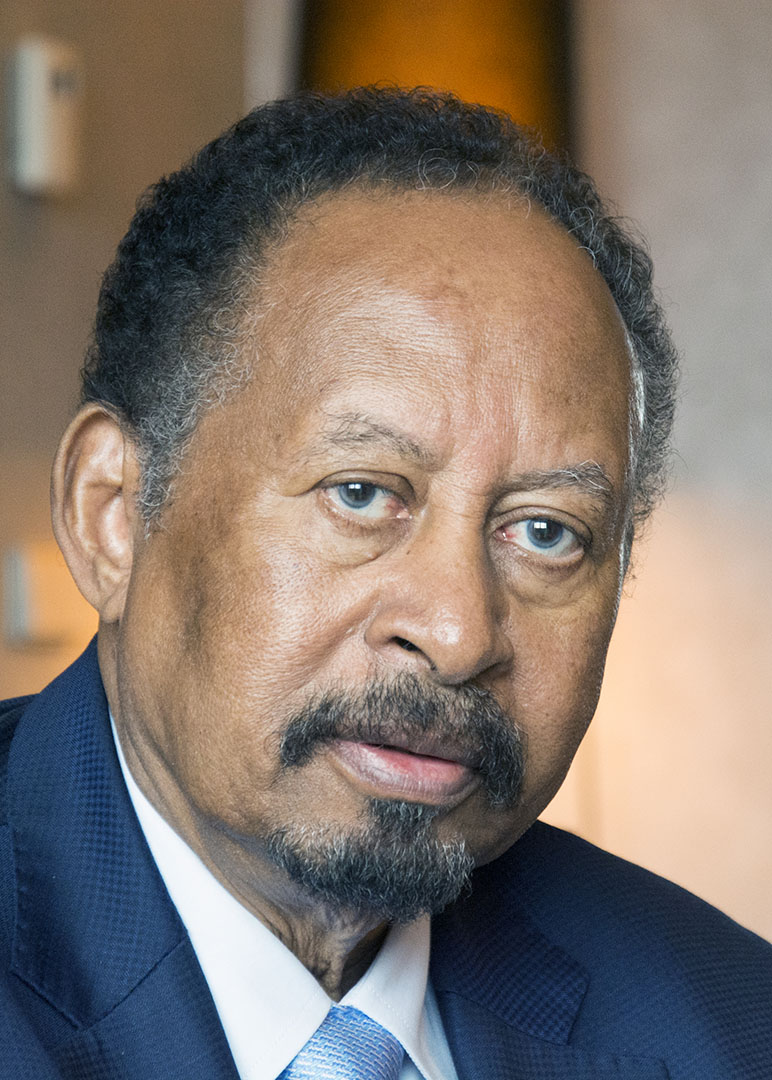
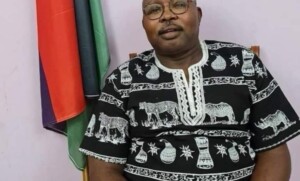
Abdallah Hamdok inteviewed by Radio Dabanga in The Hague on Jan 27, 2026 (Photo: Radio Dabanga / Andrew Bergman)
Amid the ongoing war that has displaced millions of Sudanese and caused widespread collapse of the foundations of life, Radio Dabanga’s Editor in Chief Kamal El Sadig spoke to Dr Abdallah Hamdok, former Prime Minister of Sudan and head of the Civil Democratic Alliance for Revolutionary Forces (Somoud) in The Hague, the Netherlands, in a lengthy interview that addressed developments in Sudan, the objectives of his European tour, his vision for stopping the war and addressing the roots of the crisis, and the role of civil forces and the international community in achieving sustainable peace and a civilian democratic transition.
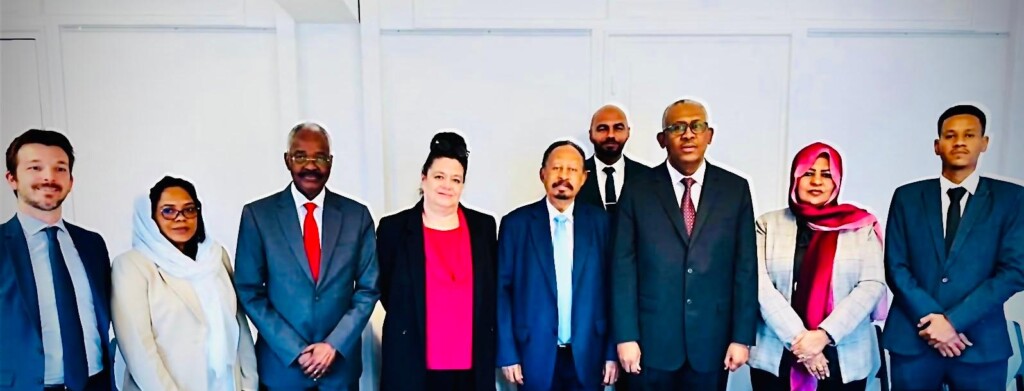
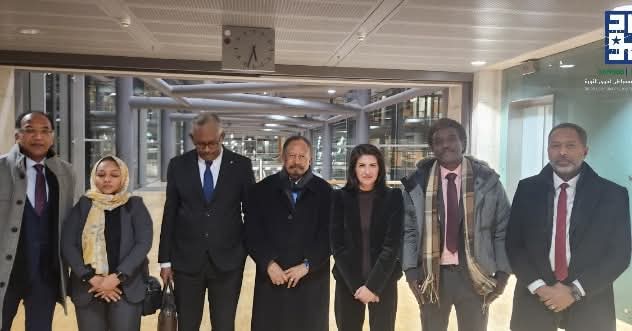
In the interview, Hamdok said that his current presence in Europe, specifically in the Netherlands after visiting France, is part of a tour aimed primarily at rallying support for peace in Sudan. He explained that the tour includes five countries: France, the Netherlands, Norway, Germany, and concludes in the United Kingdom.
Our European tour aims to rally international support to end a war that has created the greatest humanitarian tragedy in Sudan…
He told Radio Dabanga that the aim of this visit is to make the world feel the true magnitude of the Sudanese crisis, at a time when Sudan has become part of what he described as forgotten conflicts, even though what is happening there today represents the largest humanitarian crisis in the world, and even surpasses other crises that receive wider coverage and attention. He said that this tour came in response to the suffering of the people of Sudan, citizens who are suffering from the fires of displacement and refuge, and who are deprived of shelter, food, water, education and health services, at a time when the world’s capabilities have declined compared to what was previously available, which requires making a greater effort to reach the largest possible number of actors.
We would like you to remember there is a country called Sudan which is passing through the most catastrophic and humanitarian crisis in the world today, larger than Gaza and Ukraine combined…
Specifically addressing the international community via Radio Dabanga, Hamdok says: “We are embarking on a visit to Europe, starting in France, then Netherlands, Norway, Germany, United Kingdom, and we have been talking to the regional and international community in various places, whether it’s the US, Canada, our region, the institutions like the United Nations, the Arab League, the African Union, IGAD, the European Union. What we would like to see from our partners and friends in all these institutions, countries, organizations, we would like you to remember there is a country called Sudan which is passing through the most catastrophic and humanitarian crisis in the world today, larger than Gaza and Ukraine combined.
We’d like you to help our people through humanitarian assistance and all that. We do appreciate so many of you, particularly the neighbouring countries, who received with open arms, our refugees, They are sharing with them the meagre resources they have, but we would like their plight, their issues, their sufferings to be addressed. Beyond this, we would like our partners and friends to help us and work with us to address the Sudan peace through a credible, comprehensive political process led by the Sudanese with the support of our friends and partners.”
We presented three paths to stop the war and conveyed the suffering of displacement and refuge to decision-making centres and opinion-making bodies in Europe…
Civilian forces do not possess weapons, but they control the streets…
He noted that their meetings in Europe included government officials, opinion-forming institutions, research centres, media outlets, and civil society organisations, stressing that the main focus of all these meetings was the suffering of the Sudanese citizen, and that the goal was to mobilise support for the people in these harsh circumstances, so that the world would feel the magnitude of the tragedy and realise that the Sudan crisis cannot be ignored.
Regarding questions raised by Sudanese people about how to stop the war given that civilian forces do not possess weapons, Hamdok told Radio Dabanga that they are part of the civilian sphere that constitutes the vast majority of the Sudanese people, and that although they do not possess guns, they possess the power of their people and the broad street, which is a proven weapon that brought down dictatorships in 1964, 1985 and 2019. He added that when Sudanese people unite and have a loud voice, they are capable of achieving something akin to miracles.
Paths to resolving the crisis
He explained that the “Steadfastness” coalition presented its vision for resolving the crisis through three integrated tracks. The first track is a ceasefire, because the continuation of the war and the exchange of fire prevents any meaningful progress. The second track is the humanitarian track, emphasising that human life is paramount and that this is the fundamental basis for any solution. The third track is the political track, for which the coalition proposed a mechanism called the Round Table.
Hamdok stated that this dialogue is based on the readiness of the Somoud Alliance to meet with all civilian forces, including the Founding Alliance, the Democratic Bloc, and other groups outside these frameworks, such as Abdel Wahid Mohamed Nour, the Popular Congress Party, and the Ba’ath Party, to form a preparatory committee representing all these parties. He explained that the committee’s task would be to arrange the conference agenda, agree on its issues, develop a draft peace agreement for Sudan, and reach a consensus on the structure and form of the transition. Following this, a Sudanese-Sudanese dialogue conference would be convened to ratify these issues, after which the transition process would commence.
Civilian ranks are fragmented
He acknowledged that the civilian forces in the current situation are fragmented among various groups, including Somoud, the Founding (Tasees) movement, the Democratic Bloc, radicals, Islamists, and civil society organisations, lacking a unified vision, which has weakened the civilian presence. However, he emphasised that what is needed is not complete unity, as that is impossible, but rather reasonable unity or broad coordination under a single umbrella, where fundamental issues are agreed upon. This is not difficult and has been achieved more than once in Sudan’s history.
He added that this type of coordination creates a strong voice capable of putting pressure on both sides of the war, noting that positive results have begun to emerge, such as the Nairobi Declaration, which brought together the Somoud alliance with the Abdul Wahid Muhammad Nour Movement, the Baath Party, the Popular Congress, as well as the Cairo Charter. Hamdok considered these steps to be a good start towards unifying the civilian forces.
He told Radio Dabanga that Sudan is facing a real existential crisis, warning that continued disputes could lead to the loss of the country itself, and calling on Sudanese to agree on commonalities first to save the homeland, and then leave the field open for political competition later.
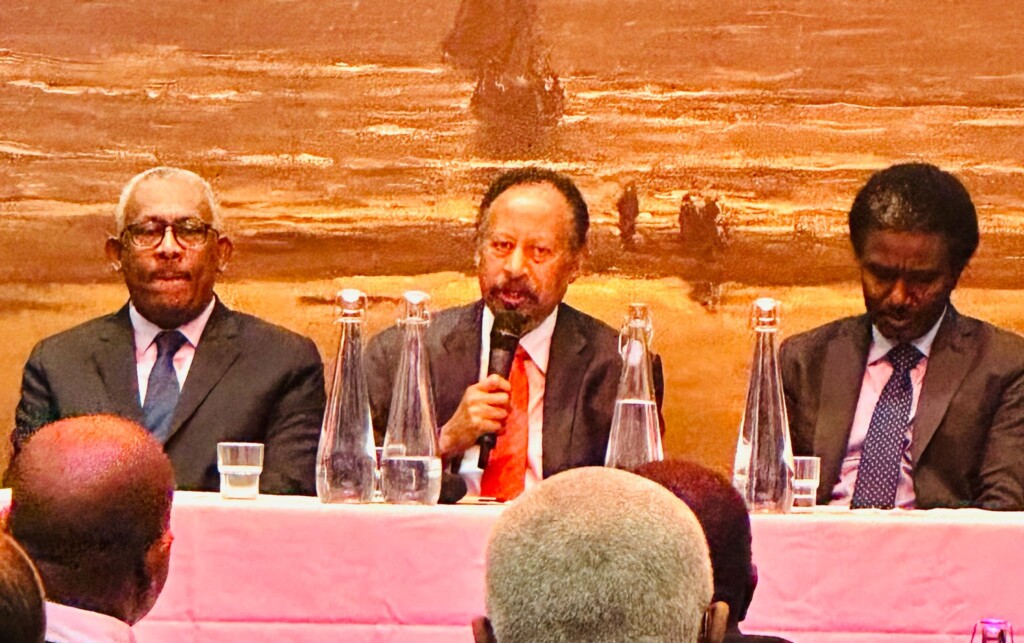
Exception to the dissolved National Congress
He explained that the only exception to the principle of political openness in Sudan remains the forces that “destroyed the country,” referring to the National Congress Party, which was legally dissolved during the transitional period, and the Islamist movement associated with it. In an interview with Radio Dabanga, he indicated that the goal is to replace the one-party state with a nation-state that is inclusive of all, emphasising that this is the foundation for any genuine political settlement.
He added that Sudan is a Muslim-majority country and there is no threat to Islam or fear for it, noting that the civilian forces are working regularly with factions within the Islamic movement, most notably the Popular Congress, which he said deserves credit for its complete break with coups and dictatorships and its clear support for civilian rule, which opens the way for a different Sudan.
Arranging the situation in Sudan
Regarding the role of the international community, Hamdok stated that Sudan’s situation cannot be resolved without the Sudanese voice, and that any initiative that does not incorporate the Sudanese perspective is meaningless. He emphasised that the war was started by Sudanese hands within Sudan, and that its fundamental solution must come from Sudanese civilians, with the role of the region and the international community limited to support and assistance.
In the interview with Dabanga, Hamdok addressed the sharp division left by the war within Sudanese society and even within the same household, explaining that this division is not new, but rather was deepened by the war, and that its roots go back to a long history of marginalisation and mismanagement of diversity.
He stated that the current war presents Sudanese people with only two options: either to restructure the country and build a new, different Sudan based on a new social contract, or to continue down the path of failure that has plagued the state for over seventy years. He explained that the fundamental issues at stake include the relationship between religion and the state, equal citizenship, and the role of the military—issues that must be at the heart of any comprehensive constitutional conference.
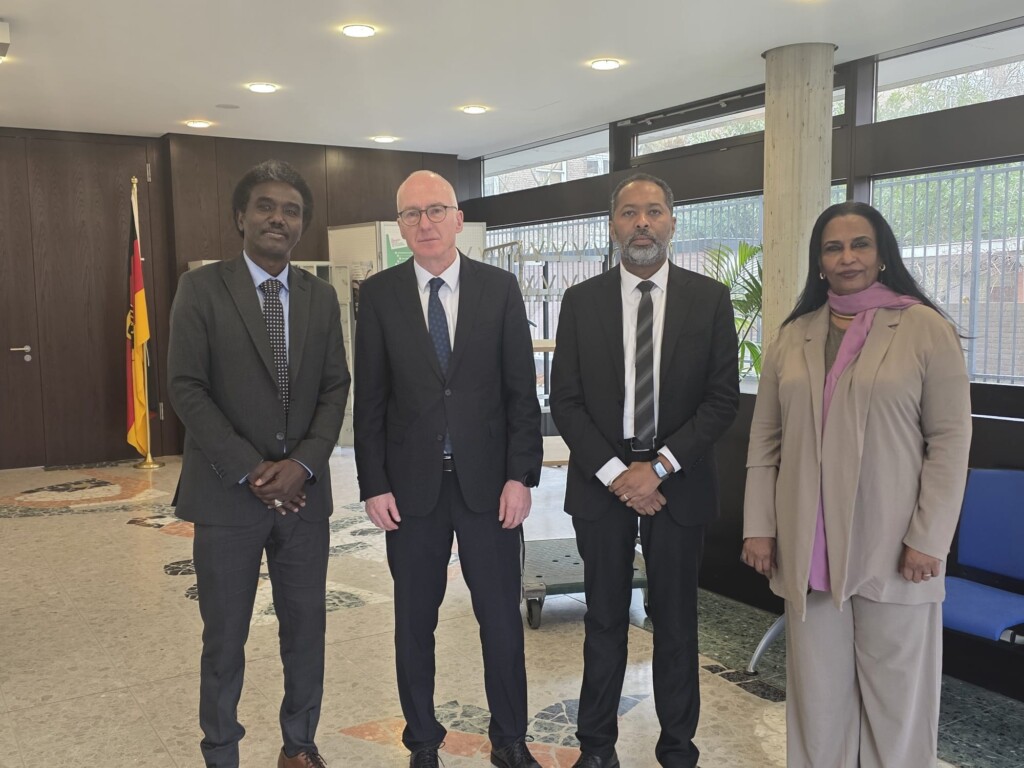
No partnerships with the military
Regarding talk of new military partnerships during the transitional period, Hamdok admitted in his interview with Dabanga that he had previously been a strong believer in civilian-military partnerships, promoting them as a Sudanese model, hoping that after decades of rule, the military would learn that military rule only leads to crises. However, he acknowledged that practical experience had proven this approach wrong, and that there was no justification for repeating the same experiment.
He stressed that any new peace equation must establish a clear and specific role for security institutions, ensuring their professionalism and keeping them away from politics and the economy, while acknowledging their important role in protecting society and the constitution.
He praised the Quartet initiative, which put forward clear principles, a roadmap and timelines, and stipulated a complete civilian transition, security and military reform, and the exclusion of forces that destroyed political life, considering that it is consistent with the vision of the Somoud Alliance.
Sudan faces two choices: a new state or continued failure, and 70 years of failure necessitate a new social contract…
A new social contract and equal citizenship
In diagnosing the reasons for Sudan reaching this stage, Hamdok told Radio Dabanga that the state failed to be reconciled with itself and its citizens, failed to manage diversity, and failed to build unifying ideas, which created the phenomena of centre and periphery and unbalanced development, and drove many on the periphery to take up arms since the 1950s.
He added that the old social contract had failed, and that Sudan needed a new social contract and a constitution drafted with the participation of all, addressing issues of identity, cultural and religious diversity, the distribution of wealth and power, and the building of a national army in which all Sudanese see themselves reflected. He said this was the essence of what he called ‘The New Sudan’ – a Sudan built on different foundations. In a final message via Radio Dabanga, Hamdok appealed to Sudanese people to unite to end the war and put aside their differences, stressing that Sudan’s greatest achievements were accomplished through unity, from independence to uprisings and revolutions, and that the time has come to end the suffering of millions and stop this war.
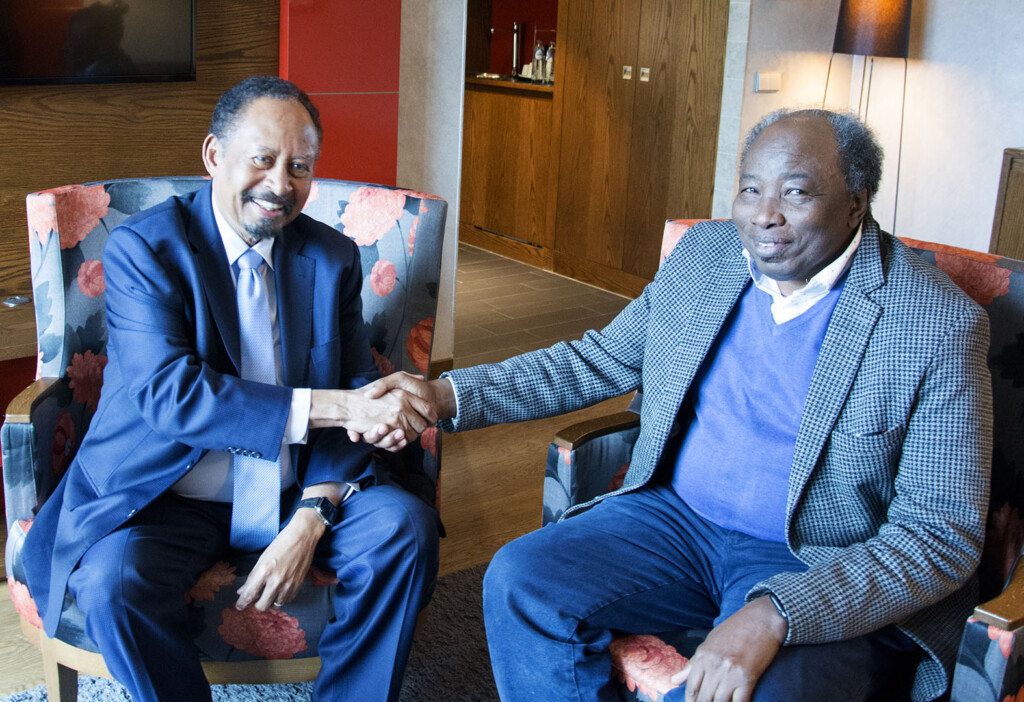
* The Civil Democratic Alliance for Revolutionary Forces (Somoud) is a broad coalition that brings together political parties, trade unions, professional associations, resistance committees, and civil society organisations, united by a shared commitment to end the wars ravaging Sudan—most urgently the ongoing conflict that began on April 15, 2023, the deadliest in the nation’s modern history.
“This war has triggered an intricate regional crisis, where political, economic, social, and geopolitical factors converge. It represents a deliberate effort to crush the December Revolution and prevent the establishment of a democratic state founded on freedom, justice, peace, and accountability. Our mission includes dismantling the remnants of the former Islamic regime and eradicating systemic corruption deeply rooted in both military and civilian institutions.” – (Source: Somoud.net)
 and then