




Sudan’s political divisions surface ahead of Nyon meeting in Switzerland
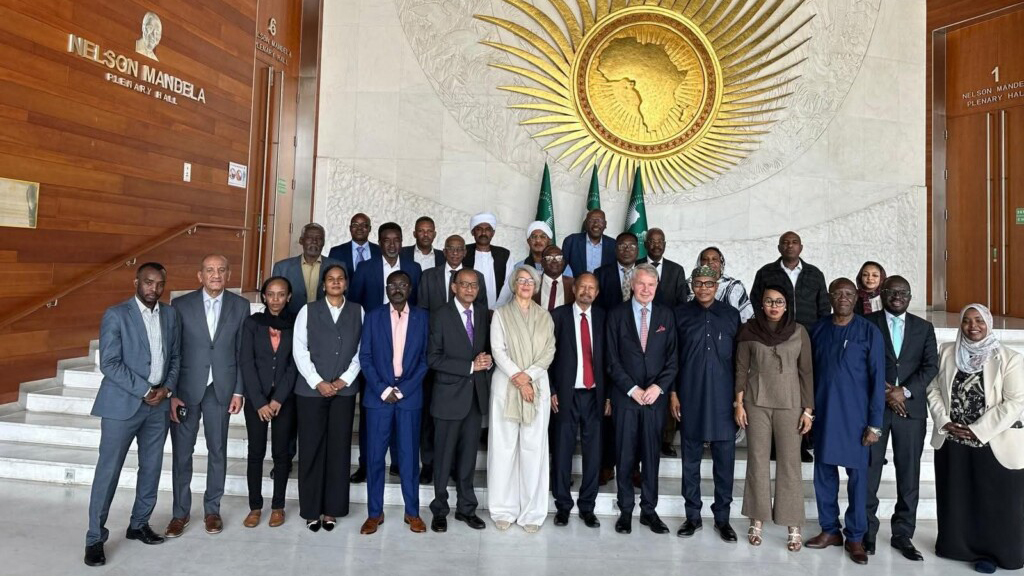
Meeting of anti-war civil forces with the five-member committee in Addis Ababa - October 12, 2026 (Photo: Resilience Alliance media)
Sudan’s fractured political landscape is once again on display ahead of the seventh round of the Nyon process, a Swiss-backed initiative bringing together Sudanese political forces. The Sudan People’s Liberation Movement – Democratic Revolutionary Current, led by Yassir Arman, has announced a boycott, citing objections to the organisers’ engagement with Islamists. Meanwhile, the Tasees Alliance has outlined its expectations of the political process, highlighting the continuing differences over how to end the war and shape Sudan’s political future.
Sudan’s political scene is marked by renewed activity and diverging positions ahead of the seventh meeting of the Nyon process, organised by the Swiss government and the Promediation organisation. The meeting, which is scheduled to bring together Sudanese political forces in Switzerland from 25 to 28 November, comes amid disagreements over the scope and direction of efforts to establish a political process.
The Sudan People’s Liberation Movement – Democratic Revolutionary Current, led by Yasser Arman, has announced that it will boycott the meeting. The announcement coincides with comments by Ahmed Taq Lisan, official spokesperson for the Sudan Founding Alliance (Tasees), who has outlined the alliance’s position on participation in the Swiss initiative.
In a statement issued by its official spokesperson, Maher Mohamed Mahmoud, the Democratic Revolutionary Current said its decision to decline the invitation was based on its longstanding and publicly stated opposition to meetings held by Premeditation with Islamists with the stated aim of unifying their ranks.
The movement considers these engagements a reward for the Islamists’ role in the war, an undermining of the democratic civilian transition, and a disregard for their support for authoritarian rule.
It argued that launching a political process while the war, famine, and drone attacks on civilians continue is untenable without first creating the necessary conditions. These include addressing the humanitarian catastrophe, establishing a single professional national army, and dismantling parallel military formations.
The movement nevertheless reaffirmed its readiness to continue in-depth consultations with the Swiss side, Premeditation, and anti-war political forces to develop a comprehensive approach addressing the underlying causes of Sudan’s crisis.
Tasees sets out its position
In a separate development, Ahmed Taq Lisan, official spokesperson for the Sudan Founding Alliance (Tasees), spoke to Radio Dabanga about the arrangements and details of the Nyon meeting, as well as the consultations under way ahead of it.
He outlined the alliance’s position on the invitations issued and the issues being addressed through the Swiss process. He stressed that any political initiatives or meetings must tackle the fundamental questions underlying Sudan’s crisis, bring the war to an end, and fulfil the Sudanese people’s aspirations for peace and a democratic civilian transition. The contrasting positions expose a persistent difficulty facing international efforts to bring Sudanese political forces together: agreement on the need to end the war does not necessarily translate into agreement on who should participate in negotiations, how the political process should be structured, or what its eventual outcome should be.
 and then