





IOM: Number of displaced people rose in seven Sudan states in October
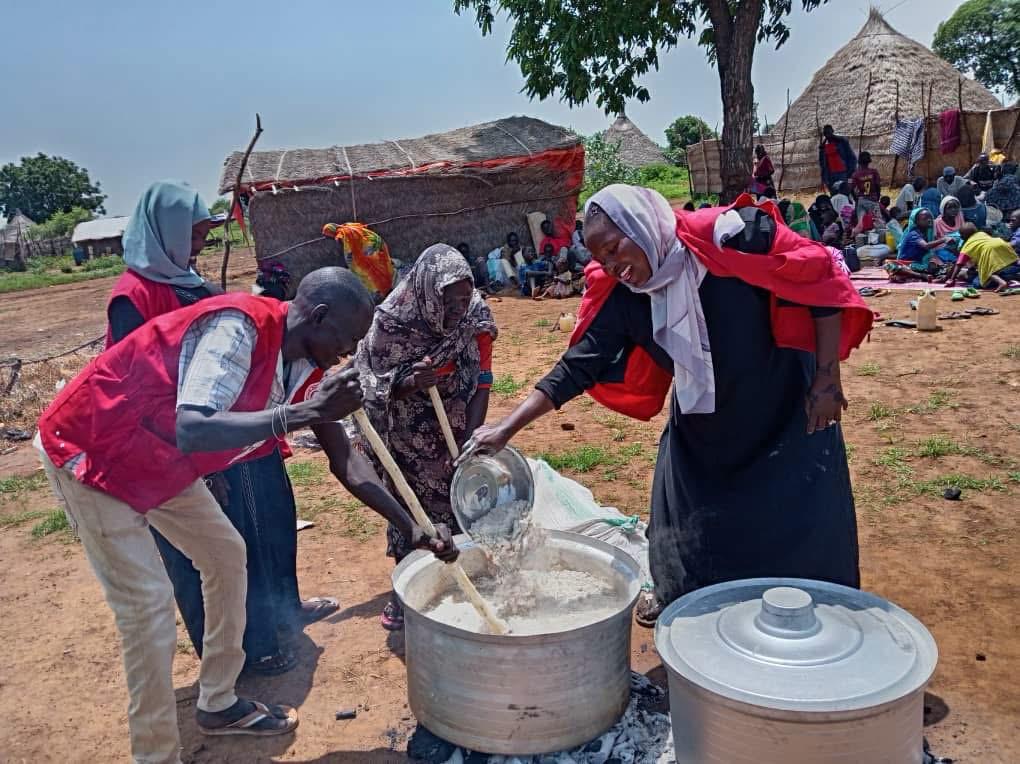
The Sudanese Red Crescent Society, Blue Nile Region Branch, is providing hot meals in camps for displaced people in Wad Al-Mahi Province, Balqwa Village (Photo: Sudanese Red Crescent)
The International Organization for Migration (IOM) has reported a slight increase in the number of internally displaced people in Sudan in October, despite an overall decline of 26% compared with the peak recorded in January 2025.
The International Organization for Migration (IOM) has reported that the total number of internally displaced people in Sudan fell by 26% in October compared with the peak of approximately 11.58 million recorded in January 2025. However, the number rose slightly, by less than 1% (approximately 8,896 people), compared with the previous month.
The report, released on Monday, says that approximately 8,594,507 internally displaced people were spread across 18 states, 185 localities, and 11,878 sites throughout Sudan in October.
Displacement rises in seven states
The report confirms that the number of displaced people in Blue Nile state increased by 6% during October, rising from 417,714 to 443,494. Most were concentrated in the areas of El Roseires and Wad El Mahi, as a result of continuing insecurity in the state.
Displacement also increased in several other states, including Khartoum (by 4%, with most displaced people concentrated in Karari and East Nile), South Kordofan (by 1%), Kassala (by 3%), Central Darfur (by less than 1%), East Darfur (by less than 1%), and West Darfur (by less than 1%).
Nine incidents trigger displacement
The report recorded nine incidents that led to displacement: five in Blue Nile, three in North Darfur, and one in South Darfur. Seven of these incidents were linked to conflict, while two fires caused people to flee their homes.
The report also identified an increase in displacement associated with water shortages, low rainfall, crop failures, and limited livelihood opportunities, particularly in North and South Darfur.
Number of returnees rises by 2%
Meanwhile, the report recorded a 2% increase in the number of returnees during October compared with the previous month, with families returning to 84 localities across the states.
The overwhelming majority of returnees (93%) went back to their usual homes, while a smaller proportion moved to other locations close to their areas of origin.
The total number of people who had returned to their areas of origin reached approximately 5,395,491, across ten states and 84 localities. This included 4,389,661 people returning from internal displacement (81%) and 1,005,830 returning from abroad (19%).
Khartoum state accounted for the largest proportion of returns, at 53% (2,884,725 people), followed by El Gezira state, at 24% (1,312,110 people).
The vast majority of returnees (87%) said improved security in their destinations was the main reason for returning. Others returned because their resources had run out in displacement locations or to reunite with their families.
Cross-border movements and shelter conditions
In addition, approximately 4,748,244 people have crossed into neighbouring countries since 15 April 2023, with movements primarily towards Egypt, Chad, and South Sudan. These figures highlight the continuing severity of the humanitarian crisis and the urgent need for field interventions and sustained support.
The report says that 25% of displaced people (2,168,640) were displaced before April 2023, while 75% (6,425,867) fled following the outbreak of conflict in April 2023.
Around 65% of all displaced people are concentrated in five states in the Darfur region, particularly South Darfur (20%), North Darfur (19%), and Central Darfur (12%).
Regarding shelter conditions, the report says that 37% of displaced people are staying with host families, while 30% are living in gathering sites and 20% have sought refuge in formal camps.
Demographic data indicate that approximately 54% of displaced people are female, while children under the age of 18 account for 48%.


 and then