




Obituary: Mohammed Osman Al-Mirghani, Khatmiyya leader and head of Sudan’s Democratic Unionist Party
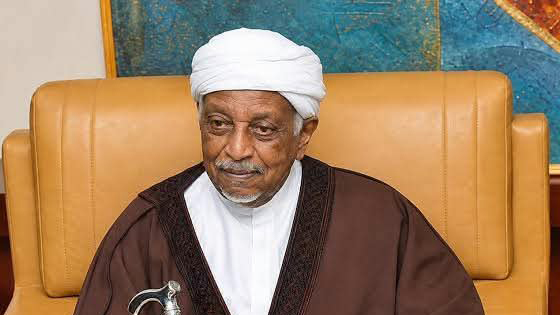
Mohamed Osman Al-Mirghani (1936-2026), spiritual leader of the Khatmiyya Sufi order and head of the Democratic Unionist Party (Archive photo: Supplied)
Mohamed Osman Al-Mirghani, spiritual leader of the Khatmiyya Sufi order and head of the Democratic Unionist Party (Original), died in Cairo on Friday, aged 90. His death has prompted tributes from political forces, civil society organisations, traditional leaders, Sufi figures, and followers of the Khatmiyya order across Sudan.
Sudanese political forces, civil society organisations, traditional leaders, Sufi figures, and the Khatmiyya community have mourned Al-Mirghani, who was born in 1936 in the Hilla Hamad neighbourhood of Khartoum Bahri. He was the grandson of Imam Mohammed Osman Al-Mirghani Al-Khatim, founder of the Khatmiyya order in the 19th century, and son of Sayyid Ali Al-Mirghani, one of the two leading figures of Sudan’s national movement in what became historically known as the ‘two Sayyids’ (Ali Al-Mirghani and Abdelpahman El Mahdi).
Al-Mirghani assumed leadership of the Democratic Unionist Party in 1982. He also led the opposition National Democratic Alliance against the government of former dictator Omar al-Bashir following the 1989 coup.
One of the most significant milestones in his political career was the signing of the Al-Mirghani–Garang agreement with Dr John Garang, leader of the Sudan People’s Liberation Movement (SPLM), in November 1988, in an attempt to end the country’s civil war.
The Khatmiyya order formally mourned Al-Mirghani and instructed its representatives and followers inside and outside Sudan to open mosques and Sufi lodges to receive condolences.
Meanwhile, leaders of the Democratic Unionist Party (Original) announced arrangements to transfer his body to Sudan for burial at the Mosque of Sayyid Ali Al-Mirghani in Khartoum Bahri on Monday, surrounded by his followers and supporters.
Al-Mirghani was known for consistently calling on Sudanese to achieve national reconciliation, unite their ranks, and end the country’s wars. These themes featured prominently in his official speeches.
Throughout his career, Al-Mirghani never held an official executive or constitutional position in the Sudanese state, unlike his younger brother, Sayyid Ahmed Al-Mirghani, who chaired the country’s Sovereignty Council between 1986 and 1989.



 and then