





Drone attacks deepen suffering of women and children, Sudan activists warn
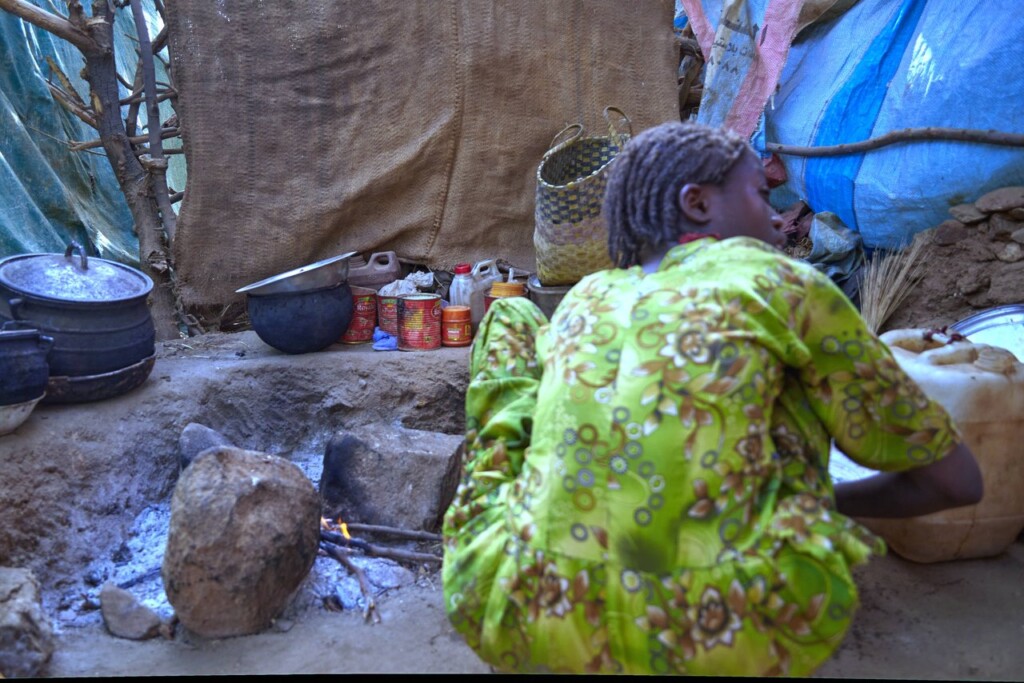
A displaced woman tends a cooking fire in Sortony Camp in Sudan (Archive photo for illustration: RD Correspondent)
Sudanese feminists and women’s rights activists warn that the use of drones in Sudan’s war is worsening the humanitarian and health crisis facing women and children. Attacks on populated areas, civilian infrastructure, and essential services are depriving civilians of their rights to life, security, food, and medical care. They warned of the escalating humanitarian and health consequences of the use of drones in the ongoing war in Sudan. They say attacks on populated areas, civilian facilities, and essential services are compounding the suffering of women and children and depriving civilians of their rights to life, security, food, and medical treatment.
The women call for an immediate end to the war and the use of indiscriminate weapons, the opening of safe corridors for humanitarian aid, and independent international investigations to hold those responsible for violations to account.
Lawyer and director of the El Gezira Centre for Human Rights, Noon Koshkosh, tells Radio Dabanga that the use of drones in Sudan’s war has become an increasing threat to civilian lives. Their relatively low cost, speed of deployment, and ease of operation have contributed to the growing risks facing people across the country.
Koshkosh explains that drone attacks have left no areas that can be considered safe. Strikes have hit locations in northern, eastern, southern, and western Sudan, including the Abyei area, which is covered by agreements providing for demilitarisation.
She points to the deaths of at least 360 civilians in drone strikes in less than three weeks, according to information she cited.
She adds that the danger of these attacks extends beyond the immediate loss of life to the targeting of hospitals, schools, shelters for displaced people, and vital infrastructure, including power stations and fuel facilities. This is worsening the humanitarian crisis and undermining civilians’ ability to access essential services.
Women and children bear the heaviest burden
Koshkosh stresses that women and children are among those most severely affected by drone attacks because of their additional health and humanitarian needs, amid deteriorating living conditions and difficulties accessing food and medicine.
She says attacks on food convoys and the absence of safe corridors increase the risks facing families, whether they remain in conflict areas or attempt to flee.
She calls on the warring parties to listen to reason and reach an urgent humanitarian truce that would allow safe corridors to be opened for aid deliveries and enable civilians to obtain food, medicine, and other basic necessities.
Lawyer and human rights activist Nafisa Hajar describes the use of drones in populated areas as a dangerous escalation and an explicit violation of human rights. She says the attacks target civilians in their homes, hospitals, and displacement centres.
Hajar tells Radio Dabanga that women and children bear the greatest share of the humanitarian losses. She warns against treating their lives as collateral damage in the war, particularly as women have increasingly become the primary breadwinners for their families and the mainstay of household survival.
“Targeting women leads to the breakdown and displacement of families, while violence and armed attacks expose children to death, injury, and psychological trauma that may have long-term effects on their future,” she says.
Hajar cites the 1949 Geneva Conventions and their additional protocols, which require civilians and civilian objects to be protected during armed conflicts.
She says the use of drones in densely populated areas without observing the principles of distinction and necessary precautions constitutes a serious violation of international humanitarian law and may entail individual criminal responsibility for those responsible.
She warns that continued violations, in the absence of practical international action beyond statements of concern and condemnation, are creating conditions for impunity.
She calls for independent international investigations to document crimes, identify those responsible, and hold them accountable, as well as pressure on countries supplying weapons to the warring parties or facilitating their acquisition.
Calls to end the war and protect civilian lives
Qamaria Omar, a member of the Sudanese Teachers’ Committee, says demands should not be limited to condemning the use of drones. The priority, she argues, must be a comprehensive end to the war, given the killing, displacement, hunger, and violations suffered by civilians, including sexual violence.
Omar tells Radio Dabanga that Sudanese citizens have consistently borne the greatest burden of the war, regardless of whether drones or other weapons are used.
She stresses the need to stop attacks on civilians, civilian objects, and infrastructure, including markets and sources of food, water, and electricity.
“The continued targeting of facilities on which people depend in their daily lives increases their suffering,” she says, calling on both sides of the war to stop fighting and refrain from putting civilians’ lives at further risk.
Lawyer and human rights activist Suhair Saeed calls for an immediate halt to the use of drones and indiscriminate shelling. She says military operations must be kept away from civilian homes, markets, displacement shelters, hospitals, schools, and water and electricity facilities, as well as bridges and transport networks.
Saeed explains to Radio Dabanga that these facilities are civilian objects belonging to neither side of the conflict. Rather, people depend on them to access essential services and maintain their daily lives.
Destroying a water station or hospital, she says, affects far more than the facility itself, depriving thousands of civilians of essential, life-saving services.
Saeed stresses that international humanitarian law obliges parties to a conflict to protect civilians and civilian objects and take the necessary precautions to avoid harming them.
She calls for an end to attacks on residential areas and infrastructure, guarantees for humanitarian access, and protection for women and children from killing and violence.
Comprehensive ceasefire and humanitarian corridors
Niemat Koko, a researcher on development and alternative policies and a gender expert, tells Radio Dabanga that the priority must be a demand for a comprehensive ceasefire as a means of protecting the lives of Sudanese women and men, rather than merely a measure to protect civilians and civilian infrastructure.
She points out that the lives and family and emotional ties of millions of Sudanese living abroad remain closely connected to their relatives inside Sudan, making the right to life and security an issue that extends beyond the boundaries of conflict zones.
Koko calls for safe humanitarian access routes to be opened after a ceasefire and for aid to be delivered unconditionally. Distribution should take place under the supervision of international institutions, with the participation of Sudanese civil society organisations across the country, rather than being restricted to areas directly affected by the conflict.
She says the needs of displaced women and men in different states must also be taken into account.
The speakers emphasise that civilian protection must not be tied to negotiation processes or political arrangements, but is an urgent legal and moral obligation.
They say Sudanese people need security, water, medical care, food, education, and a dignified life, not further bombardment and destruction.


 and then