





Darfur faces looming famine as emergency rooms report crop failure — Justice Africa Sudan calls for immediate ceasefire, humanitarian access
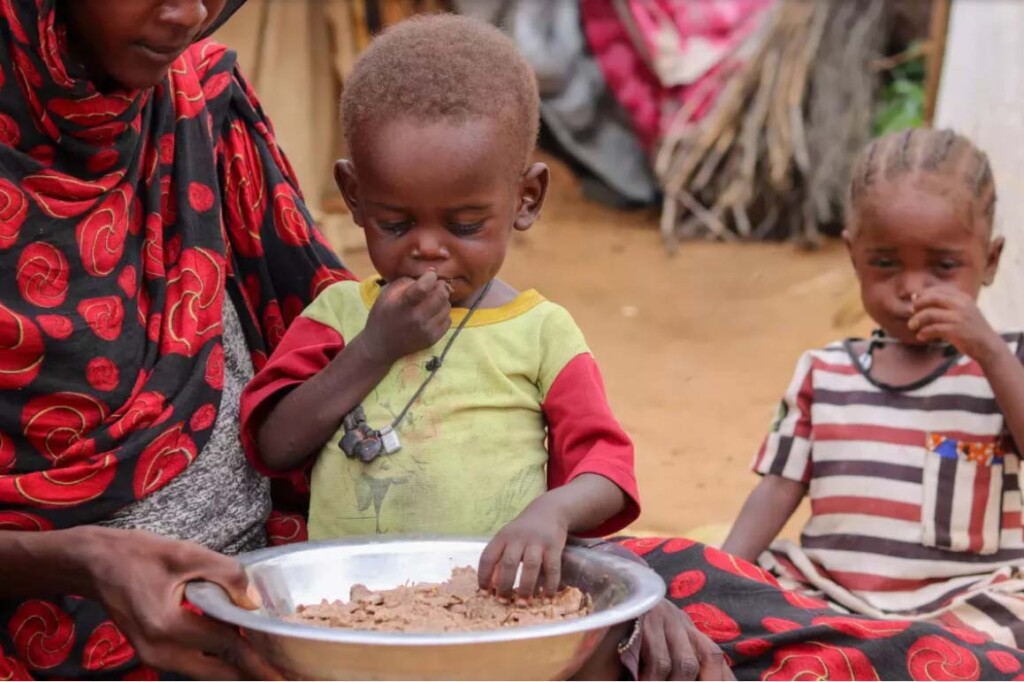
Displaced children in Darfur eat a meal prepared from ambaz (animal feed), which is usually used as animal feed (File photo: UNICEF)
Nineteen agricultural emergency rooms across Darfur warn that the current farming season has failed, raising fears of impending famine as drought and irregular rainfall devastate crops. Justice Africa Sudan (JAS) estimates harvest losses of around 90 per cent across key sorghum-producing regions and calls for an immediate and unconditional nationwide ceasefire, unhindered humanitarian access, and an adequately funded international emergency response to avert catastrophic loss of life.
Jalal Eddin Abkar Yousif tells Radio Dabanga that 2026 is unfortunately one of the worst years Sudan has experienced, owing to low rainfall and drought affecting very large parts of the country.
He says the agricultural emergency rooms initially aimed to cultivate more than 1,800 feddans during the rainy season. However, due to limited resources, insufficient rainfall, and inadequate funding, the target was reduced to 1,100 feddans, covering more than 1,000 beneficiaries.
He adds that rainfall was intermittent, resulting in poor crop germination from the outset. Crop growth also remained weak, with the drought causing crops to fail in some cultivated areas.
Meanwhile, the harsh humanitarian and living conditions caused by the failure of the agricultural season, following drought and insufficient rainfall, have forced thousands of families to flee from Mershing to Tawila, Shangil Tobaya, and Nierteti. Others have been forced to cross the border into Chad to escape hunger and the loss of their livelihoods.
Adam Rijal, the official spokesperson for the General Coordination of Displaced Persons and Refugees in Darfur, tells Radio Dabanga that approximately 538 families, comprising 3,227 people, arrived between 15 October and 6 November, according to field monitoring.
He says new families have continued to arrive in recent days, while humanitarian needs are increasing at an alarming rate.
Justice Africa Sudan
In a statement today, Justice Africa Sudan (JAS), which advances justice and accountable governance in Sudan, documents human rights violations, supports civic space, and contributes evidence-based research, calls for an immediate and unconditional nationwide ceasefire, warning that the country faces an escalating risk of famine following the catastrophic failure of the current agricultural season.
Based on field assessments in key sorghum-producing regions, including South Kordofan, Sennar, El Gedaref, Greater Kordofan, and Greater Darfur, JAS estimates harvest losses at approximately 90 per cent. These regions traditionally supply staple food to more than 70 per cent of Sudan’s population. The organisation says more than 75 per cent of Sudanese are experiencing acute food insecurity, while humanitarian assistance has declined significantly amid funding shortfalls and access restrictions.
JAS urges the international community to secure unhindered humanitarian access, protect and monitor aid corridors, and provide an adequately funded emergency response covering food, nutrition, healthcare, water, sanitation, and livelihoods. It also calls for an inclusive peace process and greater support for Sudanese civil society and local responders, warning that continued hostilities risk causing catastrophic and avoidable loss of life.




 and then