




UK-led warning: famine risk is rising in Sudan as 19.5 million face acute hunger
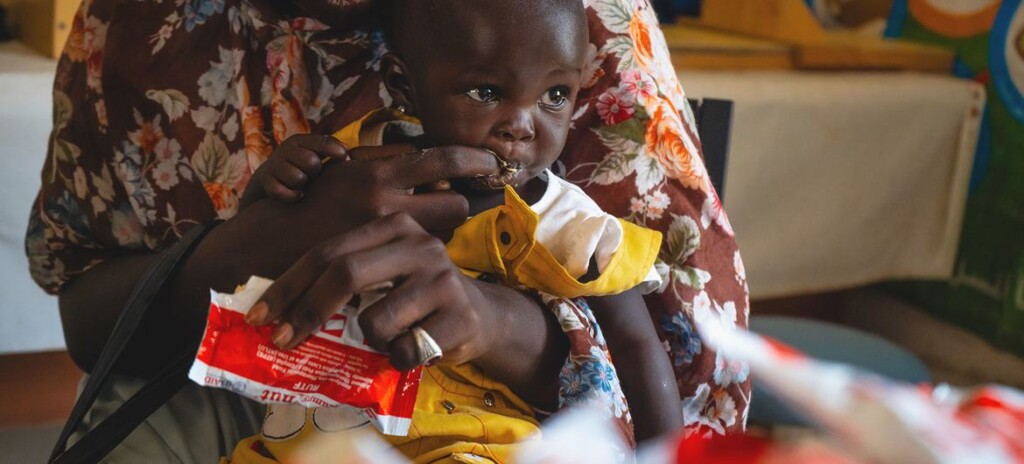
An eight-month-old girl receives treatment for severe acute malnutrition after receiving rations at a WFP-supported nutrition centre in Port Sudan (Archive photo for illustration: © WFP/Abubakar Garelnabei)
A joint statement by the UK and 31 partners urges the warring parties to lift restrictions on aid, protect humanitarian workers, and allow air access into Darfur as food insecurity worsens. The Emergency Lawyers group has welcomed the joint ministerial statement, while the displaced people’s coordination body calls for 90-day humanitarian truce in Sudan,
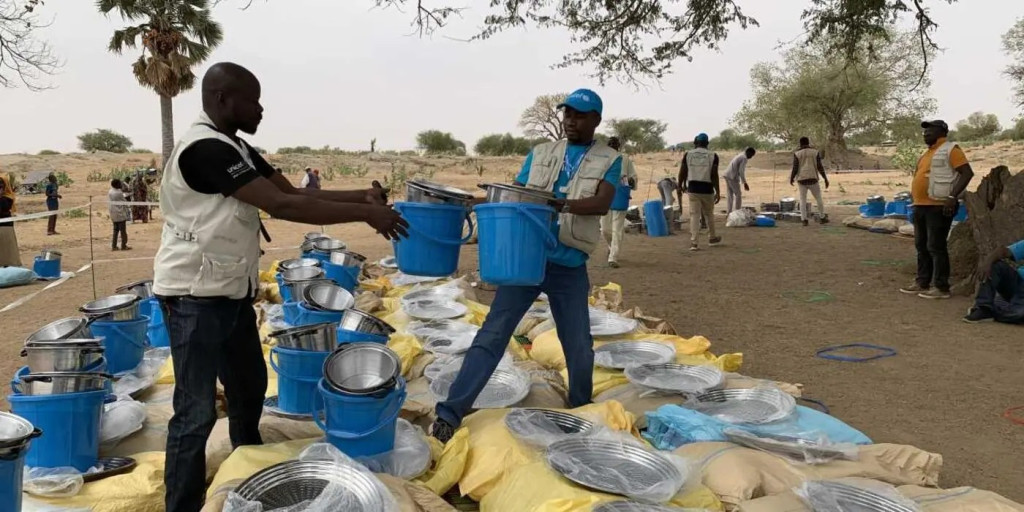
A UK-led international warning* has called for urgent action to avert famine in Sudan, where an estimated 19.5 million people are experiencing high levels of acute food insecurity, including 5 million facing emergency levels.
The joint ministerial statement, published on 23 October by the UK and 31 international partners, warns that Sudan’s food security is deteriorating alarmingly and that the risk of famine in the coming months requires immediate action.
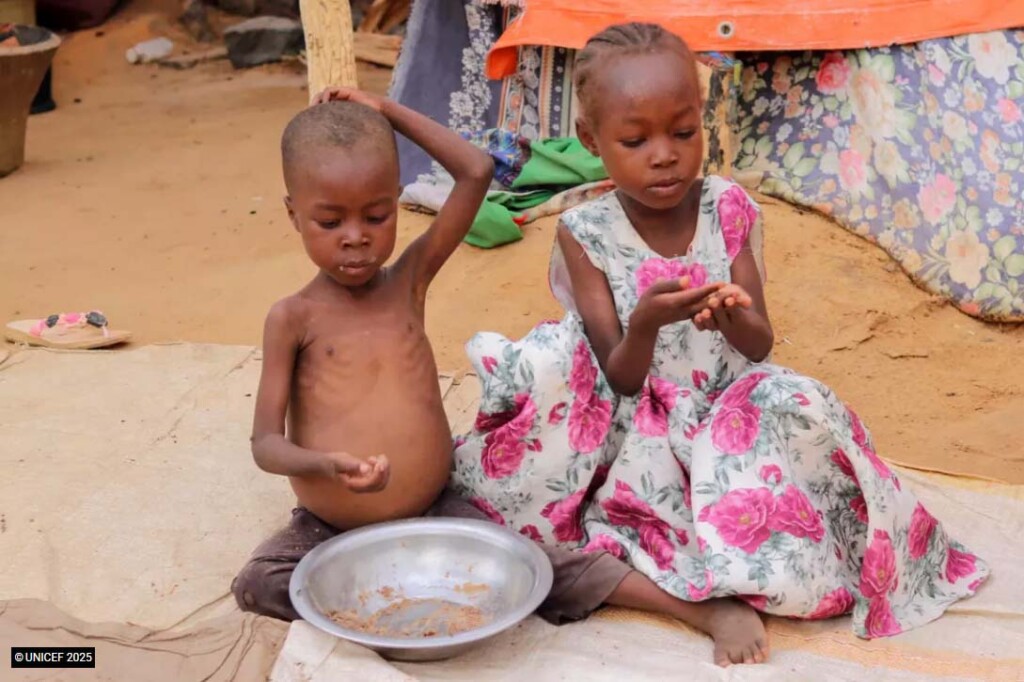
The statement says the number of children suffering from severe acute malnutrition could exceed the projected 825,000 unless the current trajectory is reversed. The number of areas affected by food insecurity, initially assessed at 14, is also expected to double.
Conflict remains the principal driver of Sudan’s hunger crisis, according to the statement, which says fighting has displaced millions of people, damaged critical infrastructure, and disrupted healthcare, food production, supply chains, and markets.
The crisis is being compounded by what the signatories describe as systematic obstruction of humanitarian aid, alongside the effects of El Niño, which have reduced rainfall and increased drought across more than half of Sudan.

Call for unrestricted humanitarian access
The statement says the parties to the conflict bear primary responsibility for alleviating the suffering of Sudanese civilians. It urges them to remove all obstacles to humanitarian assistance and ensure full, safe, rapid, and unhindered access, while protecting humanitarian personnel.
The signatories call for humanitarian operations to be authorised across all front lines and through cross-border routes, including air access into Darfur. They say this would enable aid operations to be deployed rapidly and allow timely medical evacuations of humanitarian workers.
They also call for measures to reduce delays in visas and customs clearance, extend the validity of visas and travel permits, and remove additional permits, taxes, and other bureaucratic requirements that slow aid deliveries.
The parties are urged to refrain from attacks on civilian infrastructure, including agricultural and food systems essential to providing basic services. The statement also calls for stronger civil-military coordination to protect humanitarian workers and aid facilities.
International funding needed
The statement calls on the international community to increase humanitarian funding urgently in response to growing needs and to ensure assistance reaches those most in need.
It also urges development and financial institutions to adapt their programmes to the worsening food security situation and prioritise the areas facing the greatest need.
With the risk of famine looming, the signatories stress the importance of supporting Sudan’s winter cropping season and strengthening locally led responses.
The statement concludes by expressing solidarity with the Sudanese people and humanitarian organisations continuing to provide life-saving assistance under extremely difficult conditions.

Displaced people’s coordination body calls for 90-day humanitarian truce in Sudan
The General Coordination for Displaced Persons and Refugees has called for an immediate halt to fighting in Sudan and a humanitarian truce lasting at least 90 days, as a step towards a permanent ceasefire and an end to civilian suffering.
The body stressed the need to open all humanitarian routes without restrictions or obstacles and ensure food and medical aid reaches everyone affected, particularly displaced people, refugees, and communities at risk of famine.
It called for civilians to be protected and attacks on residential areas, markets, healthcare facilities, and water sources to stop, with those responsible for violations held accountable.
The coordination body also urged urgent and effective international action to increase humanitarian funding, halt the flow of weapons to both sides in the conflict, and support a serious political process leading to a just and lasting peace.
It appealed to the international community, the United Nations, the African Union, humanitarian organisations, and donors to intensify diplomatic and humanitarian efforts, provide the resources needed to meet growing needs, and exert serious pressure on the warring parties to stop fighting and ensure aid reaches all those affected, without discrimination or exception.

Emergency Lawyers warn of worsening humanitarian catastrophe
The Emergency Lawyers group has welcomed the joint ministerial statement on worsening hunger and food insecurity in Sudan, warning that the humanitarian catastrophe is deepening as the war continues and the basic conditions for survival deteriorate.
In a statement, the group said the crisis had been exacerbated by the failure of the agricultural season, water shortages, and declining vegetation cover. These conditions had forced many people to dispose of their livestock because they could no longer provide them with food and water.
Rising prices, restrictions imposed by the army and the Rapid Support Forces (RSF) on civilian movement and the transport of goods, looting by armed groups, and the obstruction and targeting of humanitarian aid had further deepened food insecurity, the group said.
These conditions coincide with continued displacement in western and central Sudan, the absence of basic services, and ongoing military operations that put civilians’ safety and needs at risk.
The group warned that the deliberate deprivation of civilians of food and water, obstruction of relief efforts, looting of property, attacks on objects indispensable to the survival of the population, and forced displacement could constitute war crimes or crimes against humanity, depending on the circumstances of each incident and its legal elements.
It also condemned the use of humanitarian aid as a tool in political conflict, or as a means of pressuring communities and denying them relief. Aid must reach those in need without discrimination or exploitation, it said.
Emergency Lawyers called for relief centres to be established in the worst-affected areas and communities at risk of becoming depopulated, providing food, drinking water, healthcare, and other essential supplies.
The group also urged both sides in the conflict to lift restrictions on civilian movement and the transport of goods, end looting and attacks that obstruct relief operations, ensure aid can reach people safely, and protect water sources and civilian infrastructure.
It called on the international community and donors to increase humanitarian funding and direct it towards the areas with the greatest needs.
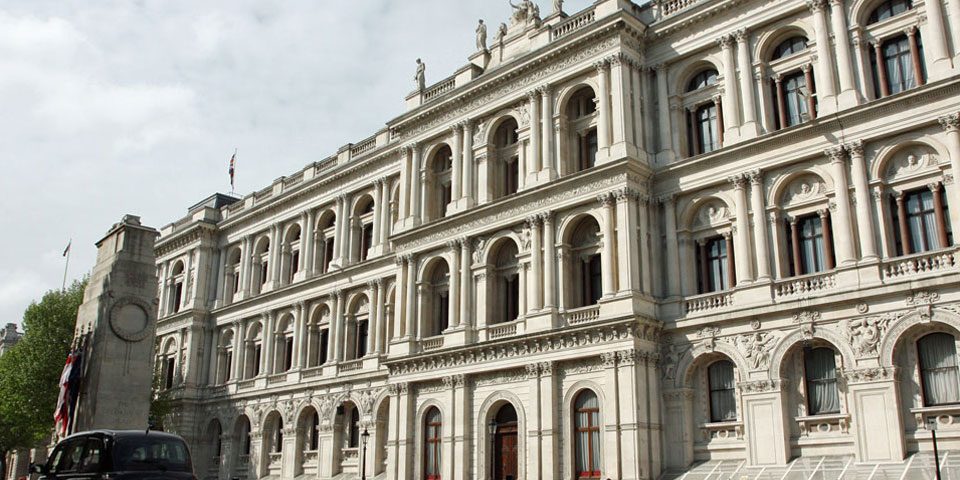
*The Joint ministerial statement on the risk of famine in Sudan, 23 October 2026 was issued by the UK Foreign, Commonwealth and Development Office and Kirsty McNeill, the UK minister of state for international development, on behalf of the UK and 31 partner countries and organisations:
The Hon Dr Anne Aly MP, Minister for International Development of Australia
Beate Meinl-Reisinger, Federal Minister for European and International Affairs of the Republic of Austria
Minister Maxime Prévot, Deputy Prime Minister and Minister of Foreign Affairs, European Affairs and Development Cooperation, Belgium
Mr. Hristo Dikanski, Deputy Minister of Foreign Affairs of the Republic of Bulgaria
Hon. Randeep Sarai, Secretary of State for International Development, Canada
H.E. Mr Gordan Grlić Radman, Minister of Foreign and European Affairs of the Republic of Croatia
Petr Macinka, Deputy Prime Minister and Minister of Foreign Affairs of the Czech Republic
Mr. Lars Løkke Rasmussen, Minister for Foreign Affairs, Denmark
Hadja Lahbib, European Commissioner for Equality, Preparedness and Crisis Management
Margus Tsahkna, Minister of Foreign Affairs of the Republic of Estonia.
Ville Tavio, Minister for Foreign Trade and Development, Finland
Jean-Noël Barrot, Minister for Europe and Foreign Affairs, France
Federal Minister for Foreign Affairs Dr. Johann Wadephul, Germany
Helen McEntee, Minister for Foreign Affairs and Trade, Ireland
Antonio Tajani, Deputy Prime Minister and Minister of Foreign Affairs and International Cooperation of Italy
Baiba Braže, Minister of Foreign Affairs of the Republic of Latvia
Xavier Bettel, Minister for Development Cooperation and Humanitarian Affairs, Luxembourg
Christopher Fearne, Minister for Foreign and European Affairs, Republic of Malta
S.W. Sjoerdsma, Minister of Foreign Trade and Development Cooperation, Netherlands
H E Mr Åsmund Aukrust, Minister of International Development, Norway
Radosław Sikorski, Deputy Prime Minister, Minister of Foreign Affairs of the Republic of Poland.
Paulo Rangel, Minister of Foreign Affairs, Portugal
Mr. Sebastian Dănuț Neculăescu, Minister of Foreign Affairs, Romania
H.E. Mr. Juraj Blanár, Minister of Foreign and European Affairs of the Slovak Republic
H.E. Mr Tone Kajzer, Minister of Foreign and European Affairs of the Republic of Slovenia
H.E. Mr José Manuel Albares, Minister for Foreign Affairs, European Union and Cooperation of Spain
Benjamin Dousa, Minister for International Development Cooperation and Foreign Trade, Sweden
Dominik Stillhart, Head of Swiss Humanitarian Aid, Deputy Director General of Swiss Development Cooperation
Massad Boulos, Senior Advisor for Arab and African Affairs, United States of America
Kirsty McNeill MP, Minister of State for International Development of the United Kingdom
Cyprus
Hungary


 and then