




US and Sudan trade statements over legitimacy and peace efforts
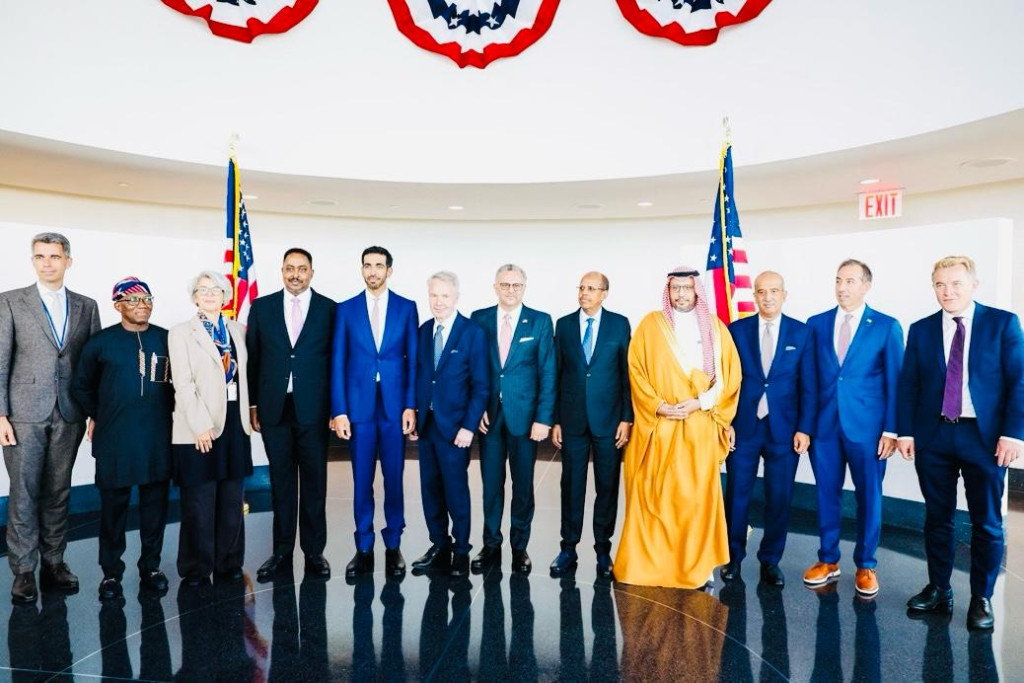
Representatives of the Sudan Quartet and Quintet pose for a group photo after their first joint meeting in New York on Wednesday, September 23, 2026 (Photo: African Union)
The United States and Sudan have traded statements over Washington’s rejection of both sides of Sudan’s war as legitimate constitutional authorities, with Khartoum insisting that any peace process must respect the country’s sovereignty and national institutions.
In a 22 September statement, US State Department spokesman Thomas “Tommy” Pigott said neither the Sudanese Armed Forces (SAF) nor the paramilitary Rapid Support Forces (RSF) had made serious commitments to an immediate truce, accusing both sides of having “redoubled combat operations and drone strikes which kill civilians”.
Pigott said Washington was calling on the warring parties to accept a humanitarian truce without preconditions and enter an inclusive political dialogue leading to civilian government.
He added that neither the SAF, the RSF nor their leaders “represent legitimate, constitutional governance for Sudan” and said the United States would seek to “raise the cost of continued conflict” for the warring parties and networks supporting them.
US Secretary of State Marco Rubio said at a press conference in New York on Wednesday that Sudan’s war would not be continuing without external support, saying “that war and that conflict and that crisis would not be happening were it not for the active participation of external actors” supporting the opposing sides.
Rubio said progress would ultimately depend on those actors using their “influence and pressure” on their respective proxies to honour commitments they have made.
Criticism of US moves
Sudan analyst and former US National Security Council official Cameron Hudson described the US statement as a declaration of “a policy of regime change in Sudan”.
In a post on X earlier this week, he said Washington had “painted itself into a corner” through sanctions, an arms embargo and visa restrictions, warning that its “maximum pressure” approach could leave little room for a negotiated exit.
Sudan’s Foreign Ministry rejected the statement on Wednesday, saying any sustainable peace initiative must respect Sudan’s “sovereignty, unity, territorial integrity and legitimate national institutions”.
The ministry said the government remained ready to engage with the US and other regional and international partners but rejected any political process that could legitimise what it described as a reality created by the RSF.
It also accused external actors of contributing to the continuation of the war, saying serious peace efforts must address “external interventions and sources of illegal support”.
The diplomatic tensions have also spilled into the Quartet, which brings together the United States, Saudi Arabia, Egypt and the United Arab Emirates.
Saudi Arabia has reportedly threatened to withdraw from the mechanism over Washington’s refusal to grant SAF Commander and Sovereignty Council President Lt Gen Abdelfattah El Burhan a visa to attend the UN General Assembly, according to the Africa Report.
Saudi officials have not publicly confirmed the reported threat.
The visa dispute reportedly centres on US pressure for El Burhan to accept a proposed 90-day ceasefire.

 and then