





WFP director warns Sudan aid cuts could intensify world’s worst hunger crisis
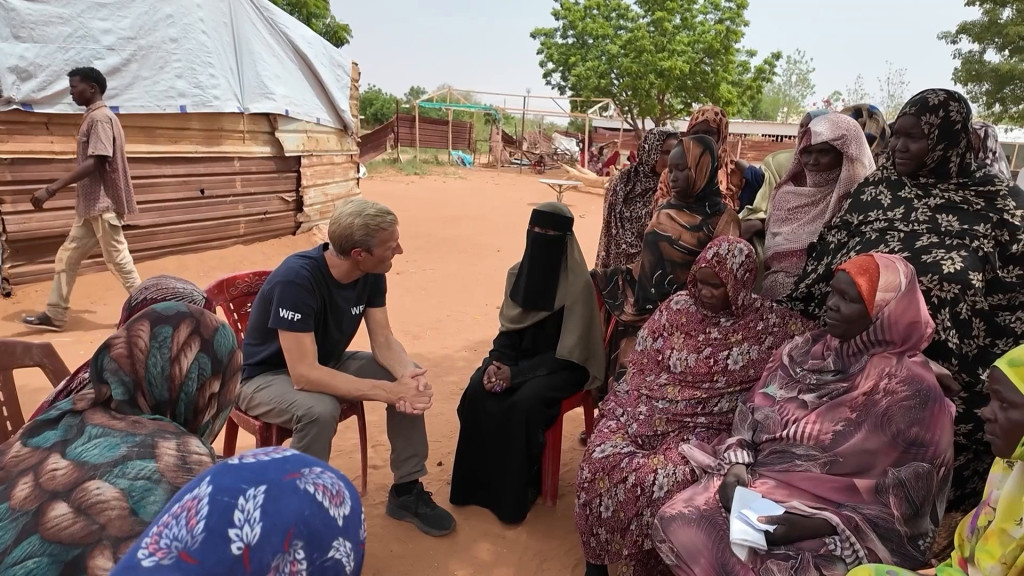
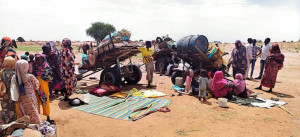
Carl Skau, Acting Executive Director of the World Food Programme (WFP), meets displaced women during his visit to Sudan (Photo: WFP)
UN food agency says it may be forced to scale back within weeks as war, displacement and drought leave millions facing acute hunger…
The UN World Food Programme (WFP) has warned that it could be forced to cut food assistance in Sudan within weeks, potentially deepening what the UN agency describes as the world’s largest hunger crisis.
In a statement to reporters today following an eight-day visit to Sudan, the WFP’s acting executive director, Carl Skau, says the agency has the capacity to reach millions of people caught between war, displacement and worsening drought – but is running out of money.
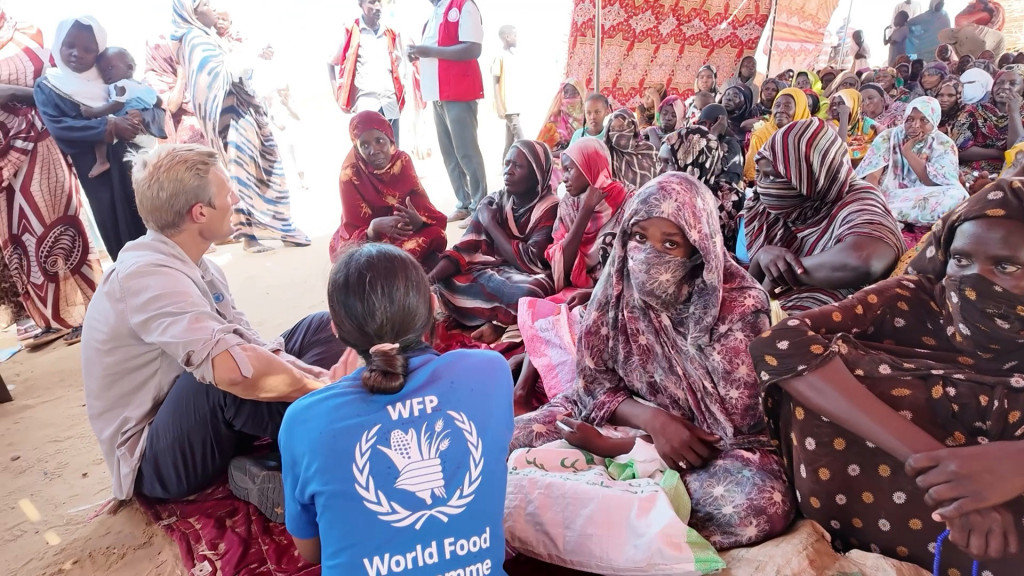
Sudan is home to 20 million people facing acute hunger. The war has displaced about 14 million people overall, including roughly nine million who remain uprooted within Sudan, according to recent UN estimates. About five million people are experiencing emergency levels of hunger, while an estimated 200,000 are facing catastrophic levels of starvation.
“We now have the capacity, we have the presence, but we are not fully using that space because of the lack of funding,” Skau says.
‘In the next few weeks, the risk is that we will have to scale back even further…’
The warning comes as the geography of the conflict shifts. While Darfur was the epicentre of fighting a year ago, violence is now intensifying in Kordofan and Blue Nile, creating new waves of displacement while millions uprooted during earlier stages of the war remain unable to return home.
Skau says he met people who were displaced when the war began three years ago, as well as others who fled their homes on the very day they spoke to him. Some walked for four or five days after their villages were destroyed.
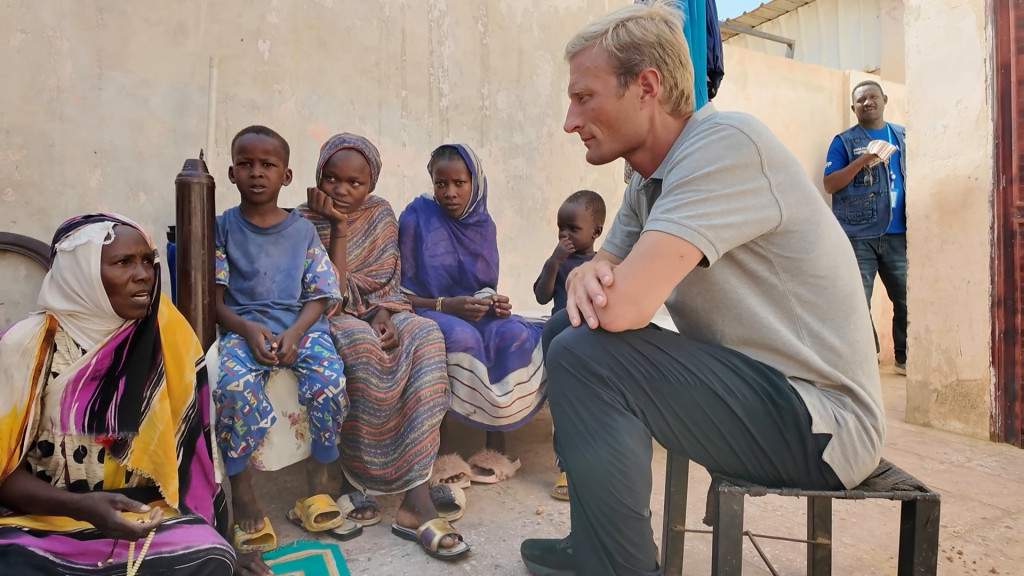
He describes meeting women struggling to find water and a former university student now living in a camp, unable to find work after losing family members and watching her parents’ health deteriorate.
Delivering aid across a country divided by conflict has become slower, more expensive and more dangerous. A journey from El Obeid to El Fasher that took about six hours before the war required three days during Skau’s visit, involving several flights and a 30-hour drive through the Jebel Marra mountains.
A WFP convoy in Kordofan was hit only two weeks before Skau’s remarks. Yet the agency continues to reach between four million and five million people each month, including up to 2.5 million in some of Sudan’s hardest-to-reach areas.
The scale of Sudan’s devastation was stark in El Fasher, the Darfur city that endured an 18-month siege and famine. Once home to about a million people, it is now inhabited by only a few tens of thousands.
Skau describes streets of bullet-riddled homes and burned-out cars, with almost no economic activity and barely functioning markets. Some people had returned not because their homes remained habitable, but because they had found little to sustain them elsewhere.
The largest gathering of people he saw in the city was at a WFP food distribution. The agency is reaching about 20,000 people in El Fasher, providing what Skau says is effectively the only assistance available to those who remain.
Outside the city, the destroyed Zamzam camp has become a ghost town. From there, the road to Tawila follows the route through which hundreds of thousands fled the violence around El Fasher, an exodus during which widespread atrocities were reported.
Tawila has since become one of the most striking symbols of Sudan’s displacement crisis. Its population has risen from about 700,000 when Skau visited in April to close to 1 million.
The WFP now reaches about 950,000 people there every month, but can provide only half-rations – enough food for about two weeks. Many households are headed by women who have lost husbands or sons and are struggling to make the supplies last.
The camp’s rapid expansion has also left enormous gaps in shelter, healthcare and education.
‘It’s just a massive city now of one million people without the basics…’
Darfur’s crisis is being compounded by drought. Skau says the region has not been this dry since 1984, despite the fact that Sudan is in its rainy season. Communities fear the drought could damage agricultural production and livestock, depriving families of one of their few remaining means of survival just as humanitarian food assistance faces cuts.
The pressure is also growing in Kordofan. In El Obeid, a city whose population has roughly doubled during the war, displaced people continue to arrive from across the country. Camps and host communities are severely overstretched.
Skau describes meeting women who reached the city after walking for five days from areas of West and South Kordofan where their homes and villages had been destroyed.
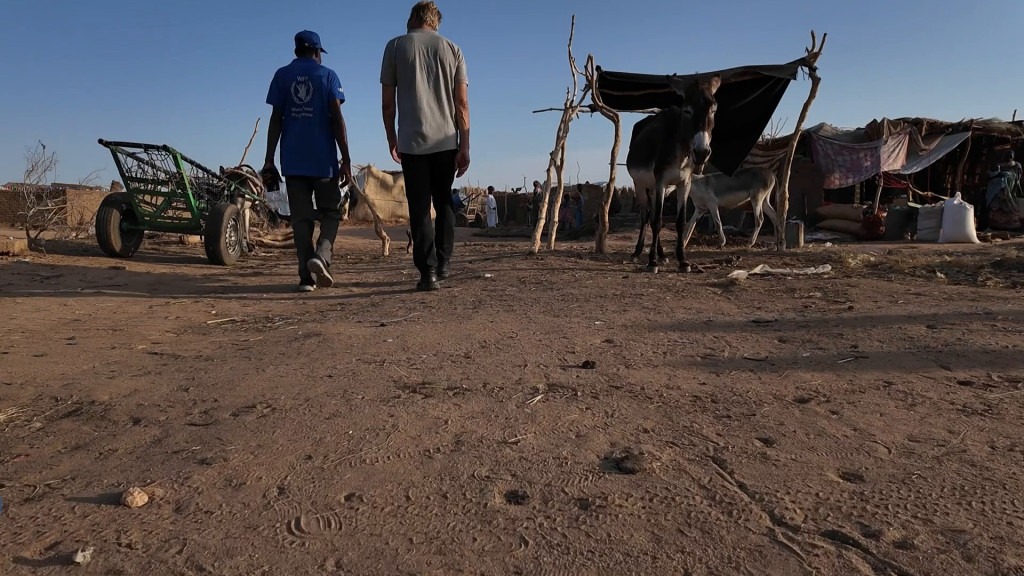
Funding shortages are forcing the WFP into increasingly painful choices. Newly displaced people are being prioritised, while assistance is being reduced or withdrawn from people who fled their homes years ago but remain unable to work or return.
The convergence of crises is making Sudan’s future increasingly uncertain. Conflict continues to drive displacement and disrupt markets and trade, while maritime disruption around Bab el-Mandeb and Hormuz is affecting a country dependent on Red Sea ports. Climate shocks are now threatening agricultural production.
For Skau, these pressures cannot be treated separately. They are converging on a population already exhausted by years of war.
His principal appeal is for a political effort to end the conflict, particularly as world leaders prepare to gather for the UN General Assembly’s high-level week.
But until that happens, he says, civilians must at least be protected and provided with the basic means of survival.
The international community failed to prevent atrocities in El Fasher and has not done enough for the displaced people who ended up in camps, he says. There is now a danger of repeating those failures as violence spreads through Kordofan and Blue Nile.
‘We cannot keep failing these people…’
“We cannot keep failing these people,” Skau says.
The WFP and other UN agencies have the operational capacity to reach millions in need. What they lack, Skau argues, is sufficient funding to sustain their work.
For millions of Sudanese families facing hunger, displacement and an uncertain future, the question is becoming increasingly urgent: whether the world will act before humanitarian agencies are forced to cut back.
The answer, Skau suggests, could determine whether an already catastrophic crisis is allowed to deteriorate still further.


 and then