





Sudan: Abdelwahid rejects El Burhan’s dialogue as eastern civil forces back anti-war plan
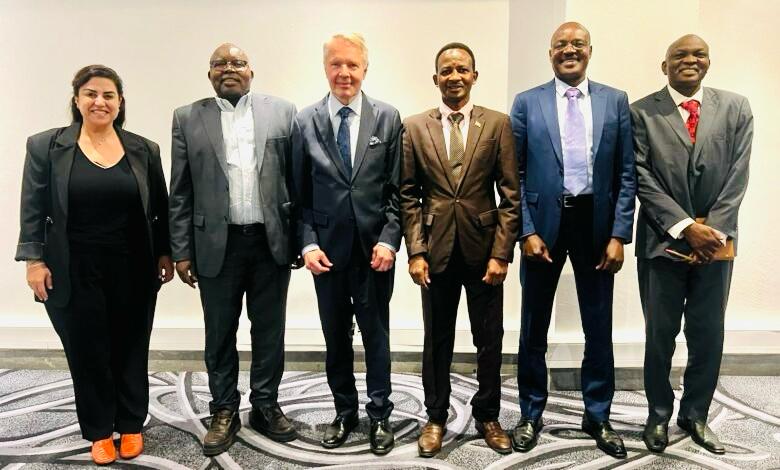
The delegation from the Sudan Liberation Movement, led by Abdulwahid El Nur, during its meeting with the Special Envoy of the UN Secretary-General for Sudan in the Kenyan capital, Nairobi (Photo: Supplied)
The Sudan Liberation Movement, led by Abdelwahid El Nur (SLM-AW), has renewed its rejection of the dialogue proposed by Sudan’s Sovereignty Council chair Abdelfattah El Burhan, while welcoming an initiative by the international Quad and expressing reservations and concerns about the performance of the international Quintet.
A delegation from the movement, headed by Abdelwahid El Nur, met the UN secretary-general’s personal envoy, Pekka Haavisto, in Nairobi, Kenya, and confirmed its rejection of the dialogue proposed by Burhan. The delegation considers its purpose to be the search for legitimacy for his coup, saying it is no different from the “National Dialogue” launched by Omar Al Bashir previously.
The delegation says such dialogues will not resolve Sudan’s crisis, which requires genuine, inclusive dialogue after the war has been stopped and ended. The only exclusions, it says, should be the National Congress Party, the Islamic Movement, and their affiliates, or anyone who rejects such a process.
During its meeting with the envoy, the movement’s delegation welcomes the international Quad’s initiative, saying it has laid sound foundations for addressing the situation in Sudan. It also points to concerns and reservations about the performance of the international Quintet.
The delegation says representatives of the Sudanese forces that signed the Declaration of Principles have sent a letter to the Quintet setting out those concerns and proposals.
Eastern Sudan civil forces welcome the document
Meanwhile, the Alliance of Civil Forces for Eastern Sudan welcomes the “Peace We Want” document issued by civilian and political forces opposed to the war. It calls for international sanctions against what it describes as the terrorist group led by Ali Karti, while also declaring its full support for the outcome of the Addis Ababa meeting, which rejects initiatives that do not lead to a comprehensive end to the war and calls for a genuine peace initiative that places Sudanese interests above all other considerations.
In a statement by the alliance’s spokesman, Saleh Ammar, the alliance confirms its support for the principles set out in the Quad initiative dated 12 September 2025. These include preserving Sudan’s unity, ending the war, bringing the humanitarian catastrophe to an end, placing civilians in charge of the political process, and excluding the Islamic Movement.
The statement says these principles should provide the reference point for the work of the Quintet, whose efforts the alliance values. It stresses the importance of protecting the process from the influence of the warring parties and their regional allies, and from any actors seeking to influence the political process in ways that conflict with the objectives of peace.
Saleh Ammar says in the statement that the continuation of the war serves the interests of its parties at the expense of civilians, prolonging humanitarian suffering and draining the country’s resources.
The alliance therefore supports international efforts to increase pressure on the warring parties, including sanctions and measures restricting the capabilities used to sustain the conflict, such as aircraft, drones, and other means that have caused casualties and destroyed property.
Sanctions should focus on Ali Karti’s group
Ammar says any international measures should also focus on what he describes as the terrorist network led by Ali Karti, which obstructs peace efforts, promotes racist rhetoric, and undermines social peace.
In the statement, Ammar calls on political and community leaders in eastern Sudan to engage in serious dialogue leading to agreements that help protect social cohesion and strengthen stability.
History will hold everyone to account for their positions on the conflicts and divisions that have harmed communities in the east and diverted attention from fundamental issues of justice and development, he says.
He also calls for action against all forms of looting, exploitation, and abuses suffered by the region’s residents, and for efforts to protect their rights, resources, legitimate interests, and the future of their children.
Ammar says the Alliance of Civil Forces for Eastern Sudan will continue engaging with leaders in eastern Sudan and across the country, as well as with regional and international forces, to ensure that the concerns of eastern Sudan are represented in dialogue and negotiation forums, address the roots of marginalisation and uneven development, and safeguard the rights and interests of the region’s residents.
Note: This article has been translated from Arabic with the assistance of artificial intelligence, and subsequently reviewed and adapted by a human editor before publication.
 and then