




Fighting, road closures raise fears of imminent famine in Sudan’s Kordofan
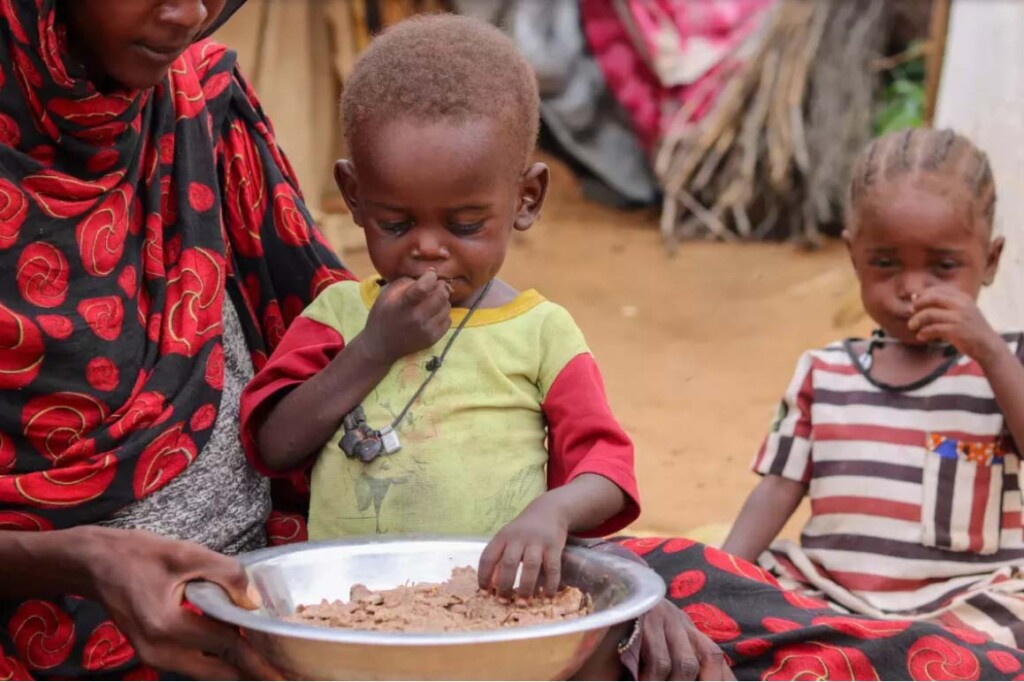
Displaced children in Darfur eat a meal prepared from ambaz (animal feed), which is usually used as animal feed (File photo: UNICEF)
The Kordofan Observatory warns of signs of an imminent famine in several parts of the region, reporting that families in the localities of El Nahud, Wad Banda, El Khuwei, and Muglad are being forced to rely on ambaz — the residue left after pressing groundnuts for oil, normally used as animal feed — as living conditions deteriorate, food prices soar, and humanitarian aid is cut off.
In a statement on Wednesday, the observatory says testimonies from residents in the localities point to a sharp decline in sources of income, while the price of a malwa of millet has risen to 35,000 Sudanese pounds, putting it beyond the reach of many families.

The growing reliance on ambaz has itself driven up demand, making it scarce in local markets and pushing the price of a malwa to about SDG 10,000, the observatory says.
The observatory blames the worsening food crisis on recent fighting around El Obeid and the military build-up by both sides of the conflict. The security situation, it says, has disrupted trade and prevented goods from reaching several parts of Kordofan.
The deterioration in security has also affected farmers’ ability to reach and cultivate their land, while rains have arrived late this year. The observatory warns that continued fighting, the closure of trade routes, and restrictions on humanitarian access could lead to a widespread humanitarian catastrophe.
The Kordofan Observatory calls on the two sides of the war to agree arrangements to open and secure trade and humanitarian routes and corridors, and to ensure that food and aid reach civilians. It also urges the parties not to use food and humanitarian assistance as a means of putting pressure on the population.
It calls on the authorities in Khartoum and Northern State to reverse decisions that, it says, prevent goods from being transported to areas of Kordofan under the control of the Rapid Support Forces, arguing that such measures place the burden on civilians.
At the same time, the observatory calls on the Rapid Support Forces to facilitate the movement of trade and remove levy checkpoints and other obstacles that contribute to rising prices for basic goods.
The observatory urges humanitarian organisations, as well as international and local bodies, to give the food and health situation in Kordofan an urgent priority, and to intervene to provide aid, healthcare services, and medicines to affected residents.
Editor’s note: This article has been translated from Arabic with the assistance of artificial intelligence, and subsequently reviewed and adapted by a human editor before publication.


 and then