




Sudan war: a conflict sustained by weapons, fragmentation, and diplomatic inertia
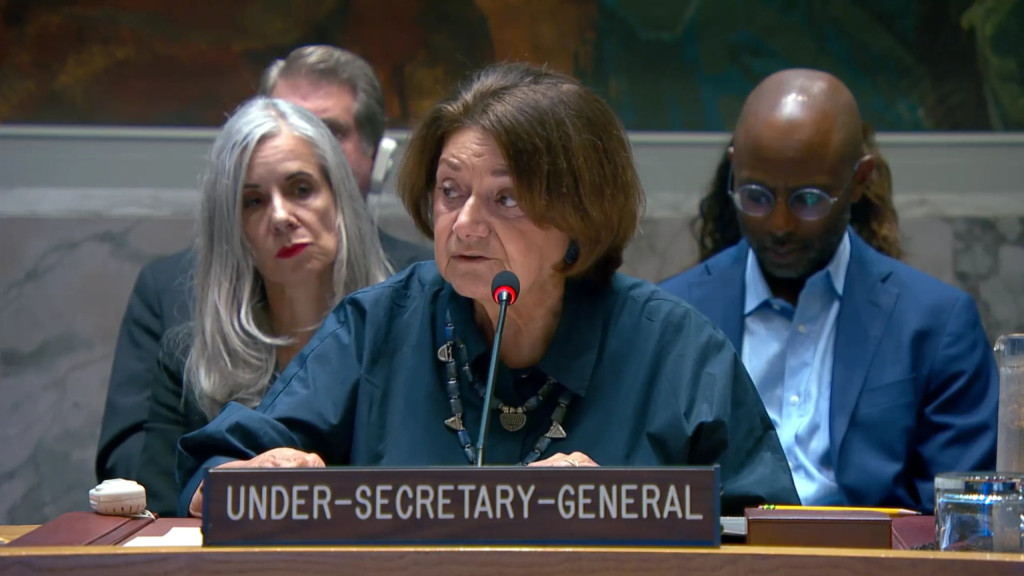
Rosemary DiCarlo, UN Under-Secretary-General for Political and Peacebuilding Affairs, briefs the Security Council on Monday, August 24th (Photo: UN)
Sudan’s war is becoming harder to stop, not easier. That was the central warning from Rosemary DiCarlo, the UN’s Under-Secretary-General for Political and Peacebuilding Affairs, in her briefing to the Security Council on Monday, August 24th. After more than three years of fighting, the conflict is spreading across several fronts, becoming more technologically sophisticated, and drawing in an increasingly complicated array of armed groups and outside interests.
The human cost is already staggering. Some 13m Sudanese have fled their homes, including 8.7m displaced within the country. The UN has documented around 1,400 civilian deaths between January and June this year, 1,100 of them caused by drone strikes. The real death toll is probably in the hundreds of thousands. “Brutal mass killings and atrocities, abductions of women and girls and mass rapes are recurring patterns,” DiCarlo told the Council. Drones operated by both the Sudanese Armed Forces (SAF) and the Rapid Support Forces (RSF) have repeatedly hit markets, schools, fuel stations, and water infrastructure.
The fighting has also become more geographically dispersed. Heavy drone attacks and limited ground combat have concentrated in North Kordofan, West Darfur, North Darfur, and Blue Nile. In and around El Obeid, the SAF and RSF are competing for strategically important territory, while fighting near Sudan’s borders with Chad and Ethiopia raises the prospect of a wider regional conflict. In Blue Nile, DiCarlo warned, insecurity near the Ethiopian border could strain relations between neighbouring states and generate further refugee flows.
‘The sophisticated weaponry used continues to point to ongoing external support to both parties…’ — Rosemary DiCarlo, the UN Under-Secretary-General for Political and Peacebuilding Affairs
More troubling still is the growing sophistication of the war. “The sophisticated weaponry used continues to point to ongoing external support to both parties,” she said. Foreign backing is allowing the combatants to sustain a level of warfare that neither could easily maintain alone. At the same time, the proliferation of local militias and other armed movements is fragmenting the battlefield. Groups beyond the SAF and RSF are pursuing their own territorial, political and security interests, making both a ceasefire and a political settlement more difficult.
‘The Sudanese people cannot wait any longer… The longer the war continues, the more deeply it is embedded in Sudan’s political, territorial, and regional landscape—and the harder peace will become to achieve…’
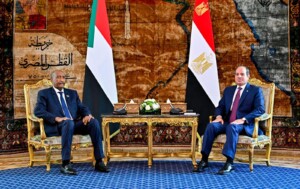
Diplomacy has not been absent, but it has yet to alter the calculations of the warring parties. The UN is supporting efforts by the United States, Saudi Arabia, Egypt, and the United Arab Emirates to secure a humanitarian truce, while working with the African Union, IGAD, the Arab League and the European Union on a broader political process. A new round of in-person talks involving Sudanese political and civilian actors is due to take place in Addis Ababa in September. The aim is an inclusive, Sudanese-led dialogue in which women, young people, displaced communities, and other civilian groups have a meaningful role.
The UN’s personal envoy, Pekka Haavisto, is meanwhile trying to build confidence between the combatants, including through discussions over prisoner exchanges and unilateral releases, with particular attention to women and children. Both sides, DiCarlo said, now need to make concrete commitments.
Yet the central obstacle remains military calculation. Despite international mediation, the SAF and RSF remain locked in what DiCarlo called a “zero-sum military logic”: each still appears to believe that victory on the battlefield is preferable to compromise at the negotiating table. External supporters have helped sustain that belief.
The UN’s conclusion is therefore less a prescription than a challenge to the countries capable of influencing the combatants. The Security Council must send “strong and unified messages” and use all the tools at its disposal to push the parties back towards negotiations. External actors, too, must do more than express concern.
For Sudan’s civilians, the diplomatic timetable is already too slow. “The Sudanese people cannot wait any longer,” DiCarlo concluded. The longer the war continues, the more deeply it is embedded in Sudan’s political, territorial, and regional landscape—and the harder peace will become to achieve.
 and then