





ICC drops Abdallah Banda prosecution for alleged 2007 Darfur crimes after evidence collapses
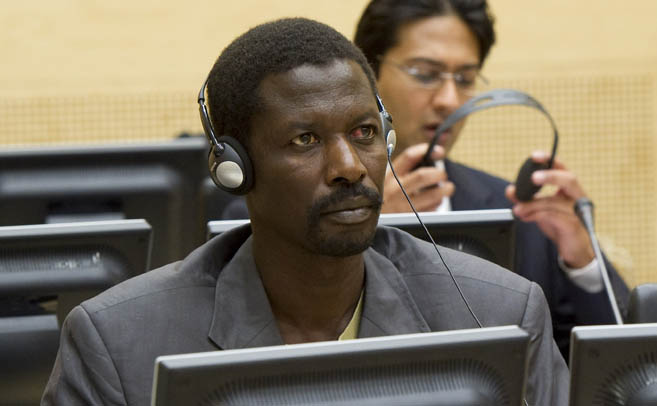
Former commander of Sudan’s Justice and Equality Movement (JEM) ‘Collective Leadership’ faction, Abdallah Banda Abakaer Nourain (File photo: ICC)
The International Criminal Court (ICC) in The Hague, the Netherlands, has formally abandoned its long-running prosecution of the former commander of Sudan’s Justice and Equality Movement (JEM) ‘Collective Leadership’ faction, Abdallah Banda Abakaer Nourain, concluding that the evidence against him no longer offers a realistic prospect of conviction. This represents a blow to the prospects of ensuring accountability and eliminating impunity for war crimes and atrocities in Sudan and Darfur.
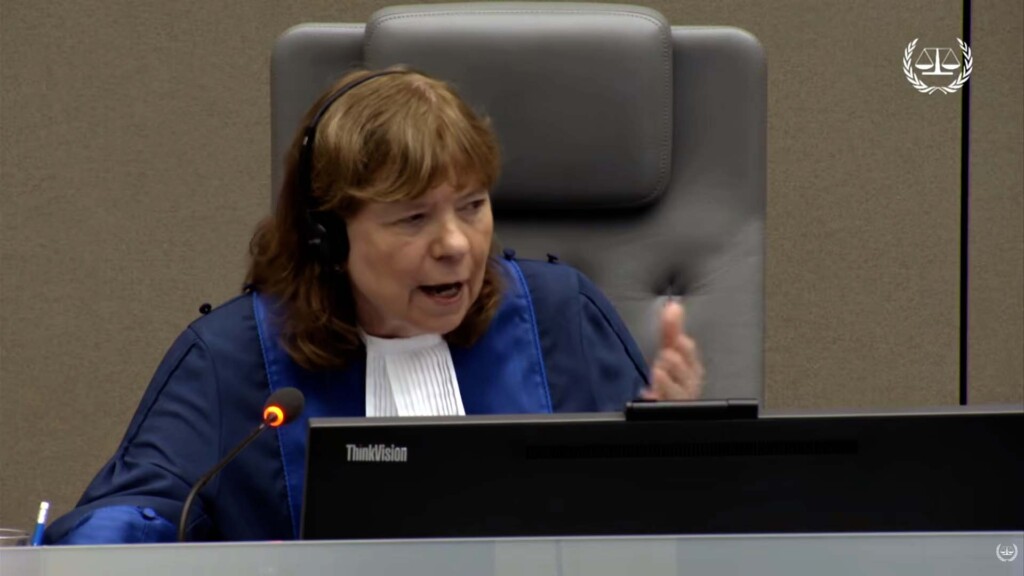
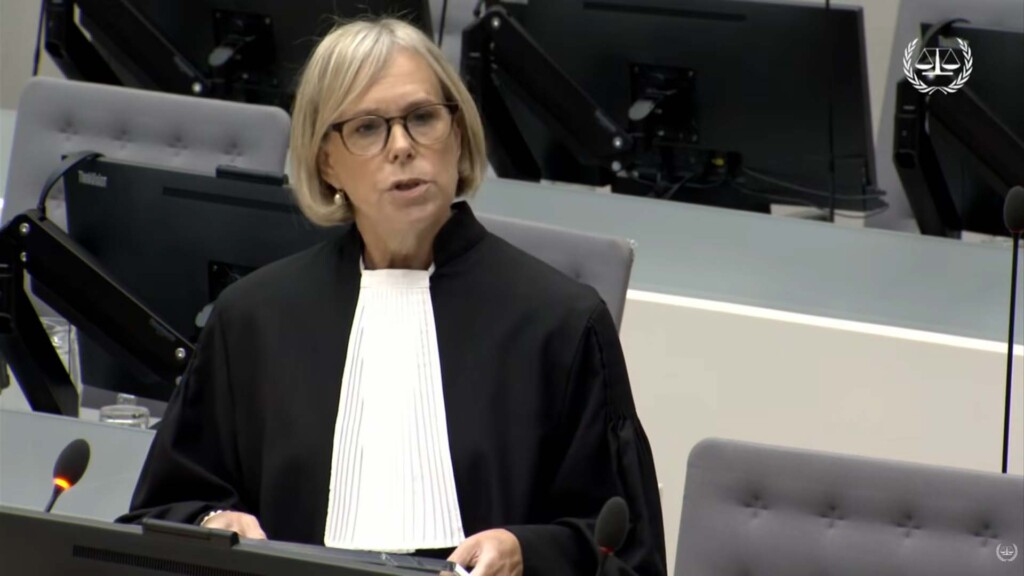
At a public status conference on Tuesday, prosecutors — presented by senior legal coordinator Cara Pronk-Jordan — explained to Trial Chamber IV, with Judge Kimberly Prost (Presiding), assisted by Judge Keebong Paek and Judge Nicolas Guillou, why they had withdrawn the war crimes charges arising from the September 2007 attack on the African Union Mission in Sudan (AMIS) base at Haskanita, North Darfur. Their account revealed how a case that once appeared trial-ready had steadily weakened over 15 years despite repeated efforts to strengthen it.
In March 2011, Judges of Pre-Trial Chamber I of the ICC decided that two rebel commanders, namely Abdallah Banda, a field commander of the Justice and Equality Movement (JEM) faction known as ‘Collective Leadership’, and Saleh Jerbo, who was the chief-of-staff of the breakaway ‘Unity’ faction of the Sudan Liberation Army in 2025, were criminally responsible and should stand trial for “violence to life” and “pillaging” regarding for a murderous attack on an African Union base in 2007, an assault that killed 12 peacekeepers.
The charges against Banda were confirmed in March 2025, after a warrant for arrest was issued in 2024. However, on October 2023, the ICC announced that it was terminating proceedings against Saleh Jerbo, saying at the time that despite the absence of an official death certificate, the evidence it had received points towards the death of Saleh Mohammed Jerbo Jamus on 19 April 2013. “In the present circumstances, it is appropriate to terminate the case against Jerbo without prejudice, but to resume such proceedings should information become available that he is alive”.
Tuesday’s hearing followed Trial Chamber IV’s decision in June to authorise the withdrawal of the charges without prejudice, leaving open the possibility of new charges should sufficient evidence emerge in future.
Case no longer sustainable
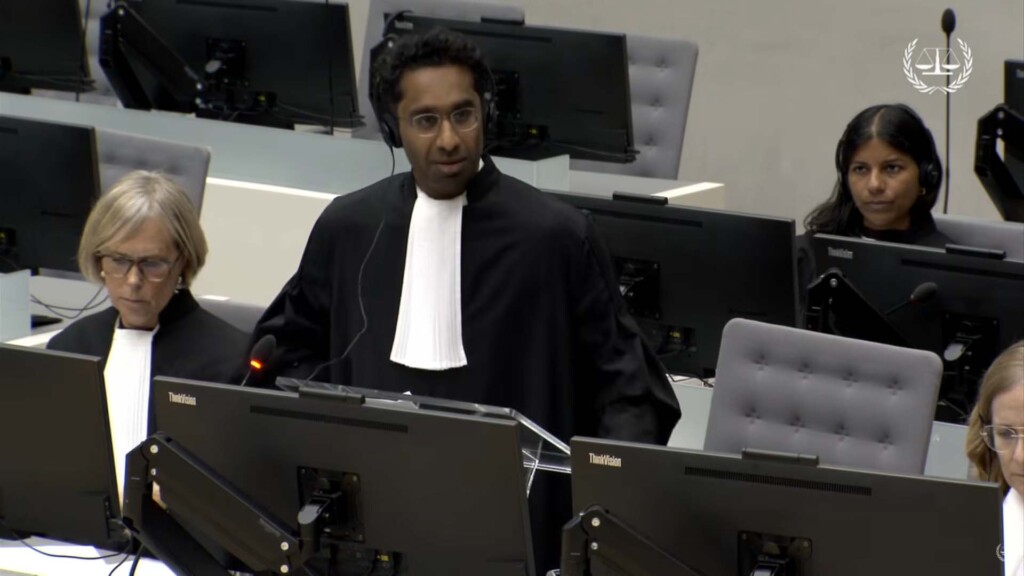
Opening the prosecution’s submissions, Cara Pronk-Jordan and Pubudu Sachithanandan said the evidence had deteriorated to the point where there was no longer a reasonable prospect of conviction. In their assessment, it no longer even established substantial grounds to believe Banda had committed the crimes charged.
The prosecution acknowledged the impact the decision would have on victims, but argued that its responsibility is not simply to pursue prosecutions, but to pursue only those cases it believes can be proved beyond reasonable doubt.
Continuing with the case, prosecutors said, would have created false expectations among victims while failing to meet the standards required of the Office.
Key witnesses lost
The prosecution explained that, although charges were confirmed in 2011 and trial had been scheduled for 2014, investigators continued reviewing the evidence after Banda failed to appear before the court and an arrest warrant was issued.
During that process, two of the prosecution’s most important witnesses were lost.
The first, identified as P-441, had provided evidence concerning Banda’s position within the attacking force and his knowledge of the planning of the assault. Later investigations found that the witness had engaged in serious dishonest conduct, making the testimony unreliable.
A second witness, P-477, had given evidence about the purpose of the attack and Banda’s alleged knowledge that it was unlawful. Renewed contact with the witness raised significant credibility concerns before the witness eventually refused further cooperation.
According to prosecutors, losing those witnesses removed two of the principal pillars of the case.
Investigation weakened rather than strengthened the case
Rather than accepting those setbacks, prosecutors said they undertook extensive fresh investigations.
Existing witnesses were re-interviewed where possible, investigators pursued new leads, identified additional participants in the attack and sought out new witnesses.
One witness, P-512, had proved particularly difficult to locate and was eventually traced after years of effort. Although prosecutors regarded the witness as credible, the evidence did not support their original case theory.
Instead, the witness described attackers actively searching for a Sudanese government representative inside the Haskanita compound. Prosecutors said that account introduced a credible alternative explanation for events and weakened one of the prosecution’s earlier conclusions about the purpose of the attack.
Further investigations produced little else. Potential witnesses had died, disappeared, refused to cooperate or could offer no evidence capable of repairing the weaknesses in the case.
Some witnesses whose evidence had supported the confirmation of charges had also become unavailable or raised reliability concerns over time.
In late 2025 prosecutors interviewed two further witnesses whom they believed might possess direct knowledge of planning meetings before the attack. Neither had attended those meetings, neither had first-hand knowledge of the planning process, and one relied largely on hearsay while the other presented additional credibility concerns.
By then, prosecutors concluded, all reasonable investigative avenues had been exhausted.
Reviews confirmed the conclusion
The Office disclosed that an internal review completed in 2023 found there was no reasonable prospect of securing a conviction on the available evidence.
Given the significance of that finding, Deputy Prosecutor Nazhat Khan ordered an independent external review. An experienced outside adviser reached the same conclusion, finding that the likelihood of conviction was low.
Those assessments, prosecutors said, left the Office unable to continue the case responsibly.
Earlier requests rejected
The prosecution first asked judges for permission to withdraw the charges in October 2023.
The Chamber refused, and rejected a second application in March 2024, prompting investigators to continue searching for evidence capable of addressing the weaknesses they had identified.
Instead, prosecutors said, the additional work reinforced their earlier conclusions.
When Banda’s appearance before the court later became a realistic possibility following a defence request to convert the arrest warrant into a summons to appear, the Office renewed its application.
Prosecutors argued that requiring Banda to stand trial when they no longer believed they could prove the charges would itself be unjust. They also said it would encourage expectations among victims that the prosecution knew it could not fulfil.
The Chamber authorised the withdrawal in June and directed the prosecution to explain its decision publicly.
Darfur investigations continue
In its closing remarks, the prosecution emphasised that withdrawing the charges does not diminish the seriousness of the alleged crimes or the suffering of victims.
It argued that prosecutors cannot knowingly rely on witnesses they no longer consider credible, nor continue seeking a conviction once the evidential basis for doing so has disappeared.
The withdrawal is without prejudice, allowing fresh charges to be brought should new evidence emerge.
The Office also made clear that its wider investigations into crimes committed in Darfur remain active, alongside other cases already before the court.
Victims challenge the decision
Lawyers representing victims argued that ending the case after almost two decades denied survivors the opportunity to have the allegations examined in open court.
They warned that the decision risked sending a message that suspects who evade arrest long enough may ultimately avoid trial as evidence deteriorates with time.
Victims’ representatives also argued that the Chamber had previously maintained there was sufficient evidence to support a trial, and that questions of witness credibility should have been tested during proceedings rather than resulting in the prosecution being abandoned.
They indicated that they would seek reconsideration of the Chamber’s decision authorising the withdrawal.
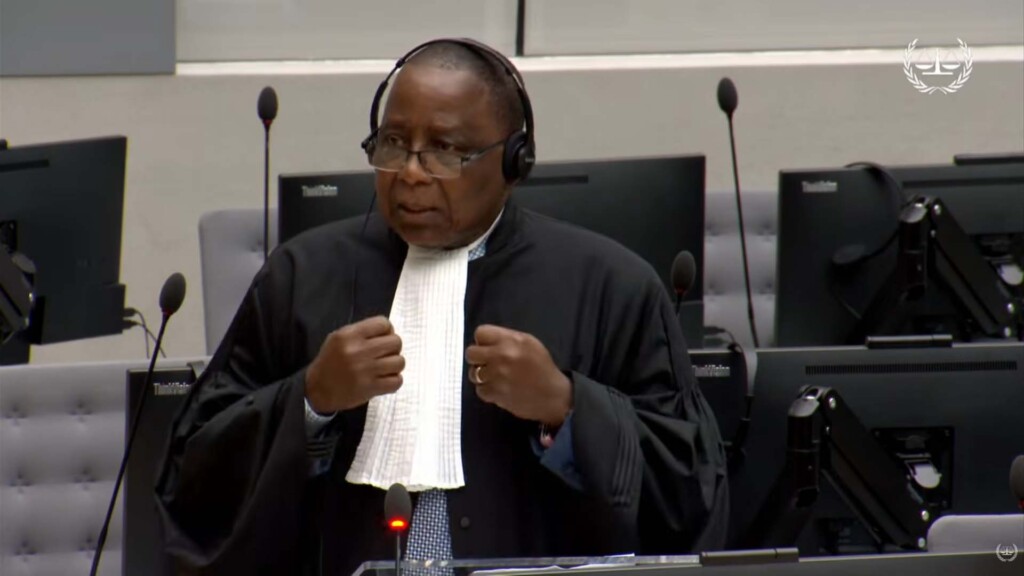
The defence submission, presented by Chief Charles Achaleke Taku, Lead Counsel and head of Abdallah Banda’s defence team, confined its submissions largely to procedural issues and the principle that the proceedings concerned Banda’s individual criminal responsibility.
The hearing brought one of the ICC’s longest-running Darfur cases to a close without a trial, ending a prosecution that prosecutors concluded could no longer be sustained on the available evidence.
The pre-trial Chamber is expected to present its final decision within days.
Related coverage:
ICC vs former Darfur JEM commander Abdallah Banda: Prosecutors ask for withdrawal of war crimes charges as ‘evidence deteriorated after 10+ years’
ICC Deputy Prosecutor: ‘Investigations into El Geneina and El Fasher in Darfur have made progress’
New report: RSF training camps, supply routes in Libya fuelling Sudan’s war — ‘What we’ve uncovered is really just the tip of the iceberg’
ICC Prosecutor: ‘No tangible accountability or justice for Darfur’s people after 17 years’


 and then